

'I'm the problem, it's me': Why do musicians revisit their pain and doubt in their art?
- Written by The Conversation
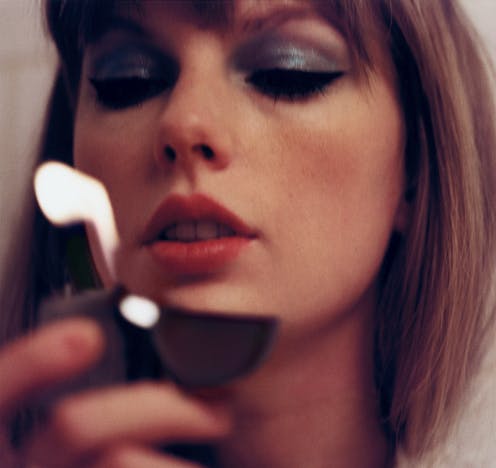
Taylor Swift’s latest album Midnights launched with the single Anti-Hero. Anti-heroes in fiction are dark, complex characters who may question their moral compass but are ultimately trying to be led by their good intentions. Perhaps most humans feel like we are all anti-heroes lacking the right amount of courage, idealism, and morality – wanting to be heroic but struggling through familiar dark places.
In Anti-Hero, Taylor shares emotional rawness and sings “It’s me, hi, I’m the problem, it’s me … everybody agrees.”
“I don’t think I’ve delved this far into my insecurities in this detail before,” Swift said about the song in a video on Instagram. “I struggle a lot with the idea that my life has become unmanageably sized and, not to sound too dark, I struggle with the idea of not feeling like a person.”
Taylor’s album reveals her struggle with her own insecurities and maybe common universal human emotions that everyone struggles to face. In Labyrinth, for example, she sings about heartbreak, and more specifically, the fear of falling in love again:
It only feels this raw right now Lost in the labyrinth of my mind Break up, break free, break through, break down
Much of the new album, and Swift’s discography in general, often revisits past heartbreaks, disappointments, and insecurities. Swift has talked about how Midnights is an album devoted to the kinds of soul-searching thoughts we have in the middle of the night.
“This is a collection of music written in the middle of the night, a journey through terrors and sweet dreams,” Swift wrote. “The floors we pace and the demons we face. For all of us who have tossed and turned and decided to keep the lanterns lit and go searching — hoping that just maybe, when the clock strikes twelve… we’ll meet ourselves.”
Music and pain
Music has the potential to change our experience of intrusive thoughts and how we deal with pain. At an extreme level, when we revisit past traumatic experiences, we are often in danger of triggering a feared response, that manifests as either fight/flight/freeeze or fawn, that can often re-traumatise individuals.
When we identify with a song that expresses similar struggles to what we are experiencing we feel understood and not judged. Clinical psychologist Dr Janina Fisher has proposed that distancing ourselves from pain helps humans survive, yet an ongoing “self-alientation” of parts of ourselves that carries fear or shame lead to a disowning of self – the bad parts that Taylor relates to as being the things she hates about herself which causes a further suppression of feelings that can create further psychological distress.
Expression is central to releasing emotion and connecting to music may be the key that allows the disowned parts of self to be re-integrated by expressing them in a new way. Music provides a creative outlet to re-script a new story of survival of the fear of the past with a renewed ability to see to the good things again in life.
Musicians often imbue grief and trauma in their lyrics and melodies as autobiographical reflections into their art as a way of working through complex emotions and feelings - and by doing so, enlighten the listener to work through their own pain.
Music and connection
Music seems to be a way for music lovers to connect with artists stories of tragedy, which allows their own traumatic or painful memories to become more comfortably integrated and accepted.
Durham University studied 2,436 people within the United Kingdom and Finland to explore the reasons why we listen to sad music. Research suggested that music is a way that people regulate their mood, pleasure and pain. Professor Tuomas Eerola, Professor of Music Cognition in the Department of Music said “previous research in music psychology and film studies has emphasised the puzzling pleasure that people experience when engaging with tragic art.”
The depth of loathing that Taylor taps into in Anti-Hero also affirms our own experience.
It’s self confirming. Engaging with trauma in art allows us to rewrite the outcome from being victims of our circumstances to victors. We are either consumers or creators.
Mental health and music
As the World Health Organisation states “there is no health without mental health”.
A musician’s writing about trauma is a way of increasing mental health - of searching for understanding of themselves through self-reflection, it changes old thinking patterns and provides a new perspective and ways of thinking about themselves and others that can often heal emotional wounds.
Like telling your story through a trauma narrative, music can help reduce its emotional impact. Music is a universal language that gives you the chance to be a protagonist in your life story, to see yourself as living through it heroically.
Psychologists understand that the quickest way to understanding someone is through their wounds, and musicians too understand this power of music to comfort, console, encourage and exhort themselves and other broken hearts.
Humans need to feel safe and in connection with others for survival, and music is the language that activates pleasure centres in the brain and communicates powerful emotions.
If trauma causes distress to the brain and body and music enhances psychological wellbeing, improves mood, emotions, reduces pain, anxiety, depression, and chronic stress, music has the potential to alleviate chronic disease and pain.
Music is a vehicle that gathers strength from distress, and helps you grow brave by reflections and maybe the anti-hero’s and insecurities recreated through music may be the treasures found in darkness that we may not have seen in the light.


