


What It Actually Costs to Repaint a Home's Interior in Geelong Right Now
- Written by News Daily
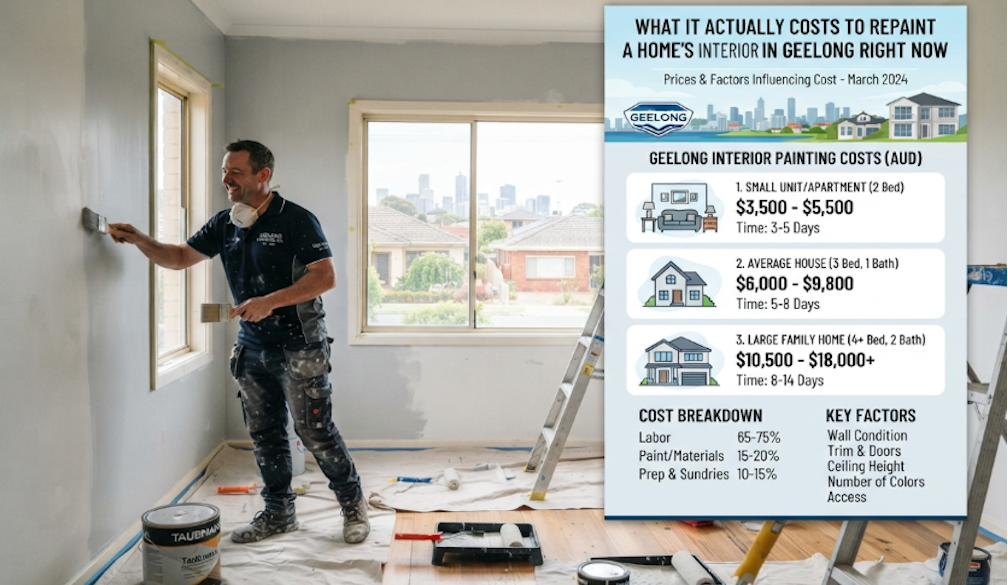
Geelong's property market has cooled slightly from the frenzy of a few years ago, but one thing hasn't slowed down: homeowners repainting before they sell, or simply refreshing a house that's been lived in hard for a decade. Real estate agents in the region have started quietly recommending it as one of the cheapest ways to add perceived value to a listing, and tradespeople across Highton, Newtown and Belmont say interior work now makes up a bigger share of their bookings than exterior jobs did five years ago.
Part of that shift is practical. Fewer people are doing full renovations in the current lending environment, so a repaint has become the middle-ground option — cheap enough to justify without a loan, but visible enough to change how a room feels or how a house presents to a buyer.
The number homeowners actually want, though, is rarely the headline figure quoted online. It's the one that applies to their specific house, and that number depends on far more variables than most people expect going in.
The range is wider than most quotes admit
A single bedroom repaint in Geelong typically sits somewhere between $350 and $850, depending on wall condition and whether skirting is included. A full three-bedroom home usually lands in the $4,500 to $7,000 bracket, and that's before anyone starts talking about ceilings, colour changes or trim work separately. Larger or more detailed homes can climb past $9,500.
Kitchens and hallways sit at the pricier end of the per-room scale, mostly because of cutting-in time around cabinetry or the access issues that come with a stairwell. Ceilings done on their own rather than bundled into a full repaint can range from $400 up to $1,500 depending on how much of the home is involved. A "per room" figure quoted without context is close to meaningless until someone knows which room and what condition it's in.
What trips people up is comparing two quotes that look wildly different for what seems like the same job. In most cases, the cheaper quote has simply left something out — spot filling instead of full prep, two coats of trade-grade paint instead of a premium brand, no furniture protection. It's rarely a case of one painter charging more for no reason. Homeowners doing the rounds for quotes are usually better served checking what's included line by line than chasing the lowest number, and a room-by-room breakdown of the cost to paint interior of house jobs typically run in Geelong makes that comparison a lot easier before signing anything.
Why Highton keeps coming up in these conversations
Highton has become something of a case study for the region's repaint boom, partly because of its mix of older weatherboard homes and newer builds sitting side by side, and partly because of the suburb's particular exposure to Geelong's shifting weather through the year. Homes here go through more temperature swing between seasons than properties closer to the bay, and that has a real effect on how paint ages, which is why some Highton homes need repainting sooner than the general ten-year rule of thumb suggests.
Several long-established painters Highton residents have used for years now handle a noticeably higher volume of interior work than they did before the pandemic, rather than relying on painters who cover the wider Geelong region without local familiarity. It's a small distinction, but one locals mention often: a painter who already knows how a Highton weatherboard behaves through a Geelong winter tends to plan the job differently than one working from a generic checklist.
The seasonal factor nobody quotes for
What rarely makes it into an initial quote is timing. Interior painting is less weather-dependent than exterior work, but humidity and temperature still affect drying time, and homes with older ventilation can hold moisture longer than newer builds, changing how paint cures on the walls. A handful of local painters have started explaining this to clients upfront, walking through how Geelong's weather affects paint on Highton homes across the seasons — a conversation that has apparently changed a few homeowners' minds about scheduling a repaint for autumn rather than the middle of summer.
Whether DIY actually saves money
The maths on doing it yourself is less straightforward than it looks on paper. Paint and basic tools might cost a few hundred dollars less than a professional quote, but a full-home repaint realistically takes 40 to 80 hours once filling, sanding, priming, cutting-in and clean-up are all counted — spread across five to ten days for most people fitting it in around work and family. For a single feature wall, that time cost barely registers and DIY makes obvious sense. For a full interior, the labour hours often outweigh the savings, particularly on older homes where walls need real repair first, and a professional job buys a more consistent finish, a workmanship warranty, and furniture protection most people underestimate the value of until they're a few days into living around drop sheets.
Getting the finish right, not just the colour
Colour gets most of the attention, but sheen level matters just as much for how a room performs day to day. Matte suits ceilings and low-traffic bedrooms, hiding surface imperfections though marking more easily. Low sheen or satin has become the default for living areas and hallways, balancing washability with a soft look, while semi-gloss is generally reserved for kitchens, bathrooms and trim, where moisture resistance matters more than the flatter finish. Getting this wrong doesn't ruin a paint job, but it often means repainting sooner than necessary, which is its own kind of hidden cost.
What homeowners should actually ask before hiring
Beyond price, a few questions tend to separate a good quote from a rushed one: does it specify the number of coats, rather than just "painting" as a lump sum? Is prep work itemised, or assumed? Is the paint brand named specifically, or just described as "quality paint"? Is there a written workmanship warranty attached to the job?
None of these questions are complicated, but they're the ones that get skipped when a homeowner is chasing the lowest number. Given how much an interior repaint can shift in cost based on wall condition and colour changes alone, a five-minute conversation about what's actually included in a quote is usually worth more than shopping around for a cheaper one.


