

Counting the wrong sheep: why trouble sleeping is about more than just individual lifestyles and habits
- Written by The Conversation
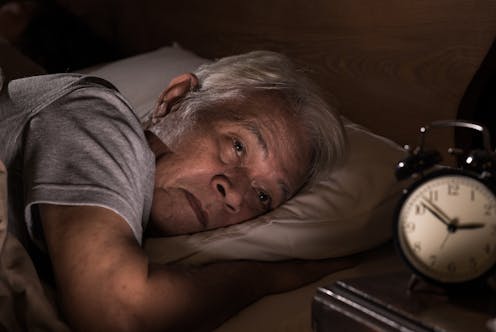
Sleep may seem straightforward – everyone does it, after all. But as many of us know, getting enough sleep is not necessarily a simple task, despite what you might read in the media.
How to sleep “properly” is a favourite topic of self-help articles, with headlines such as “Expert advice to get a good night’s sleep whatever your age” promising the answer to your nocturnal awakenings.
Older people are commonly the audience of these messages. Our analysis of articles published in the New Zealand media between 2018 and 2021 found sleep is presented as inevitably declining with age.
At the same time, sleep is portrayed as a cure for everything: a good night’s sleep is depicted as a way to maintain productivity, ward off illness and dementia, and ultimately live longer.
But most of these articles are aimed at the individual and what they can do to improve their sleep. Often missing is any reference to the external factors that can contribute to poor sleep.
Personal choice and sleep
A key message in many of the articles we examined is that sleep is a simple matter of making the right choices. So, if you’re not getting enough sleep it’s probably your own fault.
People are lectured about poor “sleep hygiene” – staying up too late looking at their phone, having too many cups of coffee, or not getting enough exercise during the day.
And it’s true, drinking too much caffeine or staring at a screen into the small hours might interfere with sleep. It’s also true that good sleep is important for good health.
But things are a bit more complicated than this. As anyone who has struggled to maintain good sleep knows, simple tips don’t always overcome the complex situations that contribute to these struggles.
Read more: Sleep deprivation benefited our ancestors, yet harms us now — but staying fit may help us cope
Awake to other factors
Good sleep is not just a matter of “making the right choices”. Internationally, there’s a growing body of research showing sleep is affected by much more than individual behaviour: it’s often shaped by a person’s social and economic circumstances.
New Zealand research is adding to this pool of knowledge. One study, based on survey results from just over 4,000 people, found insufficient sleep was more common among Māori than non-Māori, partly due to higher rates of night work.
International research has also found women are more likely to experience insomnia due to their caregiving roles.
Read more: How do I stop my mind racing and get some sleep?
One US study found unpaid caregivers for children or parents (or both) reported shorter sleep quantity and poorer sleep quality than paid caregivers or people without such roles. A survey of 526 carers in New Zealand showed two-thirds reported mild or severe sleep disturbance.
We also know lack of sleep is linked to serious disease, including diabetes and heart disease. Sleep duration and quality have been identified as predictors of levels of haemoglobin A1c, an important marker of blood sugar control.
And hypertension, stroke, coronary heart disease and irregular heartbeats have been found to be more common among those with disordered sleep than those without sleep abnormalities.
Failure to acknowledge the social context of poor sleep means sleep messages in the media ignore the fundamental causes in favour of the illusion of a quick fix.
The commodification of sleep
Sleep is also increasingly characterised as a commodity, with a growing market for products – such as sleep trackers – that claim to help improve sleep quality.
Sleep trackers promise to measure and enhance sleep performance. However, their reliability may be limited – one study found the tested tracker did not accurately detect sleep, particularly in older adults who had greater levels of nighttime movement.
Framing public health problems as matters of personal choice is common. Alcohol and fast-food consumption, for example, are regularly presented as matters of individual responsibility and poor personal choices. The role of marketing and access to healthy food gets a lot less attention.
Read more: Explainer: how much sleep do we need?
Of course, simple tips for getting good sleep may be useful for some people. But ignoring the underlying social and economic factors that shape the possibilities for good sleep will not address the problem.
Health promotion messages that focus on individual behaviour miss the structural barriers to better health, including poverty, low levels of education, high rates of incarceration, substandard or crowded housing and racism.
We need to move beyond messages of individual behaviour change and start talking about inequities that contribute to the problem of who gets a decent night’s sleep and who doesn’t.


