

We tracked election ad spending for 4,000 Facebook pages. Here's what they're posting about – and why cybersecurity is the bigger concern
- Written by The Conversation
Have you noticed your Facebook and Instagram feed filling up with political ads lately?
The social media strategies of many parties and candidates aim to bypass mainstream media to speak directly to voters, but they are often not as sophisticated as is assumed.
As part of a team studying the digital campaign, we have been tracking what the parties and candidates are doing with their Facebook and Instagram ad spend during the election campaign.
Using ads collected from the Facebook Ad Library API (containing sponsored posts declared by the advertiser as political), we are tracking the ad spend for close to 4,000 pages. We gather fresh data every six hours.
At the halfway point in the election campaign, some clear themes are emerging in the ways the parties and candidates are campaigning online.
Read more: The Wentworth Project: Allegra Spender's profile rises, but polarises
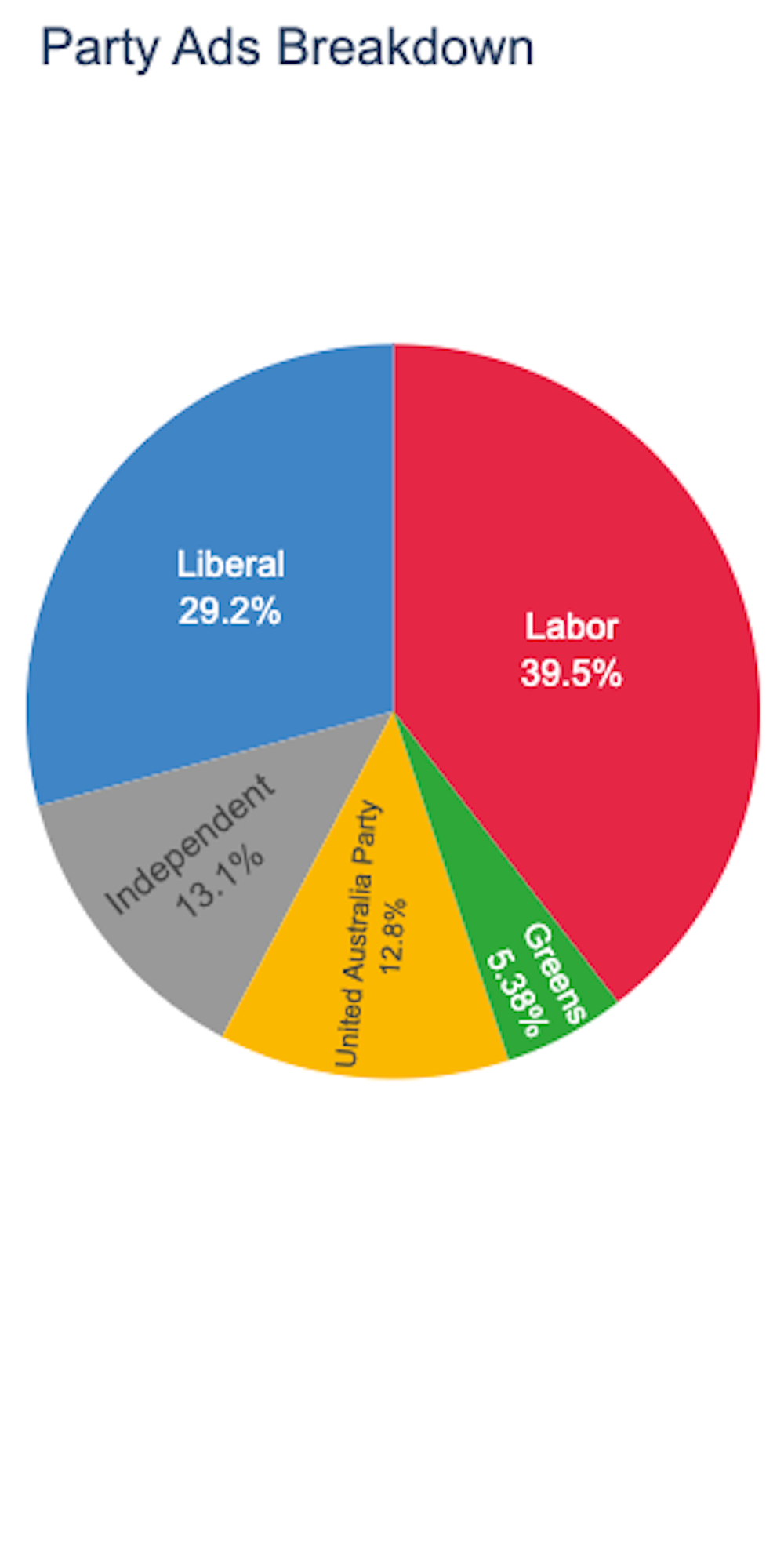
A big spend by ‘teals’ and Labor – and political fragmentation
The first is the really significant spend from the “teal” Independents. Historically, many successful federal Independents (such as Tony Windsor, Rob Oakeshott or Cathy McGowan) have come from regional areas.
But they rarely had the resources to execute a campaign of the scale we’re seeing from inner city “teals” like Monique Ryan (running in the seat of Kooyong against Treasurer Josh Frydenberg).
Some are spending A$4,000-$5,000 a week on Facebook and Instagram ads. That is enormous. Very few candidates from the major parties would normally spend that amount. Frydenberg is doing so to try to retain his seat.
The second theme emerging is that, so far, Labor is spending more than the Coalition. That’s a product of Labor’s post-2019 election review, which was damning of their digital campaign and emphasised a digital first strategy.
Thirdly, we’re seeing a real diversity of spending across a range of parties and candidates – Jacqui Lambie in Tasmania, Rex Patrick in South Australia, the Liberal Democrats and the United Australia Party in Queensland, for example.
That reflects the broader fragmentation of the political landscape in Australia. Federal elections in Australia are increasingly complex and multi-dimensional, the campaign online is indicative of this trajectory.
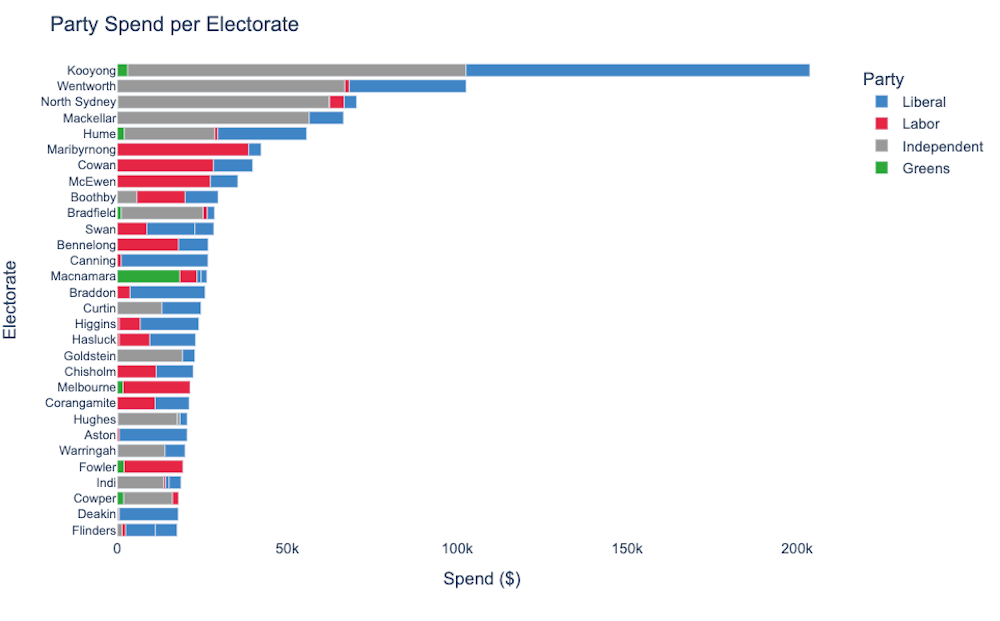 Spending in the seat of Kooyong and Wentworth has been high.
UQ Election Ad Data Dashboard
What are candidates and parties posting about?
In inner city seats where teal independents are running, the number one issue is overwhelmingly climate change. But “environment” or “climate” is not one of they key terms we have found for the major parties across Australia. Instead, jobs, Medicare and health are more prominent.
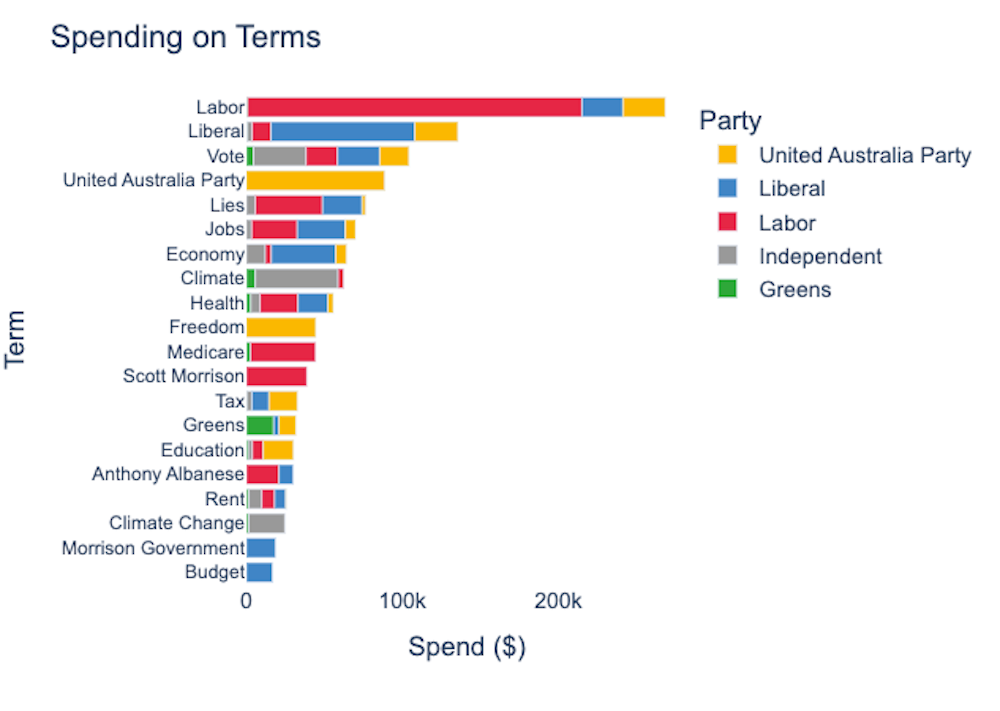 ‘Lies’ is one of the top terms showing up in posts.
UQ Election Ad Data Dashboard
For those in outer metropolitan and regional areas, the data suggests the cost of living is the key issue parties have identified as determining their vote.
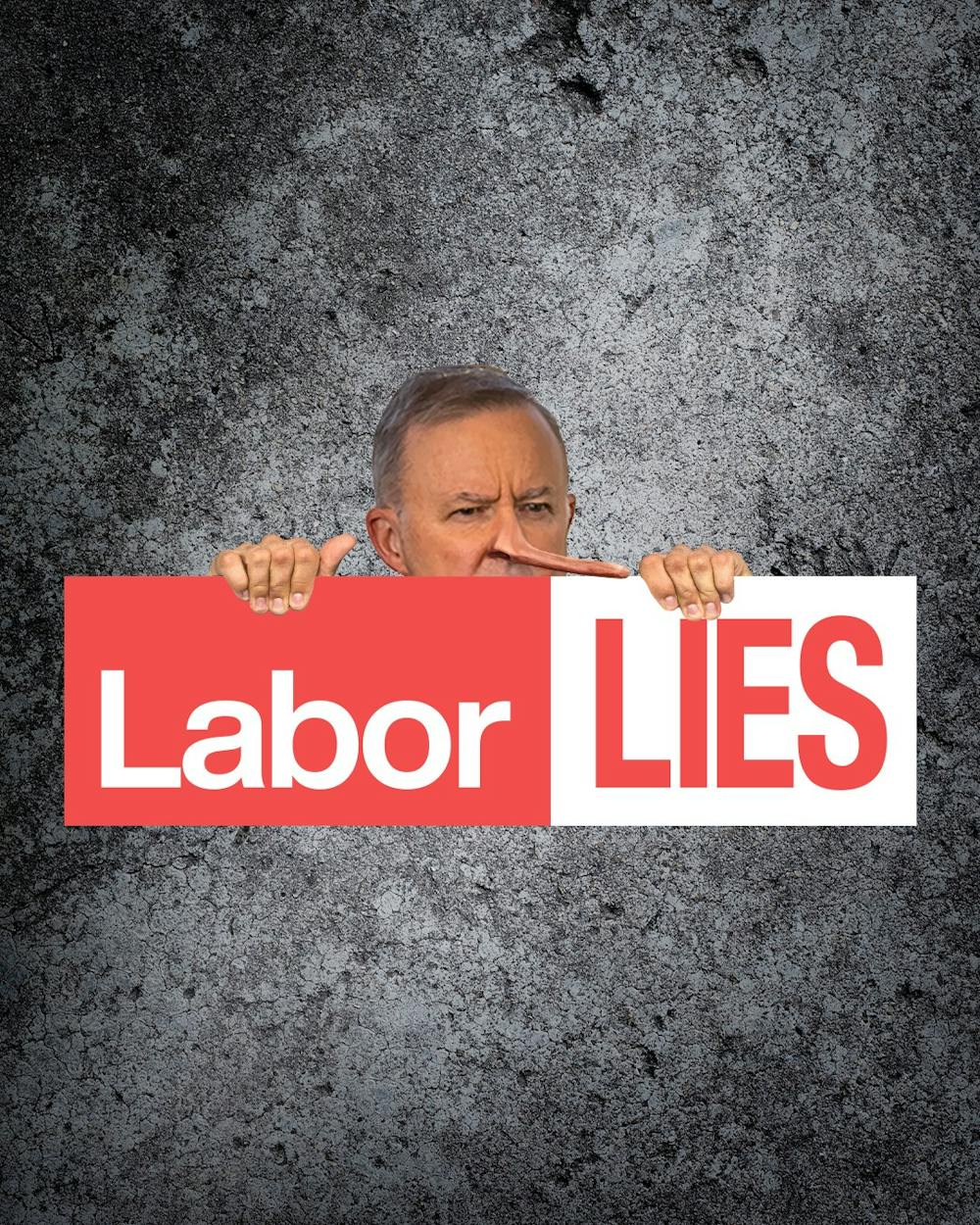 An ad from the Liberal Party of Australia Facebook page.
Liberal Party of Australia Facebook page
Negative campaigning is showing up, too. One of the top terms appearing in ads from the major parties is “lies”.
Take talk of ‘microtargeting’ with a grain of salt
While there is always talk of fine-grained and sophisticated microtargeting strategies, there is good reason to be wary of such claims.
There’s a perception we live in this incredible digital age where each message is tailored to our interests or our personalities. But the reality is quite different.
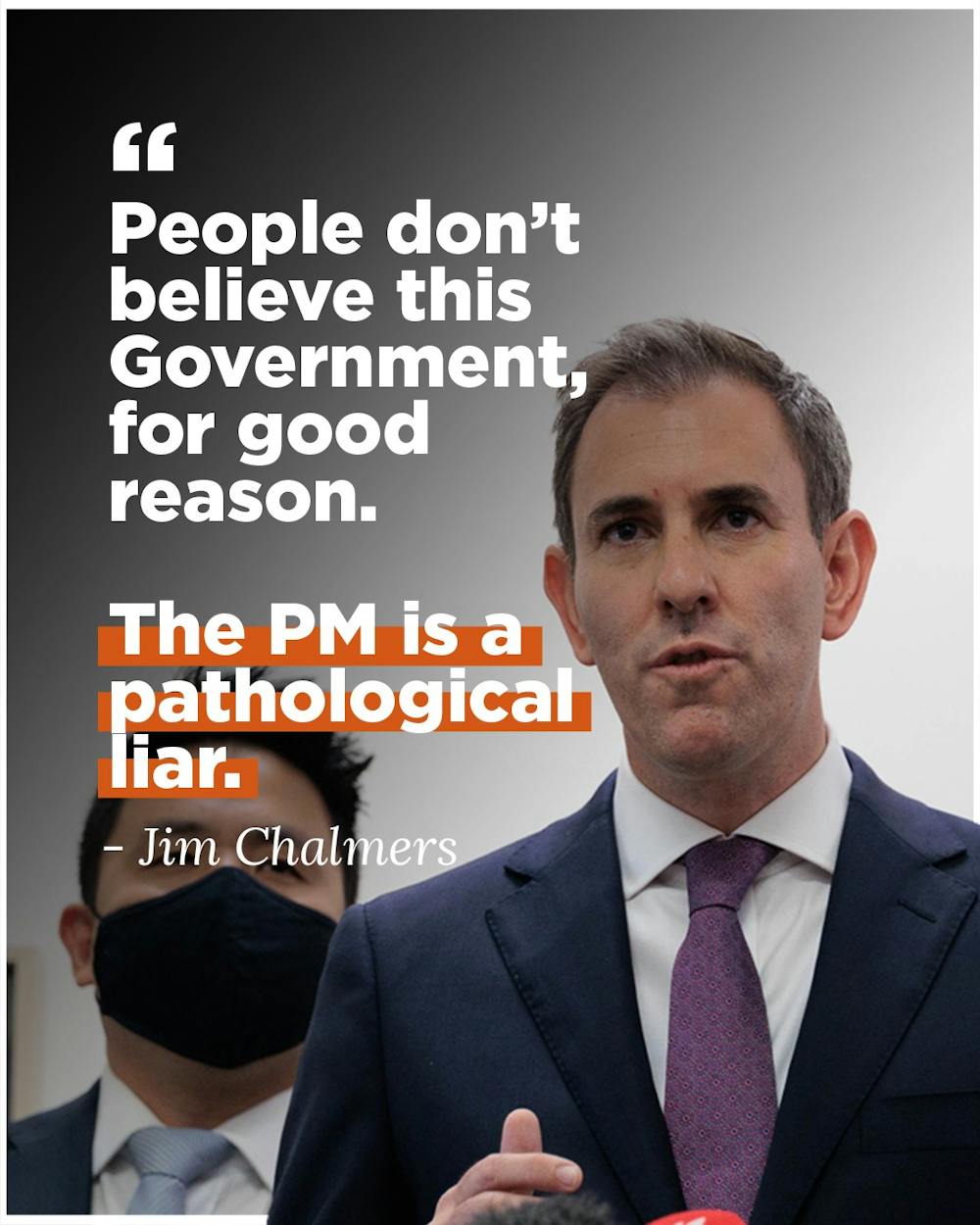 Lying is a common theme in many digital ads.
The Australian Labor Party Facebook page.
In fact, a great deal of digital campaigning isn’t that targeted at all. Clive Palmer’s campaign is an extreme example of this, “carpet bombing” the electorate with messages about “freedom”. (A reasonable rebuttal might be: can I be free to not receive these messages?)
The reality is that most political advertising online is little more than what I describe in my recent book as a form of “narrowcasting”, where targeting is based on a basic segmentation of voters into demographic or geographic groups.
While many of the techniques we see in Australian election campaigns have been used overseas, particularly in the US and the UK, our electoral system and electoral rules are different; a mixed electoral system and compulsory voting changes the dynamic enormously.
In the US and the UK, the primary focus is to “get out the vote” rather than persuade voters. But the evidence suggests the effects of digital campaigns on mobilisation are limited. For persuasion, it is even less.
Most parties also lack the resources to engage in highly differentiated and targeted campaign activity.
In research I recently completed with colleagues from six advanced democracies, we showed most campaign activity builds on pre-existing techniques and are far less sophisticated than is often assumed.
Digital campaigning matters, as voters are online. It educates, it informs, it drives the conversation and it can have effects on social cohesion.
But the idea digital campaigning is the canary in the coalmine of electoral manipulation in Australia is hyperbole.
Data privacy is the broader concern
Two significant digital campaigning issues we should be concerned about are data privacy and cybersecurity.
Australia is one of the few advanced democracies where political parties are completely exempt from privacy legislation.
They are able to acquire all sorts of data about you, from the Australian Electoral Commission, from data they collect when they speak to voters and from digital tracking data.
Should we be comfortable with parties collecting this information about us, especially when much of it provides limited campaigning or educational value to parties?
The privacy concerns are significant but so is the broader risk of domestic or foreign actors seeking to acquire this data to sow discord.
Since 2016, political parties in countries such as Australia, the UK, the US, Germany, Italy and Canada have been the targets of cybersecurity attacks. Many see political parties as the weak link in the election security of democracy.
That represents a broader risk for all of us.
It is important for us to track what parties and candidates are doing online during a campaign.
But we also need to identify where the real vulnerabilities are, as the threats online are only likely to increase.


