

Australia could rapidly shift to clean transport – if we had a strategy. So we put this plan together
- Written by The Conversation
Australia has no clear strategy to decarbonise transport. That’s a problem, because without a plan, our take-up of clean technologies like electric cars, trucks and buses is slow. It’s stopping us from meeting our climate commitments. And it leaves us paying exorbitant prices for imported oil at the fuel pump, as well as in the cost of groceries and services.
The good news? Over the last year, 18 transport and energy experts have created this independent, science-based summary of what is now possible in cleaning up land, sea and air transport as well as what will become possible in coming decades.
Our plan gives all levels of Australian government a list of priority policies. Together, these policies would make possible the delivery of a net zero transport system by or before 2050, and see Australia gain major economic, social and environmental benefits from the transition.
The pandemic has shown us how governments and experts can work together to take on wicked challenges. We can do the same here. We can draw on the knowledge of transport and energy experts, engineers, planners, and economists to develop the science-based net zero transport strategy Australia urgently needs.

Why we must rapidly reduce transport emissions
Today most of our transport relies on fossil fuels. That makes it one of Australia’s most emission intensive sectors. Worse, transport emissions are forecast keep increasing until at least 2030, during the most critical decade in the fight to slow climate change.
By 2030, transport emissions could grow to a quarter of the country’s domestic emissions. Australia has a high-polluting, inefficient vehicle fleet 90% reliant on imported fuel. These two factors mean many Australians have been hit hard by unprecedented fuel prices.
Shifting to clean transport is a win-win-win – we can slash emissions, cut costs to commuters and boost Australia’s fuel security in a very uncertain geopolitical time.
How can Australia reduce transport emissions?
To begin this shift, we must have a clear vision for rapid decarbonisation of transport. Our framework has three steps:
avoid: where possible, avoid transport trips and shorten travel distances such as through working from home
shift: for the majority of trips that are unavoidable, shift as many as possible to more efficient transport modes such as e-bikes, public transport and walking
improve: boost Australia’s transport energy efficiency by adopting low and zero emission vehicles, such as electric cars, electric buses and electric trucks.
We must invest in transformative technologies to speed the transition, such as electric vehicles for land transport, and electric, hydrogen, ammonia, sustainable biofuel and synthetic fuel options for shipping and aviation.
This approach is in line with the world’s current best practice. The peak global body for clean transport says the electrification of transport is the single most important technology to decarbonise the sector.
The latest Intergovernmental Panel on Climate Change report states electric vehicles offer the largest decarbonisation potential for land transport on a lifecycle basis. The harder challenges will be finding ways to make shipping and planes run without fossil fuels. To do this, we’ll need to invest in finding the solutions.
As if saving the world from the worst of climate change isn’t enough, the economics have shifted enormously. Far from being a long-term cost to Australia, a rapid switch to clean transport could save us nearly half a trillion Australian dollars by 2035. Of this, almost $300 billion is the amount we save the health system by getting killer pollutants out of the air. Australians could also save around $2,000 every year in lower fuel and maintenance costs for electric cars. If all cars in Australia were electric, this would equate to more than $30 billion saved every year.
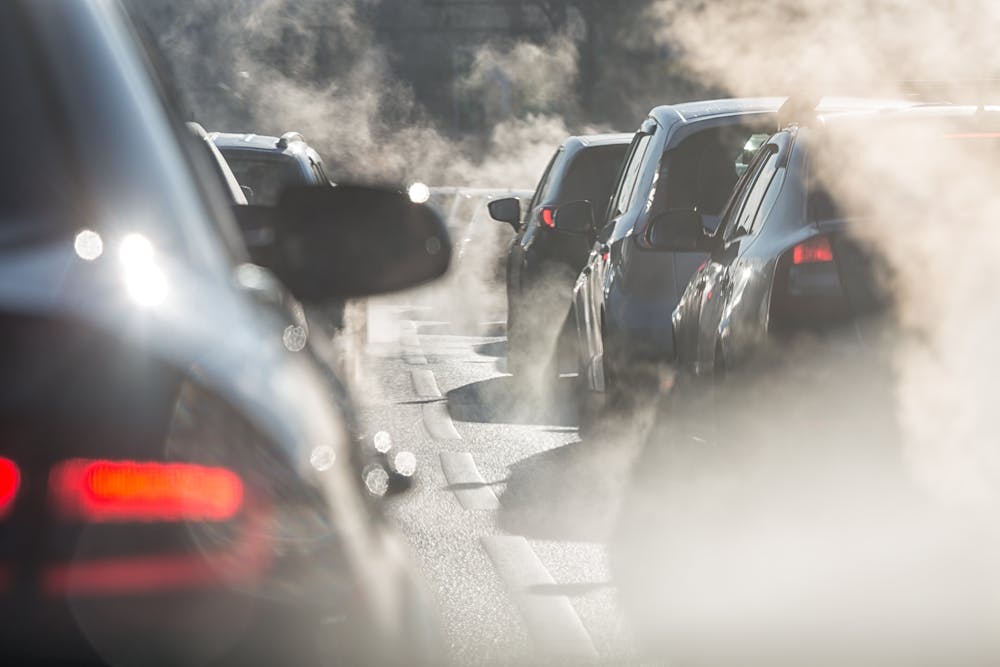 Internal combustion engines fill the air with many dangerous chemicals, causing an estimated death toll higher than the road toll.
Shutterstock
This may not surprise you to hear, but Australia is woefully behind the rest of the world on this transition. For example, we’re one of the few countries without mandatory fuel efficiency standards, which has given us a dirty and inefficient vehicle fleet.
To date, neither the Coalition or Labor’s current policies go far enough to achieve net zero transport emissions. Our next government must commit to ambitious policy to support the rapid decarbonisation of transport.
Read more: How do the major parties rate on climate policies? We asked 5 experts
Where to from here? The road map to hit net zero transport by 2050
To reach net zero for land transport by 2045 and all transport by 2050, we need evidence-based strategies.
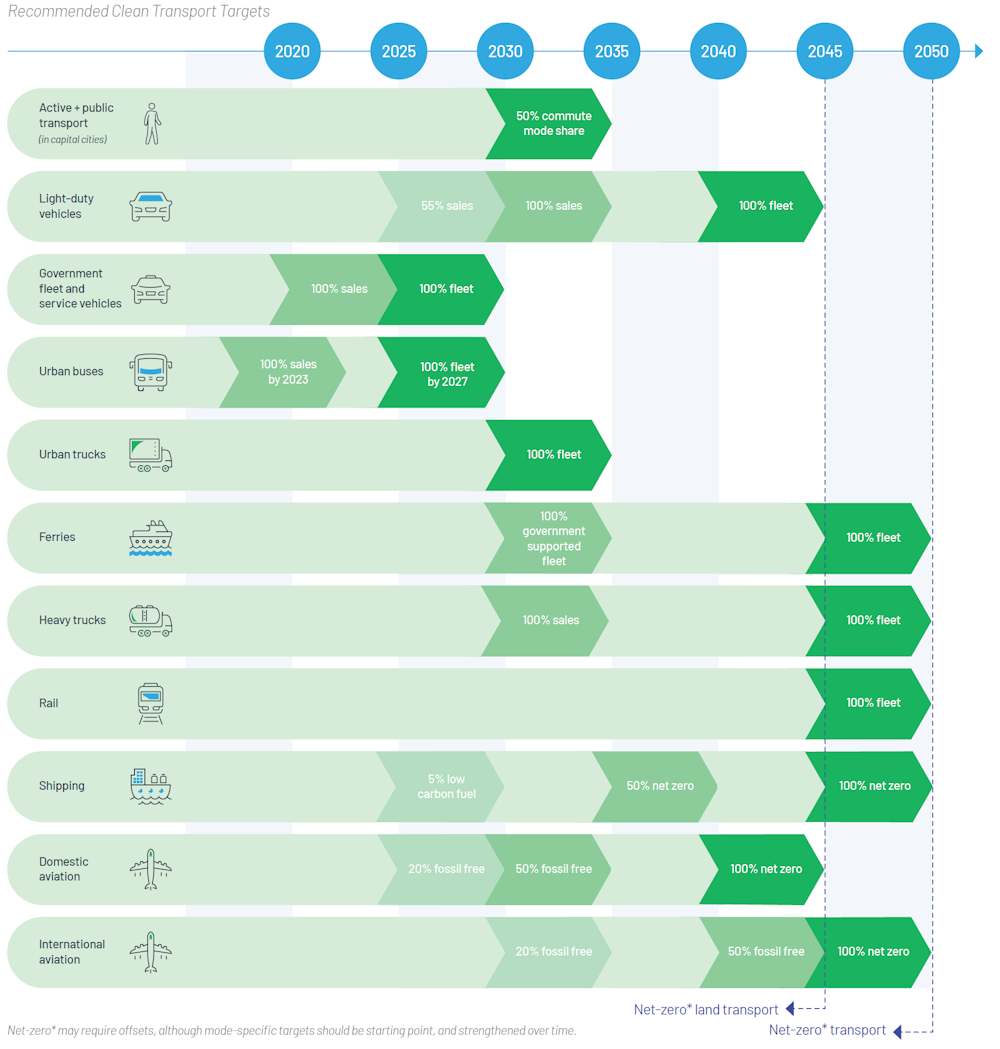 Clean Transport Targets.
FACTS
Given we’re almost starting from scratch, we can only make this shift through ambitious transport policies. These would include:
- clear targets for each transport sector to achieve net zero transport by or before 2050
- new financial incentives to help households and businesses switch to zero emission transport
- new sales mandates and fuel efficiency targets to stimulate innovation and increase the supply of zero emission vehicles
- investing in clean transport manufacturing and recycling industries to allow us to build batteries, produce renewable fuels and build electric vehicles locally by 2030
- infrastructure and policies to support active transport, low emission zones and road pricing reform.
To tackle the harder-to-decarbonise sectors of shipping and aviation, we need:
- research, development and investment into low and zero emission options, coupled with mandates for use of zero emission fuels
- renewable hydrogen clusters to support broader economy decarbonisation and the low and zero emission shipping and aviation.
Luckily for us, we have many resources to draw on to create this better system. We have a natural resource base able to support clean transport not only locally but globally. We will be able to access enormous amounts of cheap, renewable energy, which we can harness to power mining and refining of critical resources, turn water into green hydrogen, manufacture batteries, and build our own zero emission vehicles.
Pipe dream? Hardly. Australia already has one of the world’s top EV charger companies, and we already have companies turning out electric buses.
This is all possible. But time is short. We must move to grasp this opportunity to clean our transport sector while securing new jobs, improving our national security, and cleaning the air we all breathe.
A full list of the 18 co-authors of the FACTS report can be found here, and the FACTS report is available for download here.


