News Daily

The Times

Australia

  • Written by The Conversation
Bravery, insight and simmering fury: Australian female correspondents on speaking truth to power

A confession: I am an academic and a journalist, but the name at the top of an article means little to me – whether my own, or anyone else’s. It never has. I am always far more interested in elegantly rendered content. Whether it’s written by a man or a woman is irrelevant.

This gender disregard may seem counterintuitive. But being a woman does not change the craft of journalism. I know it changes almost everything else, but to survive as a woman in many (if not most) industries needs a sense of bloody-mindedness about our right to be there, and a weary robustness born of battle.

Review: Through Her Eyes, edited by Melissa Roberts and Trevor Watson (Hardie Grant)

Does gender matter in journalism?

In their preface, the co-editors of Through Her Eyes, Melissa Roberts and Trevor Watson, touch on the sexism experienced by all female journalists.
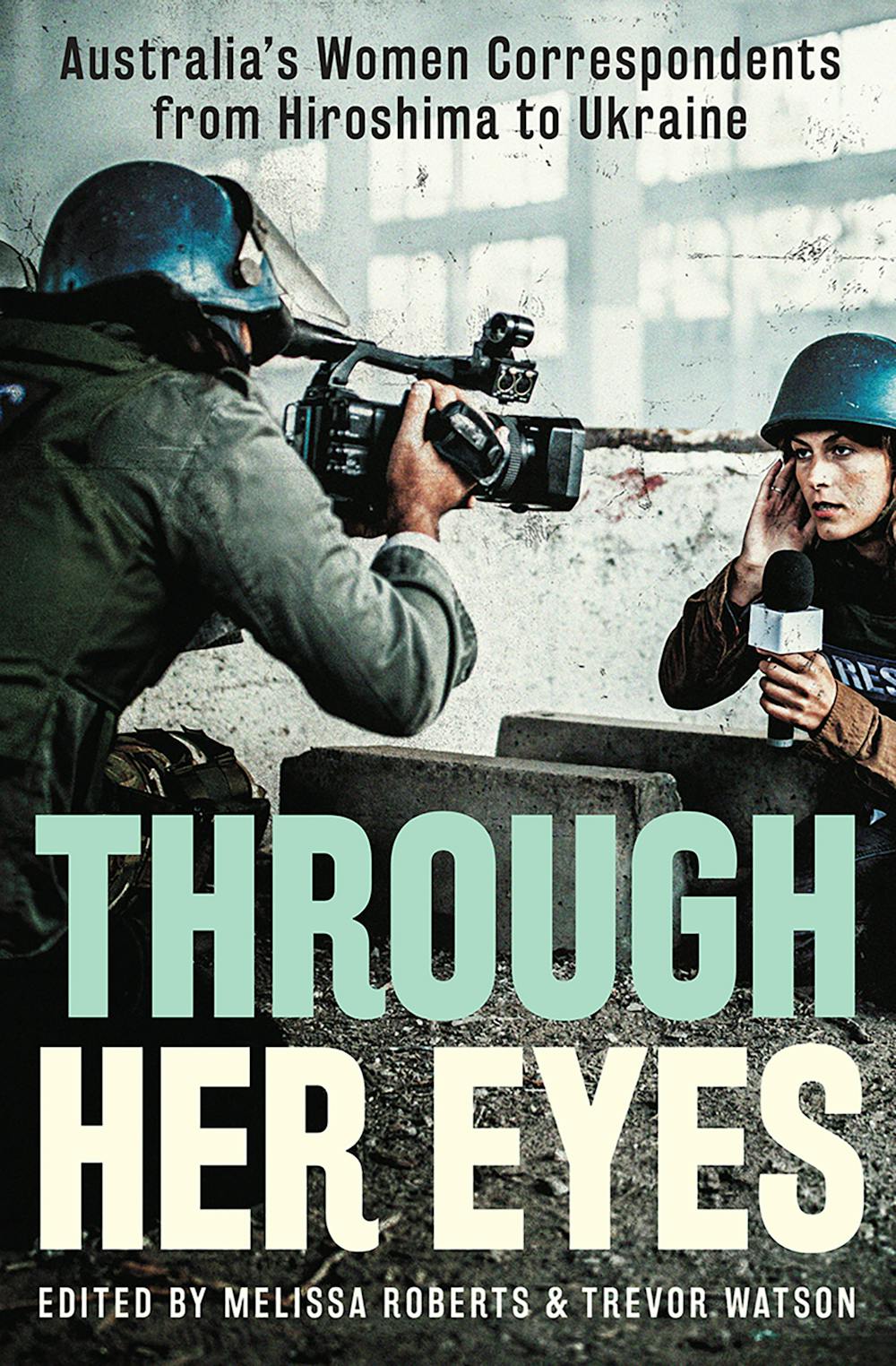
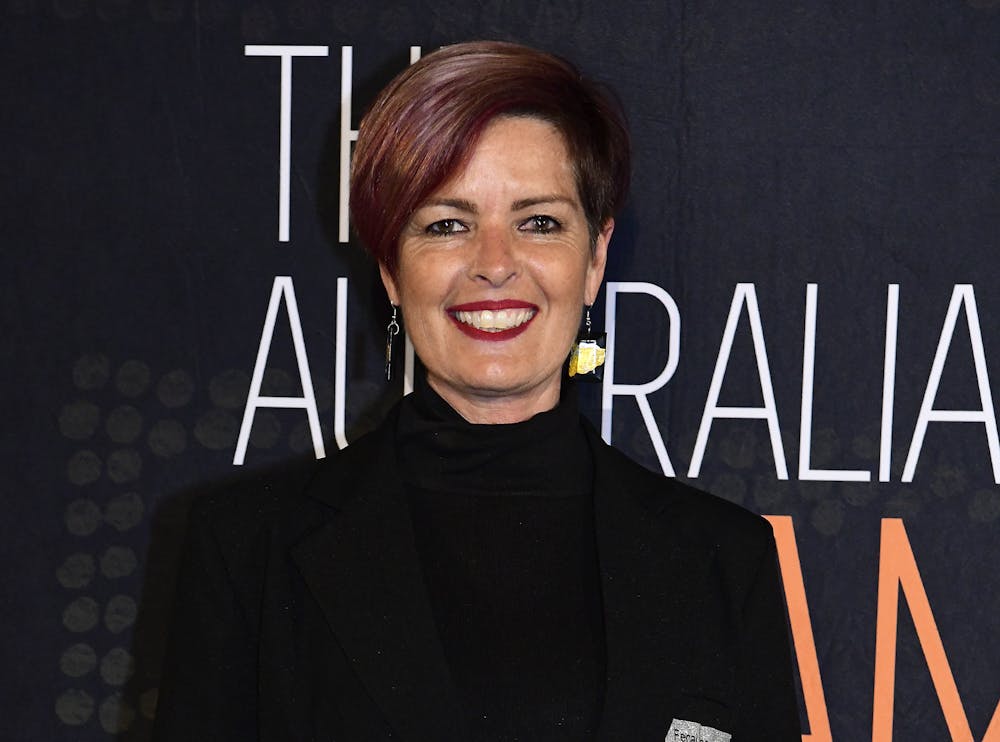
Like me, they think and write: “The gender of a correspondent shouldn’t matter.” They qualify: “But the reality is that until very recently, gender determined all in journalism, particularly opportunity.” This is also true. Several of the correspondents in this book hurdled gendered obstructions to their career and set out alone to foreign lands, funding themselves by freelancing. So, in many ways, reading Through Her Eyes is humbling. Not because it collects the stories of 29 Australian female foreign correspondents who fought hard for their place, but because it collects the stories of foreign correspondents. Most of these stories are deeply reflective. These chapters are the ones that resonate most – and will, I hope, make readers truly think. They reflect not on being an Australian woman in the field, but on the job and the skills of journalism. On speaking truth to power through written words. Read more: ABC has for too long been unwilling to push back against interference – at its journalists' expense Emma Alberici’s personal perspective Emma Alberici’s chapter, “What’s news?”, is the one that really stands out. It’s not so much a running mission of gathering news in war-torn, dangerous and corrupt countries, but more an essay on the state of play of news-gathering culture. Alberici writes with a simmering, recognisable fury. She begins with the fiasco that was the Tampa incident in August 2001 – “one of the most shameful periods in our political history” – and the subsequent spiking of the scoop she and Terry Ross gathered for Channel 9’s A Current Affair on Nauru, where Australia dumped 434 traumatised people, most of them Afghan refugees. A Current Affair replaced the shattering and shameful story of Australian government callousness Alberici and Ross had filed with an interview with an inventor who claimed to have created a cure for sweating. After 30 hours of getting to Nauru and manically interviewing, writing, filming and filing there, Alberici tells Ross that back in Sydney, their work has been shelved. Ross vomits at the news. Emma Alberici called her move from Channel 9 to the ABC, where she became their European correspondent, ‘serendipity’. She writes of “serendipity” launching her from the commercial Channel 9 to the ABC later that year. Seven years later, she became the ABC’s European correspondent. And then there are several eviscerating pages on the Murdoch press, particularly in the United Kingdom, circling the phone hacking scandal and subsequent Leveson Inquiry. It is a verifiable and considered unpacking. She writes a tad despondently about the Fourth Estate and public interest notions of journalism, and scathingly about how “media houses continue to undermine the trust bestowed on them”. But she ends hopefully, invoking multi-platform news outlets, writing that “younger audiences and readers are voting with their feet, taking advertisers and philanthropic money with them”. This chapter is a personal perspective from inside an industry still desperately reshaping and reforming itself. It’s cogently argued, with a succinct rhythm. Read more: Honouring the journalists who bring us stories from the frontline Writing women correspondents back into history We all know women are written out of much historical narrative – they have been for centuries. The book redresses this, retrofitting stories of past female foreign correspondents between those of contemporary journalists. These historical chapters – on Lorraine Stumm, Diane Willman, Kate Webb and Margaret Jones – are compiled by editors Watson and Roberts. They are shorter by comparison and told in the third person, so give the text a slight imbalance. But they aptly place these women in the vanguard of Australian foreign correspondent work, alongside their contemporary counterparts. Kate Webb covered the Vietnam war and ‘broke the khaki ceiling’, from 1967. The arc of this text performs an important function, honouring this work between the covers of a book, patching up and correcting the historical imprint of Australian foreign correspondents. The editors write: Women correspondents are the equal of their male counterparts. They are among the bravest and most insightful journalists we have at a time when the hot zone is more dangerous than it has ever been. They argue that the type of journalism historically covered by female journalists, what they call the “soft” stories, are now the “big” stories. This leap, infused with the argument that women report with more empathy than men, is polemical. By making it, the editors inadvertently differentiate between the product that male and female journalists produce. This is less than helpful in chasing equality for women – but I understand it, in this context, as counterbalance. Each of the 29 stories in Through Her Eyes has the impact of a blockbuster film. There is some powerful writing. Every chapter is an eye-opening glimpse into a world gone crazy – continuously, for the past 80 years. This is my biggest take-away: the ubiquitous corruption, greed, inequality and hatred we perpetrate on each other. The granular lens through which most of these chapters are written is scintillatingly thought-provoking: the current Ukrainian plight; the fall of the Soviet Union; the highly surveilled China; coming face to face with the Taliban; being in Pakistan when a US elite squad executed Osama bin Laden. Beirut, Syria, Gaza, India, Central Africa, the Pacific and more. The stories are as riveting as they are horrifying. When practitioners lean into their craft and write personally about what they see and feel, it invokes Dan Wakefield’s 1966 foundational text Between the Lines: A reporter’s personal journey through public events. Clearly a thinker before his time, Wakefield was one of the first to discuss the story behind the story – the story between the lines on the public record. This is what Through Her Eyes gives us: the rest of the story, imbued with each writer’s personal experience and perspective, separate and additional to what was published or broadcast. It’s the journalist’s experience of gathering the story: what else she saw and felt. Read more: Protests, 'biznez' and a failed coup: journalist Monica Attard on covering the empire Gorbachev allowed to collapse Strong and authoritative All the book’s chapters are strong and authoritative: Barbara Miller on the Russian invasion of Ukraine; Cate Cadell on technological surveillance in China; Anna Coren in Kabul; Kirsty Needham’s expulsion from Beijing; Tracey Holmes in China and the Middle East; Ruth Pollard in Syria; Gwen Robinson in Manila; Sue Williams in Caledonia. Tracey Holmes is among the ‘stellar cast of gifted reporters’ in this book. Bianca De Marchi/AAP It is a stellar cast of gifted reporters: some dodging bullets, some dodging predatory men (including, for Janine Perrett, former prime minister Malcolm Fraser), some getting deported, some running towards the World Trade Center on 9/11 when everyone else was running away. Yes, they are as brave, courageous and insightful as their male counterparts – but that is not surprising to any thinking woman. And it should not surprise any thinking man. Women historically – and still – are blocked, excluded and obstructed in their careers, personal lives and education (more in some parts of the world than others). Just because they are women. Through Her Eyes offers a significant rebalancing act, for what was once deemed a male province. But what is my real dream? To wrap my hands around a text written by Australian foreign correspondents of diverse identities and genders, within the pages of one book. A balanced, thoughtful and considered compilation of a cross-section of excellent Australian reporting from afar, continuing to speak truth to power through writing.

Read more https://theconversation.com/bravery-insight-and-simmering-fury-australian-female-correspondents-on-speaking-truth-to-power-189962

Australian Off Road Caravans: What Makes Them Different from Standard Touring Vans?

Australian off-road caravans are designed for travellers who want to go beyond sealed highways and established caravan parks. A standard touring caravan is perfect for bitumen roads and conventional holiday routes. On the other hand, off-road models are built with... Read more

Why Compact Designs of Caravan Travel Transform Short Getaways

A caravan makes exploring Australia more flexible. For many Australians, a compact and practical setup makes short breaks easier, more comfortable and far more spontaneous. The layout inside significantly impacts how comfortable, organised and enjoyable your travels become.  Travellers often compare... Read more

7 Situations Where GPR Scanning Can Prevent Costly Construction Mistakes

Construction projects often rely on accurate information before excavation, drilling, coring or demolition begins. While plans, utility records and visual inspections provide valuable guidance, they don't always reveal what's hidden beneath the surface. Unknown utilities, reinforcement, voids or buried structures... Read more

Key Terms to Review Before Signing a Business Lease

A business lease can be a large financial commitment, and the terms buried in the fine print can affect your operation for years. It can be tempting to skim past the legal detail once you’ve found premises you like, but... Read more

When Should You Speak to Bankruptcy Lawyers About Debt Problems?

Debt problems rarely appear without warning, yet many people wait far longer than they should before seeking legal advice about their situation. By the time the decision is made to consult with bankruptcy lawyers, the available options are often more... Read more

Top Electrical Safety Tips from Inner West Sydney Electricians

While it may not be the most exciting subject to discuss, having an electrically safe home is definitely one of the most critical. Knowing the basics could help you avoid accidents and ensure your home remains in good condition, whether... Read more