

Bottle Label Printing That Balances Design and Readability
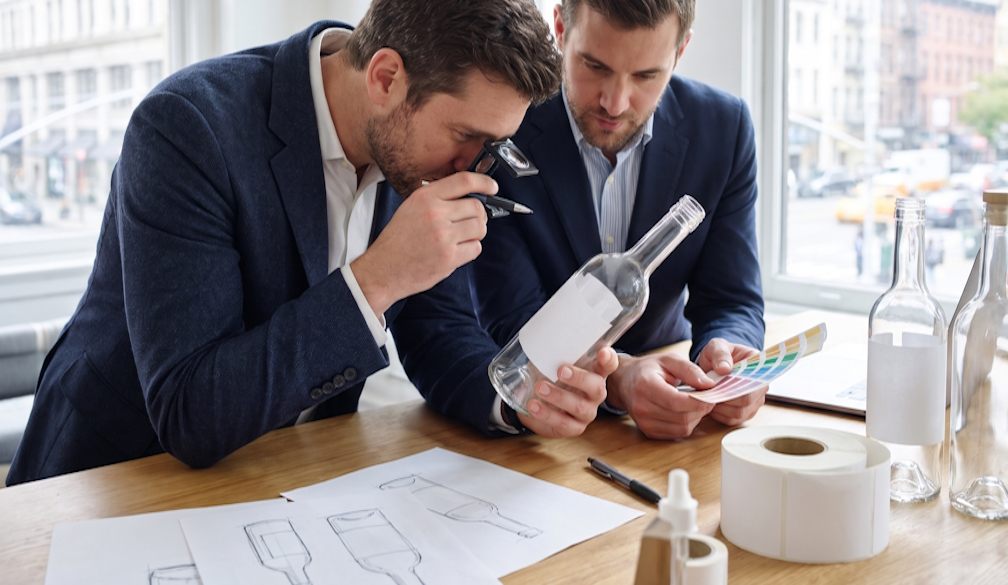
Product labels need to attract attention while making information easy to find and understand. On a bottle, the available space may be limited by the container’s shape, so every design decision matters. Bottle label printing should account for visual hierarchy, readable text and the practical conditions the label will encounter.
Hyde has a dedicated webpage outlining its bottle label printing service. Businesses preparing a label can review the published information and organise their requirements before discussing the job. Useful details include the bottle dimensions, intended quantity, artwork status and any handling conditions that could influence the label specification.
A design that looks good on a large monitor may be harder to read when reduced to the actual label size. Reviewing a realistic proof helps teams assess text size, contrast, spacing and alignment before approval.
Establish a Clear Visual Hierarchy
Readers should be able to identify the product and find key information without searching through competing elements. Use size, spacing and contrast to establish an order for the content. Decorative graphics can support the identity of a product, but they should not overwhelm essential wording.
Keep typefaces and styles consistent, and check that the design remains readable at its finished dimensions. Avoid placing small text over busy imagery or using colour combinations that make characters difficult to distinguish. Bottle label printing is most effective when the design remains clear at the scale and distance at which customers will read it.
Match Artwork to the Container
The shape of the bottle determines how much usable space is available and how the label will sit on the surface. Measure the intended container and confirm the label dimensions before finalising the layout. Curved surfaces can affect the appearance of text and graphics, particularly when key information sits close to an edge.
Check the position of the label in relation to the bottle’s front, back and any visible seams. Make sure important details remain visible when the container is displayed in its usual orientation. Reviewing a proof or sample can help teams spot alignment problems before committing to a production run.
Prepare Accurate Print Files
Use approved artwork and verify that the final file reflects the correct version of the design. Check spelling, product details, colour choices, images and any variable information. Where barcodes are included, make sure they are placed appropriately and can be checked according to the requirements of the product.
Maintain a record of the approved version so that future orders do not accidentally use an outdated file. If any detail changes, review the entire label rather than only the edited section. Hyde’s bottle label printing service page can be consulted when preparing to discuss printing requirements.
Consider the Customer’s View
Look at the label as a customer would see it on a shelf or in the hand. The product name should be easy to locate, and supporting details should remain readable without the design feeling crowded. If the bottle is usually displayed among similar products, clear visual hierarchy can help people distinguish the variants.
Ask someone unfamiliar with the artwork to review the proof and locate key information. Their feedback may reveal confusing wording or elements that compete for attention. Bottle label printing benefits from this practical check because the design needs to communicate clearly beyond the team that created it.
Prepare for Future Reorders
Once a design is approved, preserve the final artwork and the associated dimensions, material choices and other agreed details. This record can help ensure a future order uses the correct version. If the bottle, product information or intended conditions change, review the specification rather than assuming the old label remains suitable.
Hyde’s service page is a starting point for reviewing bottle label printing information. Confirm current requirements and production details directly with the provider, and keep an internal record of approved changes so that future runs remain consistent.
Review the Finished Result in Context
Labels should be assessed on the actual bottle, not only as a flat image. Check whether the text is legible, the label sits neatly and the design remains balanced when the bottle is viewed from normal angles. If the product will be chilled, exposed to moisture or handled frequently, consider whether the selected materials suit those conditions.
Businesses comparing bottle label printing options should confirm the material, size, finish and production details with the provider. Hyde’s online information offers a starting point for that conversation. A consistent approval process helps keep design intent, practical use and final output aligned.


