

'We had to Google a lot': what foster and kinship carers looking after babies told us about the lack of support
- Written by The Conversation

Foster and kinship carers are volunteers who provide day-to-day care to children who are unable to live safely with their parents. A kinship carer is someone who is either related to the child or has a previous relationship with the child (such as a neighbour or family friend). Prior to placement in their care, a foster carer is a stranger to the child.
There are roughly 9,000 foster carer households and 15,600 kinship carer households in Australia, providing care to nearly 46,000 children. Babies (under one year of age) enter out-of-home care at a higher rate than any other aged children.
Foster and kinship carers undergo an extensive screening process prior to authorisation and should receive ongoing support and training to assist them in their caregiving role.
However, our research, launched recently at the National Permanency Conference, found these carers are not well supported to care for babies.

40% of carers got no information or training on infant care
Typically, when a person discovers they are becoming a parent, they have access to pregnancy and parenting classes, and many other resources to prepare them to care for their baby.
When a baby is born, parents are taught by nurses and midwives how to hold, feed, bath and settle their baby.
After leaving the hospital, many also receive home visiting services which provide ongoing support for parents and their babies.
Unfortunately, foster and kinship carers of infants do not receive this same level of support.
We surveyed 232 foster and kinship carers who had provided care to a baby in out-of-home care sometime in the past five years. We also interviewed 13 carers to understand how to best support them in their caregiving role.
The survey asked carers whether they had received information or training related to eight key areas regarding infants:
nutrition
feeding
bathing
sleeping and settling
immunisation
developmental milestones
attachment; and
trauma.
Around 25% of carers received information on infant nutrition (such as what formula to use or when to introduce solids) and about 33% were given information on feeding (such as how to bottle-feed a baby).
Only 16% of carers reported receiving information to help them bathe a baby, settle a crying baby or put them to bed.
Only 25% of carers received information regarding childhood immunisation and 20% received information regarding typical developmental milestones (such as when babies should be able to lift their head, roll over or crawl).
These rates are surprisingly low given that the health care system provides basic caregiving information to all expectant parents either shortly before or after the birth of a child.
Babies who require separation from their parents due to safety issues often experience developmental trauma and struggle to form healthy attachments to others.
Poor attachment and during infancy can have major negative long-term effects on children.
Despite this, only 25% of carers received information on attachment and about 33% received information on developmental trauma.
In total, 40% of the carers in our study received no information or training at all related to caring for a baby.
‘We had to Google a lot of information’
The carers in our study were resourceful.
We asked those who reported receiving information or training whether it had been offered to them or if they had found it themselves.
The majority reported finding the information themselves. While this shows a desire to provide good quality care, it is concerning as we don’t know whether this information is from a credible source.
As one carer told us:
We had to Google a lot of information because we hadn’t had a baby for so long!
Carers were also motivated. While only 29% of carers reported receiving home visiting services, over 80% reported taking the babies in their care to the community health nurse.
Also, it should not be assumed carers don’t need information because they’ve done it before.
Just over 30% of the carers surveyed had no previous parenting experience before providing out-of-home care.
Many of those with parenting experience had not cared for a baby for several years.
In their interviews carers described themselves as “unprepared” and needing a “refresher” before receiving care of a baby.
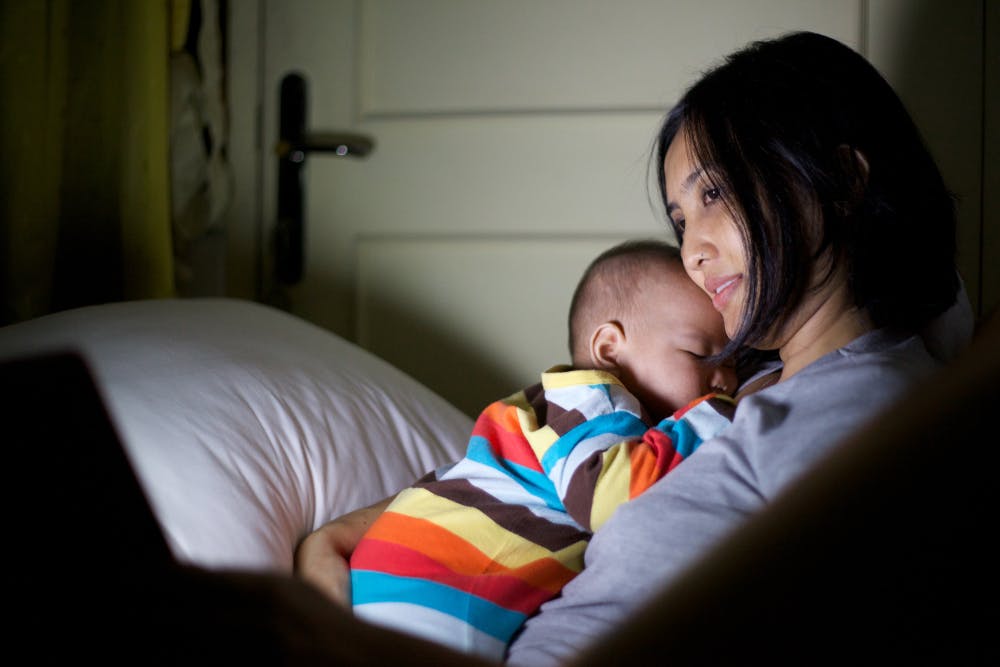 Some carers reported having to Google information on how to care for the baby they were fostering.
Shutterstock
Some carers reported having to Google information on how to care for the baby they were fostering.
Shutterstock
Three key recommendations
The United Nations says governments have the responsibility to ensure children grow and develop healthily.
This includes babies living in out-of-home care. But how can carers provide quality care if they are not trained and supported to do so?
When carers are not supported, they may worry about their ability to meet the needs of the baby in their care. This anxiety and self-doubt can cause carers to stop providing care.
As one carer put it:
I’m still in two minds myself about whether I would do this again.
Australia is already facing a shortage of carers and increasing numbers of babies are requiring care.
The carers in our study found caring for babies to be “rewarding” but indicated they would welcome training and support, such as home visiting services, to help them provide the best possible care to babies.
We recommend that foster and kinship carers caring for babies are provided:
- training related to basic infant care
- credible resources, and
- home visiting services.
This will help retain carers and ensure the best possible care is provided to babies in out-of-home care.


