

The cost of school uniforms is a barrier to education – but there are ways to level the playing field
- Written by The Conversation
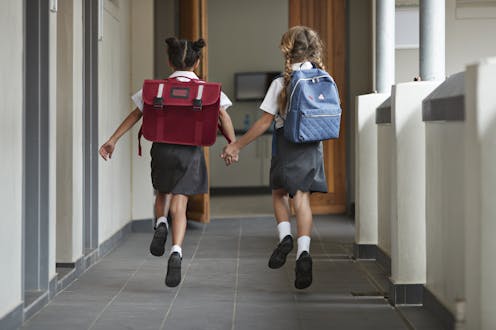
This year’s perennial back-to-school uniform discussion happens during a cost of living crisis. And we already know that the upfront and maintenance costs of school uniforms are a stress for families on lower incomes, in New Zealand and globally across rich and poor countries alike.
The Human Rights Commission even publishes school uniform guidelines, setting out how school policies can help pupils’ physical and mental health. And while cost is outside the guidelines’ scope, the commission acknowledges this is a common problem and it encourages schools to make uniforms accessible.
This is important, as uniform cost has been shown to reduce attendance and enrolment among pupils from lower income families. In other words, uniform affordability is an important factor in people accessing their right to state-funded education.
Given uniforms in themselves have no direct link to academic performance, there is a high price to pay for their being an obstacle to learning. However, there are things governments, schools and communities can do to improve this situation.
Uniform as ‘social camouflage’
It’s acknowledged across the political spectrum that education lifts people out of poverty, improves lives and boosts the economy. Indeed, the desire to remove the most outward signs of socioeconomic difference was a key reason school uniforms were adopted in the first place.
A well designed uniform should be comfortable, appealing and inclusive, easy to wear and allow physical activity. It can and should take away the pressure to wear expensive labels (sometimes called “social camouflage”), and remove distractions in class.
But if it’s unaffordable, many low-income students are no better off. Garments that were originally introduced to remove barriers can end up actually getting in the way of the right to a (theoretically) free education.
Government policy that bolsters existing initiatives would help, starting with a requirement for all schools to have a uniform policy. A nationwide overview of uniform costs, rules and dress codes could form the basis of a resource for schools to help develop best practice processes and principles that build on the Human Rights Commission guidelines.
With the government’s new equity index for funding high-need schools to improve students’ educational outcomes, it makes sense that the known obstacle of school uniform affordability doesn’t stop students getting through the gates.
New Zealand (along with other similar countries) could also amend its existing welfare grants process to better reflect the high upfront cost of school uniforms and make the eligibility criteria broader – especially given current inflation rates.
Benefits of simpler, more affordable uniforms
In New Zealand’s devolved system, where school boards and communities have significant control of school operations, uniform policies are influenced by local expectations. Uniform design reflects tradition, helps identify students and signals a school’s place in the education market.
And while uniforms have no direct impact on academic performance, they influence how comfortable students feel in the learning environment. So understanding the functions of a uniform can help determine its form.
Mental and physical comfort, respect, and physical activity all improve learning. This explains why a simpler sports-style uniform that hits a number of targets for physical activity, comfort and affordability has been adopted by both private and public schools.
However, choice and affordability are linked to supply and demand. To ensure a thriving market, schools should follow Commerce Commission guidelines to regularly review suppliers and encourage competition for their business.
Additionally, allowing some uniform items to be purchased from any retailer, as opposed to specific suppliers, works out cheaper overall. Schools should consult with parents about uniform purpose, expectation and changes, and be transparent about any profits made from selling new uniforms.
Level playing fields
We know those experiencing hardship often don’t ask for help because they feel ashamed. Schools can counter this by considering how hardship funds are administered and whether school uniforms can simply be supplied on enrolment.
Other strategies include having more expensive items, such as blazers, that can be borrowed when representing the school or for formal occasions; allowing students to discreetly borrow uniform items until their families can afford new or secondhand items; or simply giving students in need good quality secondhand uniforms.
Most schools have already established secondhand uniform sales, stocking good quality used items at a reasonable price.
As the Human Rights Commission guidelines make clear, school uniforms and policies about their use should be informed by considerations of human dignity, rights and Treaty of Waitangi principles.
These serve to shield pupils against racism and bullying, and protect culture, identity and religious expression, meaning students can feel comfortable and get on with learning. So let’s also think harder about uniform costs as integral to the value of our investment in education.


