

Can beetroot really improve athletic performance?
- Written by The Conversation
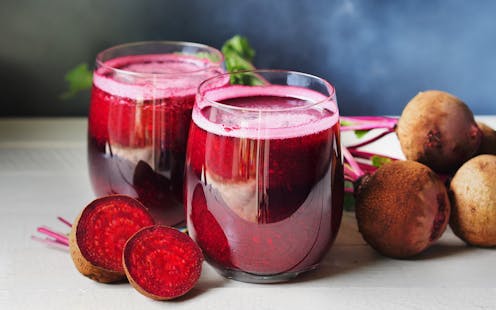
Beetroot is gaining popularity as a performance-enhancer for athletes and those wanting to gain a competitive advantage in running and cycling.
Some people juice beetroot, some eat it, others mix up a drink from the powdered form. But will it make a noticeable difference on how quickly we run a race or cycle up a hill?
Small benefits for some
A large systematic review in 2020 included 80 clinical trials, in which the included studies had participants randomly assigned to consume beetroot juice or not. It found consuming beetroot juice provided performance benefits for athletes.
In sports where every second or centimetre counts, this can be a significant improvement. In a 16.1 kilometre cycling time trial the gains linked to beetroot consumption were equivalent to 48 seconds.
But when the authors analysed subgroups within these studies they found beetroot juice wasn’t effective for women or elite athletes – though this could be because there were too few study participants in these groups to draw conclusions.
Another large systematic review in 2021 of 73 studies that looked at endurance athletes (who run, swim or cycle long distances) found similar results. Supplementation with beetroot (and other vegetables rich in nitrate) improved their time to exhaustion by an average of 25.3 seconds and the distance travelled by 163 metres.
This improvement was seen in recreational athletes, but not in elite athletes or sedentary people. This analysis didn’t look specifically at women.
What is it about beetroot?
Beetroots are rich in nitrate and anthocyanins. Both provide health benefits but it’s primarily the nitrates that give the performance benefits.
Once ingested, the nitrate is converted in the mouth by the local bacteria into nitrite. In the acidic conditions of the stomach, the nitrite is then converted to nitric oxide, which is absorbed into the bloodstream.
Nitric oxide dilates blood vessels, which delivers oxygen more quickly to the muscles, so energy can be burned to fuel the exercising muscles.
The result is that less energy is used for performance, which means it takes longer to tire.
Read more: Why nitrates and nitrites in processed meats are harmful – but those in vegetables aren’t
How can I use beetroot juice?
The Australian Institute of Sport (AIS) has assessed beetroot and classified it as a Group A supplement. This means there is strong scientific evidence for use in specific situations in sport.
The AIS advises beetroot supplementation can be beneficial for exercise, training and competitive events that lasts 4–30 minutes and in team sports with intermittent exercise.
For performance benefits, the AIS advises the beetroot product (be it juice, powder or food) should have between 350–600mg of inorganic nitrate in it. Check the label. There are several concentrated juices available on the market.
Beetroot contains about 250mg per 100g of nitrate, so you need to consume at least 200g of baked beetroot to get the same effect.
To give the nitrates time to be converted to nitric oxide and absorbed into your bloodstream, you need to consume the product 2–3 hours before training or competition. You may get added benefits drinking beetroot juice for several days leading up to training or competition.
However, don’t use antibacterial products like mouthwashes, chewing gums or lollies. These will kill the bacteria in your mouth needed to convert the nitrate to nitrite.
Are there any downsides?
Your urine will turn red, and this will make it difficult to determine if you are dehydrated. Your poo may also turn red.
Some people may experience an upset stomach when consuming beetroot juice. So try drinking it while training to determine if you have any problems. You don’t want to find this out on competition day.
What about nitrate from the rest of your diet?
While it’s difficult to consume enough nitrate to boost your athletic performance directly from vegetables before an event, consuming five serves of vegetables a day will help keep the nitric oxide levels elevated in your blood.
Vegetables higher in nitrate include celery, rocket, spinach, endive, leek, parsley, kohlrabi, Chinese cabbage and celeriac. There isn’t clear evidence about the effect of cooking and storage on nitrate levels, so it’s probably best to eat them in the way you enjoy the most.
However, it’s best to avoid cured meats with added nitrate. The additive is used to stop the growth of bacteria and adds flavour and colour, but the resulting sodium nitrite can increase the risk of cancer.
While beetroot may give you a small performance boost, don’t forget to tailor the rest of your training as well. Ensure you have enough carbohydrates and protein, and that you drink enough water. You may need to consult an exercise scientist and an accredited practising sports dietitian to get the best outcome.
Read more: Do athletes really need protein supplements?
Read more https://theconversation.com/can-beetroot-really-improve-athletic-performance-193221


