

Forget spy balloons, the world of surveillance has tried everything from schoolchildren to trained cats
- Written by The Conversation
The Chinese “spy balloon” shot down over the United States has brought the seemingly strange methods of surveillance and espionage into news headlines. Balloons have long been used for espionage – and not just for surveillance, as appears to be the case with this one.
In the 1950s, Soviet soldiers in East Germany often saw white balloons overhead. Rather than spying, these balloons dropped propaganda leaflets produced by US-backed groups in West Germany.
But the history of surveillance includes many operations that now appear strange or even absurd. Intelligence organisations often try creative solutions to outwit their targets. Many of these schemes remain classified. But from declassified material and the stories of former intelligence officers, we know the real world of Cold War espionage could be even stranger than fiction.
Acoustic kitties and spy animals
Intelligence agencies have long used not just human agents, but animal ones too. Operation Acoustic Kitty was a US Central Intelligence Agency (CIA) program to use cats as listening devices during the 1960s. Robert Wallace (former technical services director at the CIA) and H. Keith Melton, an intelligence historian, described the operation in their book Spycraft.
The CIA came up with the idea while monitoring an unnamed head of state. Officers noticed that during this leader’s confidential meetings, cats often wandered in and out of the room. No one would suspect a cat of being a trained spy. So the CIA trained and surgically implanted cats with transmitters and microphones, to send them to listen in on people’s conversations.
It’s not clear exactly what happened to the acoustic kitties. One former officer claimed the first cat was run over when they deployed it, but others dispute this. The only available official document on the program is heavily redacted. It indicates that the project was eventually abandoned – but the cats were trained and probably deployed.
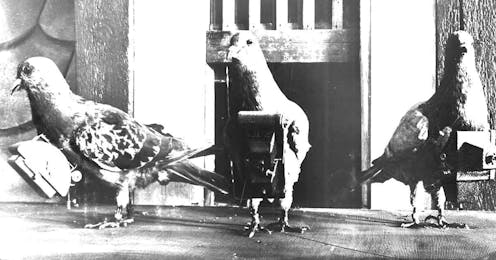
And so were many other animals: the CIA also trained ravens and pigeons, and the US Navy, Soviet intelligence, and maybe intelligence agencies in Putin’s Russia have used whales and dolphins for surveillance work.
The spy seal
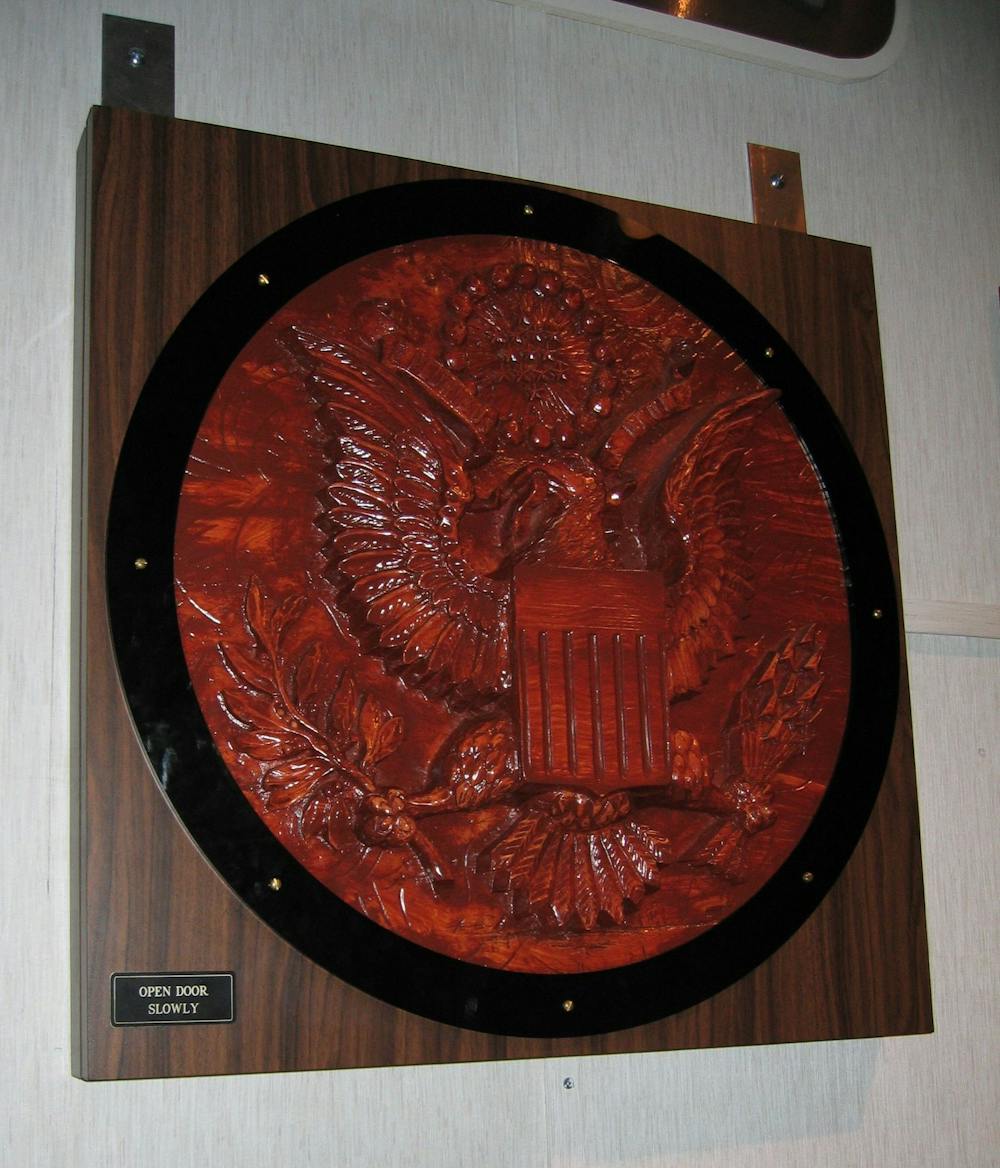
Intelligence organisations were not opposed to working with animals – or with children. The US Embassy in Moscow was covered in listening devices and microphones planted by the KGB, the Soviet security agency – including in the wall plaster. But the KGB’s most lucrative embassy bug was planted in the ambassador’s study. It had been hand-delivered by a group of Soviet schoolchildren in 1945. They were unaware that they carried a listening device when they presented the ambassador with a large, wooden US Great Seal for his study.
The seal spent the next seven years on the ambassador’s wall and sound waves entered through two tiny holes under the eagle’s beak. US intelligence officers smashed the eagle open when they discovered the device in 1952. But at first they couldn’t figure it out – it had no battery or power source.
The sophisticated device transmitted information when Soviet officers in a van parked outside bombarded it with microwaves. During the Cold War, you had to beware anyone bearing gifts – even schoolkids.
ASIO in the ceiling
In Australia, surveillance sometimes involved unlikely agents too. One of the earliest surveillance targets of the Australian Security Intelligence Organisation (ASIO) was a flat in Sydney’s Kings Cross, where Soviet press representatives lived. But these press representatives also often worked for the KGB on the side.
ASIO rented the flat above the Russians and a married couple, Joan and Dudley Doherty – both ASIO officers – moved in. While they lived there, they had two children. The kids grew up padding around in slippers, learning to whisper and stay quiet, so the officers in their living room wearing giant headphones could listen to what was happening below.
But the operation almost never got started. When ASIO installed the listening device, drilling down into the ceiling of the Russians’ flat, they dislodged some plaster. After a persuasive chat with the building’s caretaker and a quick patch-up job, they were ready to go – but it was a close call.
And after two years of gathering intelligence, one of the Russians did spot the device in their ceiling. He confronted Joan Doherty about it and even tried, unsuccessfully, to enter her apartment. The operation had to be suspended for months afterwards. But it was eventually reactivated. The bug was never as useful as they hoped, but hundreds of pages of intelligence came from the Doherty’s family home into ASIO’s files.
Necessity is often the mother of invention in the world of surveillance. Intelligence agencies need to avoid detection. Officers work to outsmart their targets and collect information on what the target does and says, a process that can lead them to deploy everything from balloons to children and even cats.


