

Bendy joints, stretchy skin, clumsiness. Why hypermobile Ehlers-Danlos Syndrome is often missed – and what it has to do with autism
- Written by The Conversation
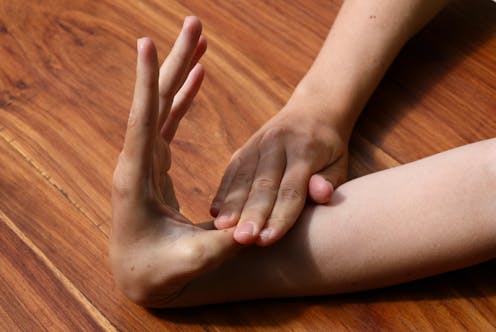
There is growing interest in a connective tissue condition called Ehlers-Danlos Syndrome.
As more adults are diagnosed with autism, some might not be aware their history of bendy joints and clumsiness are indications they may also have a common form of Ehlers-Danlos Syndrome.
What is this condition and how are the two diagnoses connected?
So, what is it?
Ehlers-Danlos Syndrome is a group of 13 hereditary connective tissue disorders. It was first described over a century ago when two physicians each noticed some of their patients shared common characteristics of stretchy skin, easy bruising and hypermobile joints.
The condition can cause extremely poor quality of life and is associated with a vast array of other chronic illnesses. Despite this, clinicians in Australia remain generally unaware of its existence. This can result in distressing interactions with health professionals and delayed diagnosis.
Gene variants have been discovered for 12 of the Ehlers-Danlos Syndrome subtypes. While some of these subtypes are known to cause life-threatening problems such as vascular aneurysms, they are generally also very rare.
This isn’t the case for the 13th subtype: hypermobile Ehlers-Danlos Syndrome. It has no identified genetic variant and makes up 80–90% of all Ehlers-Danlos Syndrome cases. It’s thought to affect at least one in every 3,100–5,000 people.
However, the lack of a reliable biological marker for hypermobile Ehlers-Danlos Syndrome has resulted in poor tracking and poor awareness. It also seems some physicians confuse hypermobile Ehlers-Danlos Syndrome with “benign joint hypermobility syndrome” and dismiss some of the problems that accompany it.
Far from benign
Aside from the painful musculoskeletal conditions experienced (including joint dislocations, disc prolapses and malformations of the spine), those with hypermobile Ehlers-Danlos Syndrome are prone to gut, eye, nervous system, heart, kidney, skin, immune and reproductive conditions.
The British Medical Journal published 2020 guidelines reporting patients with hypermobile Ehlers-Danlos Syndrome and another closely related condition (hypermobile spectrum disorder) represented one third of the presentations to hospital gut clinics in the United Kingdom. These patients tended to be young females with reduced quality of life and malnutrition.
There is also a high association between hypermobile Ehlers-Danlos Syndrome and neurodivergent conditions such as autism. Neurodivergent adults are statistically more likely to experience joint hypermobility and pain when compared to the general population.
There are several overlapping characteristics between hypermobile Ehlers-Danlos Syndrome and autism, including gross motor difficulties, sensory hypersensitivities and dysfunction of the autonomic nervous system. This part of the nervous system regulates involuntary bodily functions such as breathing, heartbeat and digestion.
The exact nature of how autism and hypermobile Ehlers-Danlos Syndrome are linked is not yet clear.
Around one half of people with hypermobile Ehlers-Danlos Syndrome are also diagnosed with postural orthostatic tachycardia syndrome (POTS) – a debilitating condition which results in gut, bladder, sweat and blood pressure problems.
Diagnosis and supports
So far, there is no treatment for the underlying condition of hypermobile Ehlers-Danlos Syndrome. Instead, treating clinicians prioritise supportive therapies.
This might involve strengthening exercises, pain management strategies or reducing the risks associated with surgery (which is sometimes required to stabilise joints). Doctors might treat autonomic dysfunction such as low blood pressure or fast heart rate. Dietitians focus on diet to improve appetite and help identify food intolerance, which can often occur.
In short, it takes a multidisicplinary team who understand the condition and work together with the patient to manage their complex condition.
The challenge for many patients is to get this kind of help in the first place, especially if they have a combination of hypermobile Ehlers-Danlos Syndrome, autism and/or POTS.
A patient might present to numerous doctors with vague but life-altering symptoms: chronic joint pain, dizziness, palpitations, excess sweating, insomnia, poor concentration, nausea, abdominal pain, vomiting, bladder problems and weight loss. They might be sensitive to light and noise and the chaos of noisy waiting rooms might make it difficult to think or articulate their concerns.
Standard tests may appear normal. Consequently, the patient might be misdiagnosed as anxious, depressed or suffering from an eating disorder. Subsequent medications may worsen the symptoms.

Read more: Autism is still underdiagnosed in girls and women. That can compound the challenges they face
Collaborate and listen
Dozens of young men and women seen in our specialist clinic and echoed in academic literature report experiencing misdiagnosis. The cumulative effects of negative encounters with medical professionals can lead to worsening, but preventable, health outcomes and “clinician-associated traumatisation”.
Hypermobile Ehlers-Danlos is an under-recognised – but likely common – condition that can result in poor quality of life and social exclusion. People with the condition deserve a concerted and collaborative effort to raise awareness and improve treatments for their complex physical, emotional and psychological needs.
Those seeking more information and support can visit:


