

Volcano eruptions are notoriously hard to forecast. A new method using lasers could be the key
- Written by The Conversation
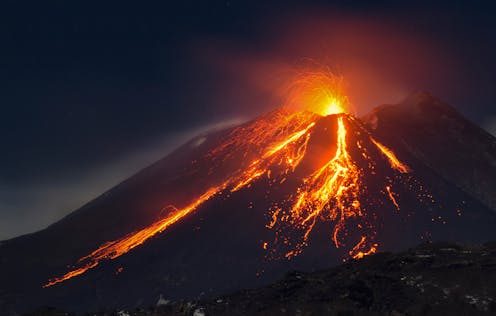
When you hear news reports about volcanoes spewing lava and ash, you may worry about the people nearby. In fact, almost one in ten people around the world live within 100 kilometres of an active volcano. For those living close to volcanoes, farming on their fertile soils, or visiting their spectacular landscapes, it is crucial to understand the drivers of eruption.
Why is the volcano erupting? How will the eruption evolve? When will it finish?
Our new research published today in Science Advances applies laser technology to read into the chemical composition of erupted magma over time.
Because the chemistry of magmas affects their fluidity, explosivity and hazard potential, our work could help future monitoring and forecasting of the evolution of volcanic eruptions.
Read more: Why can't we predict when a volcano will erupt?
Untangling the chemistry of erupted melt
Magma – molten rock – is composed of liquid (known as “melt”), gas and crystals that grow as the temperature of the magma drops during its journey up to Earth’s surface.
When the magma erupts to become a lava flow, it will release the gas (which contains water vapour, carbon dioxide, sulphur dioxide and other compounds) and cool down into a volcanic rock. This rock contains crystals cooled slowly inside the volcano, embedded in a finer rock matrix cooled rapidly at the surface.
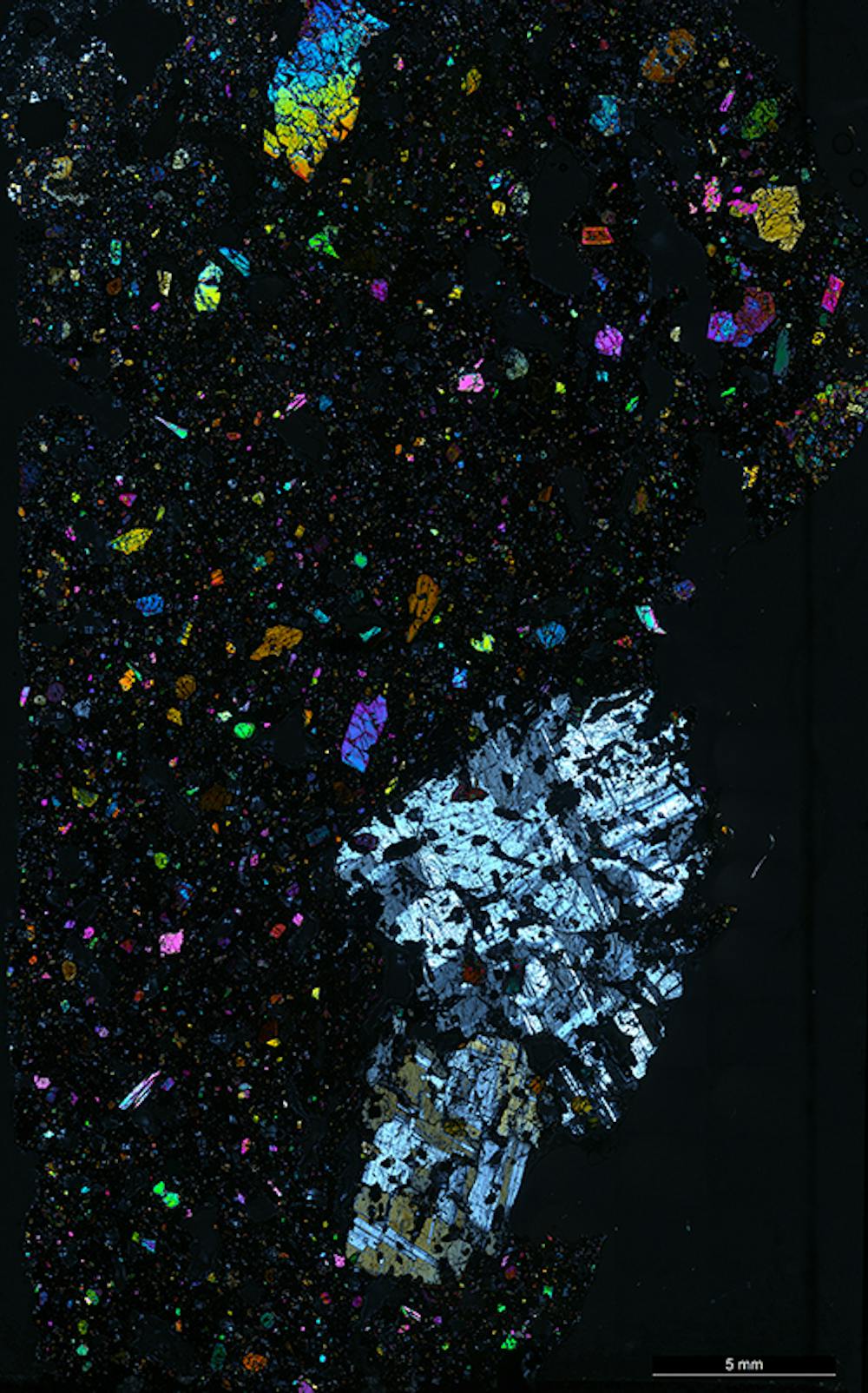
As a result, volcanic rocks can look a bit like “rocky road” chocolate. The crystals formed in the guts of the volcano are excellent archives of the run-up to eruption. However, the crystals can get in the way when we want to focus on the melt that carries them to the surface, and how the melt properties vary throughout the eruption.
To isolate the melt signal, we used an ultraviolet laser, similar to the ones used for eye surgery, to blast the rock matrix between larger crystals.
We then analysed the laser-generated particles by mass spectrometry to determine the chemical composition of the volcanic matrix. The method allows for a rapid chemical analysis.
This provides a faster and more detailed measure of melt chemistry and its evolution over time, compared to traditional analysis of the entire rock, or to painstaking separation of matrix and crystal fragments from crushed rock samples. Even if we call the crystals “large”, they are often as small as a grain of salt (or up to a chickpea in size if you are lucky!) and difficult to remove.
Read more: The 'pulse' of a volcano can be used to help predict its next eruption
A destructive disaster in the Canary Islands
Our study focused on the 2021 eruption at La Palma, the most destructive volcanic eruption on historical record in the Canary Islands.
From September to December 2021, a total of 160 cubic metres of lava covered more than 12 square kilometres of land. It destroyed more than 1,600 homes, forced the evacuation of more than 7,000 people and generated losses of more than €860 million (AU$1.4 billion).
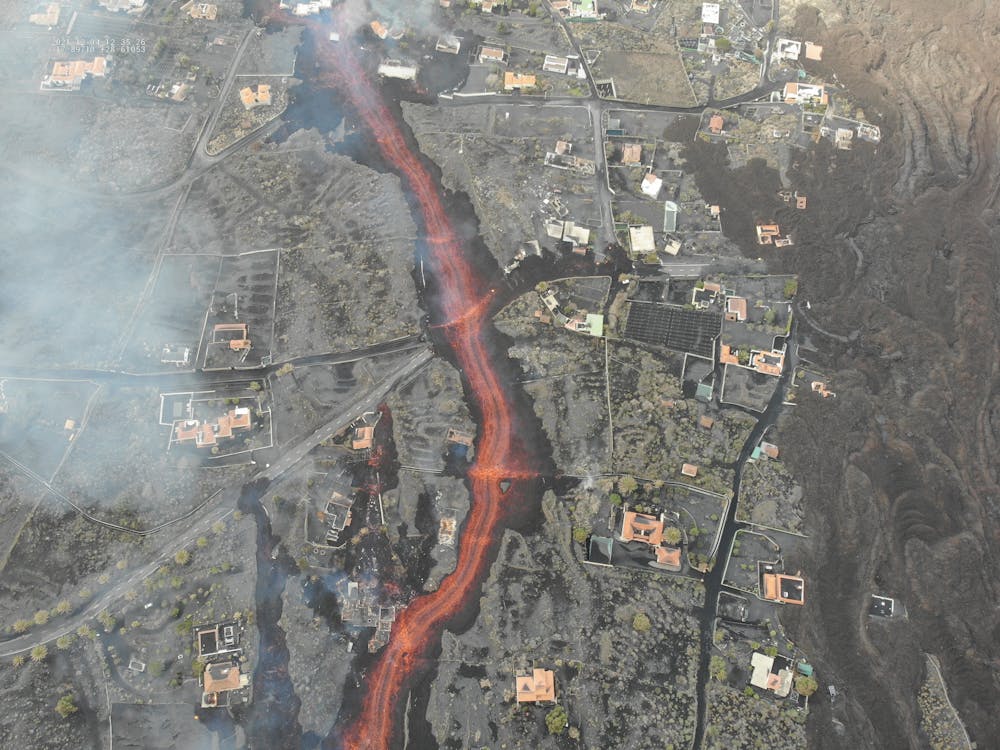 Drone image of a lava flow from the 2021 La Palma eruption (December 4 2021, houses for scale).
Instituto Geologico y Minero de Espana, Author provided
Drone image of a lava flow from the 2021 La Palma eruption (December 4 2021, houses for scale).
Instituto Geologico y Minero de Espana, Author provided
We analysed lava samples collected systematically by our collaborators in Spain throughout the three months of eruption. These are precious samples as we know their exact eruption day, and many of the sampling sites are now covered by later lavas from the eruption.
Using the laser-powered method, we could see variations in lava chemistry linked to changes in earthquakes and sulphur dioxide emissions, as well as eruption style and the resulting hazards. This included a change from thick lavas that acted as a bulldozer at the start of the eruption, to runny lavas that created rapid lava rivers and lava tunnels later in the eruption.
We also found a key change in lava chemistry about two weeks before the eruption ended, which suggests cooling of the magma due to a dropping magma supply.
Similar changes could be monitored as a signal of eruption wind-down in future eruptions around the world.
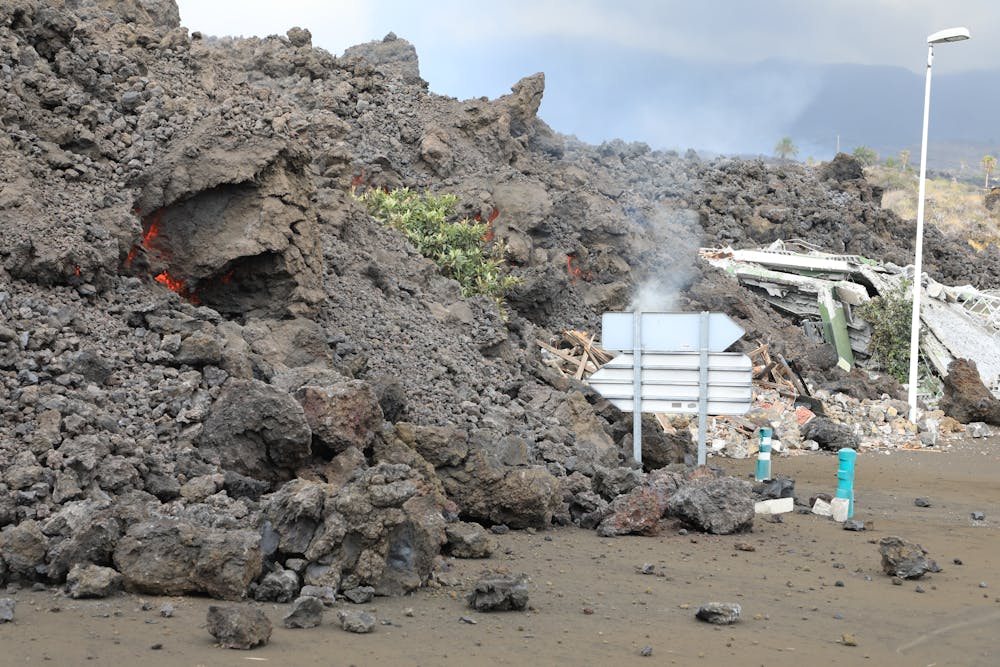 Early lavas from the 2021 La Palma eruption were voluminous and blocky, acting as a hot ‘bulldozer’ (September 22 2021, traffic sign for scale).
JJ Coello Bravo, Author provided
Early lavas from the 2021 La Palma eruption were voluminous and blocky, acting as a hot ‘bulldozer’ (September 22 2021, traffic sign for scale).
JJ Coello Bravo, Author provided
Forecasting volcanic activity
We cannot prevent volcanoes from erupting, and we cannot yet travel inside them like French sci-fi author Jules Verne once envisioned. But volcano monitoring has improved enormously in the last few decades to allow us to indirectly ‘peek into’ volcanoes and better forecast their activity.
Our work aims to provide a laboratory tool for testing volcanic samples collected during future eruptions. The goal is to read into the evolution of eruptions, to understand why they start and when they will end.
With about 50 volcanoes erupting at any given time around the world, you will soon see another volcano erupting in the news. This time, you can consider the importance of volcano science to improve our understanding of how volcanoes work and what drives them to erupt, to protect the people around them.


