

Creating ‘sponge cities’ to cope with more rainfall needn't cost billions – but NZ has to start now
- Written by The Conversation
Tune into news from about any part of the planet, and there will likely be a headline about extreme weather. While these stories will be specific to the location, they all tend to include the amplifying effects of climate change.
This includes the wildfire devastation on the island of Maui in Hawaii, where rising temperatures have dried vegetation and made the risk that much greater. In Italy, summer temperatures hit an all-time high one week, followed by massive hail storms and flooding the next.
Flooding in Slovenia recently left three people dead and caused an estimated €500 million in damage. At the same time, rainfall in Beijing has exceeded a 140-year record, causing wide-scale flooding and leaving 21 dead.
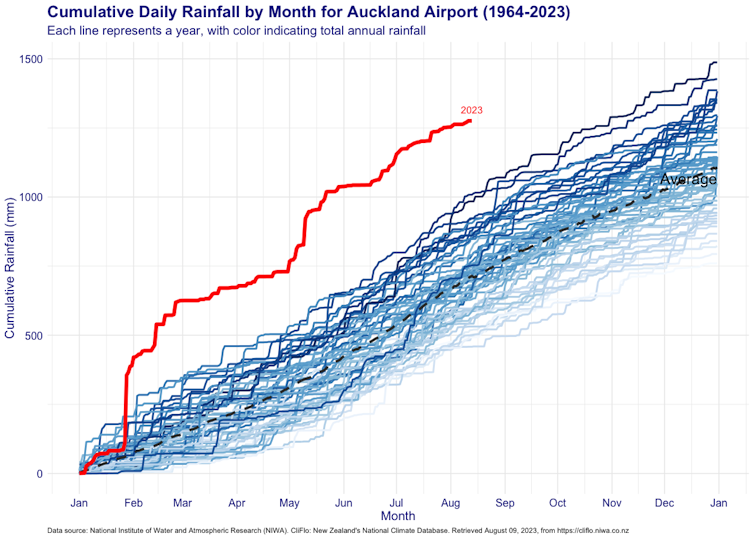
These northern hemisphere summer events mirror what happened last summer in Auckland, classified as a one-in-200-year event, and elsewhere in the North Island. So far this year, rainfall at Auckland Airport has surpassed all records dating back to 1964.
Given more rainfall is one of the likeliest symptoms of a changing climate, the new report from the Helen Clark Foundation and WSP – Sponge Cities: Can they help us survive more intense rainfall? – is a timely (and sobering) reminder of the urgency of the challenge.


