

If we do it right, we can replant trees and shrubs to store carbon – and restore biodiversity
- Written by The Conversation
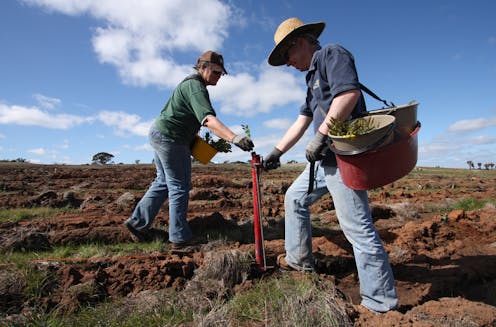
This is how carbon farming works. Farmers plant trees on abandoned farmland. The trees take in carbon from the atmosphere as they grow, acting as a natural sink to offset some emissions. For farmers, these carbon-storing plants pay off with carbon credits.
It sounds simple. But in recent years, the technique has come under fire over claims the approach is not delivering the carbon credits required to offset Australia’s carbon emissions.
This comes amid a broader crisis of confidence in carbon offsets and credits.
As a restoration scientist, I believe it’s good the industry gets more scrutiny. But we should not write off carbon farming. If done properly, carbon farming can also restore lost habitat and help tackle the global biodiversity crisis. As Earth loses more and more species, large-scale restoration is now essential.
We know keeping existing habitat and restoring degraded land to habitat will benefit 86% of the over 1,300 threatened species in Australia. At one well-run carbon farming initiative in southwestern Australia, for instance, we saw a rare malleefowl – a bird that is exceptionally fussy about where it lives.
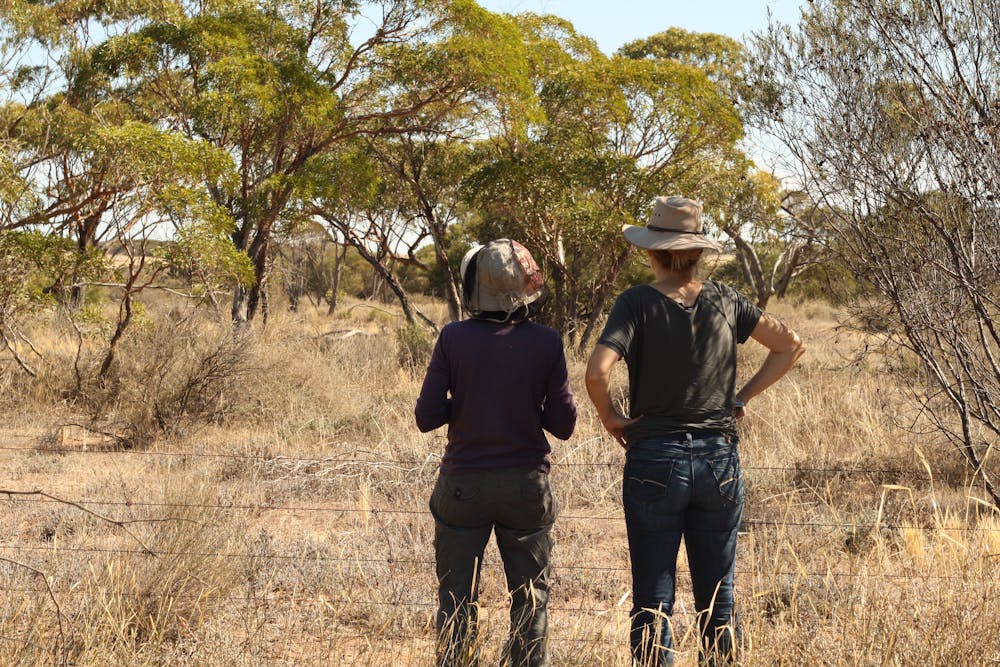
Carbon farming can be a win-win – if done right
There are good and bad ways to do carbon farming. It’s wrong to claim credits for the growth of native remnant vegetation caused by rainfall, for instance, rather than regrowth after ending livestock grazing or other deliberate human intervention. It’s also wrong to claim credits for “avoided deforestation” – leaving vegetation intact when it was never intended to be cleared. We should also avoid planting trees in grasslands, which have their own set of species and should not be replaced.
Some carbon farming efforts have been run like plantations, where you plant a single fast-growing species such as blue mallee. The assumption here is monocultures like this store more carbon than a mix of species.
But we and other researchers have found this isn’t the case. Planting a diverse range of trees – like in a real forest – can store just as much carbon as monocultures.
Shrubs store less carbon than trees but play an important role in restoration. Their tangle of branches and leaves can offer safe harbour for smaller birds, for instance. Shrubs also boost projects’ resilience to drought and fire as they respond differently, which helps in recovery.
There would be no penalty to farmers for planting shrubs if the government’s planned nature repair market comes into force. Biodiverse projects could earn both carbon and biodiversity credits.
This would open the door to a win-win. Carbon-farming efforts could double as nature restoration projects, if we avoid tree monocultures and focus on restoring biodiversity while storing carbon. Australia has 13 million hectares of degraded land, meaning there’s plenty of room for restoration without taking farmland or compromising agricultural production.
Australia could benefit
As critics of carbon farming have pointed out, carbon credits from tree planting can be rubbery. But we shouldn’t tar all projects with the same brush.
In Australia, a number of companies are offering high-integrity carbon credits from biodiverse native tree planting projects, such as Carbon Positive Australia and Greening Australia.
Nature restoration is likely to become more attractive to investors because of the potential for growth in natural capital and employment.
As much as restoration is needed, so too is ongoing care such as feral animal control and leaving remnant vegetation intact.
Climate change is, unfortunately, threatening the environmental restoration which can help reduce its effects. In dryland Australia, drought makes it harder for seedlings to survive and for trees or shrubs to grow well even once established.
While many of Australia’s native plants are tough enough to weather fires, more frequent fires make it harder to bounce back. Plants need time between fires to grow rootstock and develop seed banks.
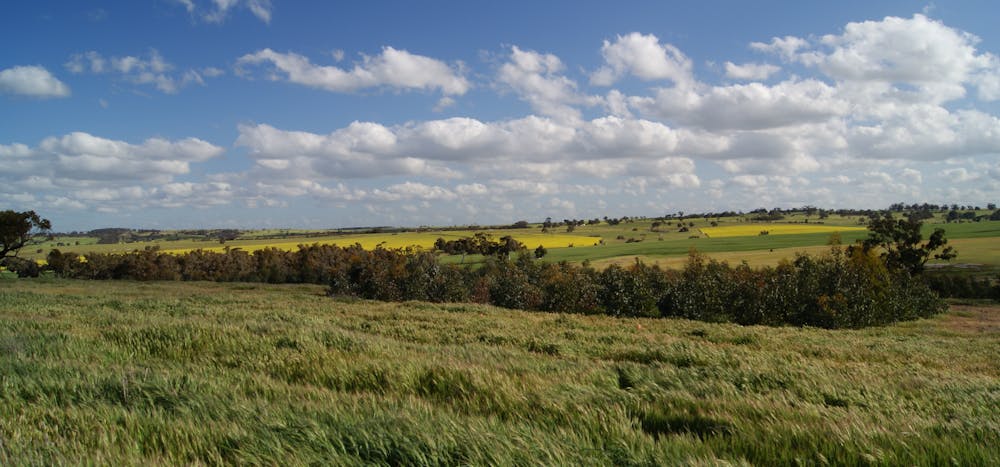 We have been researching how mixed-species revegetation efforts store carbon at the University of Western Australia’s research farm Ridgefield.
Rachel Standish, CC BY-ND
We have been researching how mixed-species revegetation efforts store carbon at the University of Western Australia’s research farm Ridgefield.
Rachel Standish, CC BY-ND
Biodiversity matters
When we talk about biodiversity, we’re talking about the richness of life.
To date, Australia’s carbon farming efforts vary a great deal in how they protect biodiversity. Think of the difference in walking through a blue mallee or sugar gum plantation – where there are few birds or other species – compared to walking through a patch of native forest. Some carbon farms can be diverse.
Restoration efforts which attract more species will come to function more like a true native ecosystem typical of their region.
This is not to say restoration work is easy. Turning a weed-filled paddock worn down by decades of agricultural use is tough. Even native species such as kangaroos and emus can become challenges by eating seedlings.
Treating experimentation as part of practice and publicly reporting successes and failures can help the industry progress. For instance, our restoration research has found native shrubs return if given the chance – but not understorey species.
In defence of carbon farming
Carbon farming is new. While some efforts may well be aimed at gaming the system, there are many others genuinely seeking ways of using nature to store the carbon we’ve released into the atmosphere. As this new approach progresses, there will be failures. But a failure is not necessarily greenwashing.
And as Australia, like many other nations, sets ambitious restoration targets to protect 30% of land and sea by 2030, we will need to experiment, innovate, work alongside Traditional Owners and plan to be there for the long term.
We are already seeing hopeful signs restoration work does yield benefits for at least some species, such as ants and woodland birds.
Restoration can work: for us, for climate and for our species. Let’s make sure it does work.


