

Think potholes on our roads are getting worse? You're right – and here's why
- Written by The Conversation
If you’re a driver, particularly in the country, you could be forgiven for thinking potholes have become a design feature of Australia’s local roads.
You would certainly know they are in a state of disrepair. And you have every reason to be fed up, because bad roads are dangerous, they increase your travel time, and they force you to spend more on fuel and on car maintenance.
They are getting worse because we’re not spending enough to maintain them.
Three-quarters of our roads are managed by local councils.
Every year, those councils spend A$1 billion less on maintenance than is needed to keep those roads in their current condition – let alone improve them.
The underspend is largest in regional and remote areas.
New Grattan Institute research finds the typical regional area has a funding shortfall of more 40%. In remote areas, it’s more than 75%.
Federal funding is falling behind
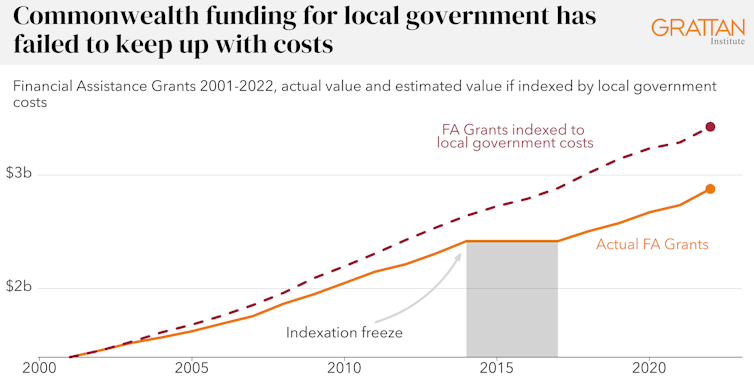
One reason for this underspend is that untied federal government grants to local councils haven’t kept pace with soaring costs.
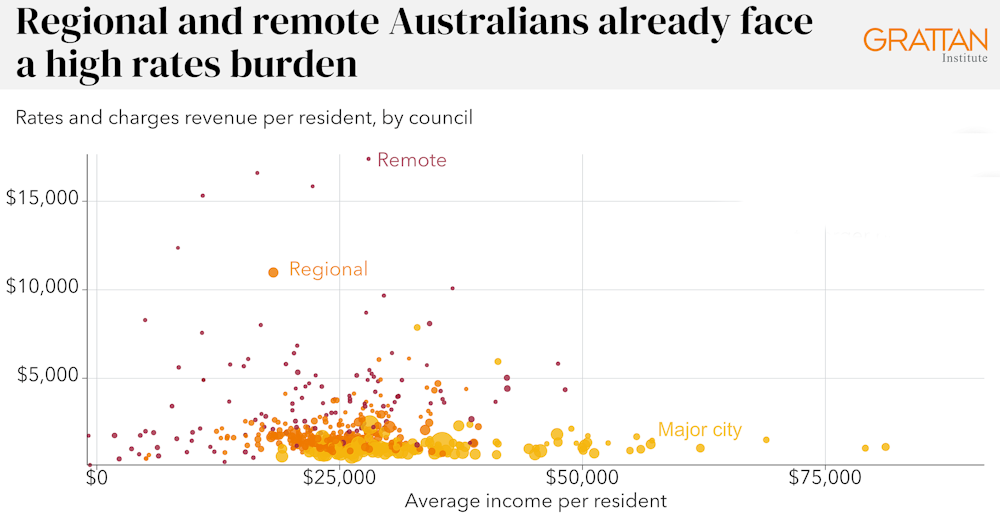
Councils raise most of their own revenue – 80% on average. But in large parts of the country, there are a lot of roads and not enough ratepayers to pay for them.
Rural and remote councils have limited ability to raise more revenue from ratepayers. Their ratepayers already pay higher rates than those in cities, despite having lower average incomes.
Rate caps in place in New South Wales and Victoria also make it difficult for councils to raise more revenue.
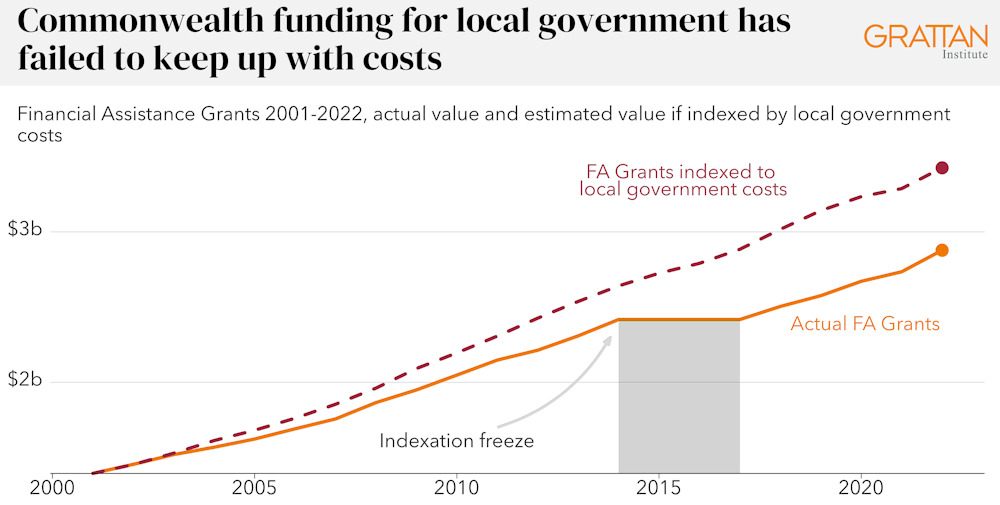
Councils receive top-up grants from the federal and state governments. The primary grants from the federal government, available for councils to spend as they see fit – including on roads – are called Financial Assistance Grants.
These are worth about $3 billion a year.
But their value has not kept pace with rising costs. If they had kept pace, on our estimates they would be 20% higher, at $3.6 billion per year.
 Grattan Institute, 2023
Road use is growing, but maintenance isn’t
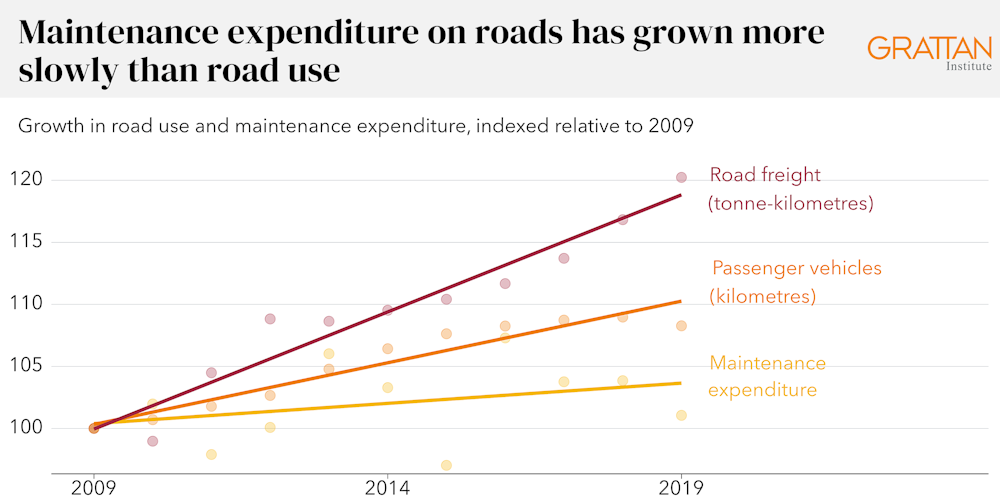
Another reason for the underspend is that even as funding dries up, we’re using roads more.
A growing population means both more cars on our roads and more trucks needed to keep our shelves stocked.
But despite the extra damage to our roads, spending on maintenance has stalled.
Grattan Institute, 2023
Road use is growing, but maintenance isn’t
Another reason for the underspend is that even as funding dries up, we’re using roads more.
A growing population means both more cars on our roads and more trucks needed to keep our shelves stocked.
But despite the extra damage to our roads, spending on maintenance has stalled.
 Grattan Institute, 2023
Councils are spending more on other things
Another reason roads are underfunded is that councils are coming under increasing pressure to fund other services.
The legislation governing councils doesn’t clearly define what councils are responsible for, and there is no shortage of services communities want.
Spending on transport has fallen from almost half of local government spending in the 1960s to 21% today.
Environmental protection was only identified as its own area of spending for councils in 2018, but it now makes up 15% of all council spending.
Grattan Institute, 2023
Councils are spending more on other things
Another reason roads are underfunded is that councils are coming under increasing pressure to fund other services.
The legislation governing councils doesn’t clearly define what councils are responsible for, and there is no shortage of services communities want.
Spending on transport has fallen from almost half of local government spending in the 1960s to 21% today.
Environmental protection was only identified as its own area of spending for councils in 2018, but it now makes up 15% of all council spending.


