

The government has announced plans to regulate smart TV home screens: what the new rules mean for you
- Written by The Conversation
Communications Minister Michelle Rowland has today introduced legislation that will require smart TV manufacturers to ensure we can easily find local broadcasters – including ABC, SBS and the commercial networks – when we turn on our TVs.
This “prominence” law will require TV manufacturers to preinstall iview, SBS On Demand, 9Now, 7Plus and 10Play on all smart TVs sold in Australia. It will also ensure these apps are not unfairly hidden in the user interface compared to major players like Netflix and Disney+.
This prominence law was recently the subject of heated discussion between the free-to-air networks, TV platforms, manufacturers and Foxtel – a pseudo-debate driven by industry scare campaigns.
But there is little reason for users to be alarmed.
The government’s proposed smart TV law is a light-touch change that will support our local content and public-service broadcasting ecosystem without compromising the user experience.
Smart TVs need smart regulation
Since 2019, our team at RMIT has been studying smart TVs as part of an Australian Research Council project. During this time we observed significant changes in the smart TV marketplace that point to the need for careful regulation.
Major TV manufacturers have reinvented themselves as advertising platforms. To generate ad revenue, they charge apps fees for prominence: advertising dollars determine the order in which streaming apps appear when you turn on your smart TV.
Samsung, LG, Hisense and TCL have also launched their own FAST (Free Advertiser Supported TV) channels, which are actively promoted on the TV home screen.
One consequence of these commercial arrangements is reduced visibility of local apps and services. The smart TV testing we conducted at RMIT found local services are much less prominent and less frequently preinstalled than Netflix, Disney+ and other US-based services that do global prominence deals with manufacturers.
Why is this a problem? Our research found a third of Australian users do not know how to download smart TV apps. For these users, the smart TV is a preconfigured device: if local apps aren’t on the TV when it comes home from the store they will likely never be installed.
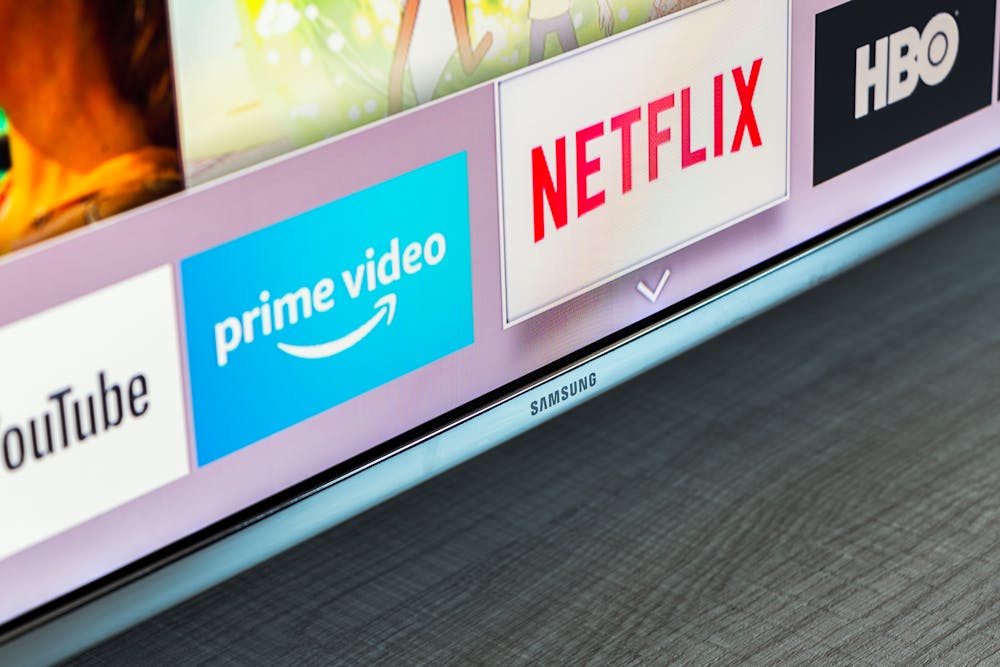
In other words, manufacturers rely on the inertia bias of users to opt for prominently positioned advertiser apps.
Within this environment, local streamers and other smaller players are structurally disadvantaged. In particular, our public-service broadcasters – who do not have the resources to pay for prominence in the attention economy of the smart TV interface – would face a dim future.
How will the prominence law work?
The key feature of the new law, which will take effect mid-2025, is a “must carry” requirement. While ACMA (Australian Communications and Media Authority) will clarify the detail of the rules in coming months, the government’s intention is to require manufacturers of smart TVs and connected TV devices sold in Australia to preinstall the streaming apps of Australian free-to-air channels.
These apps need to have their own home screen shortcuts, which must be of equivalent size and format to those of other streaming services. This will prevent manufacturers trying to bury these shortcuts in favour of paying advertisers’ apps.
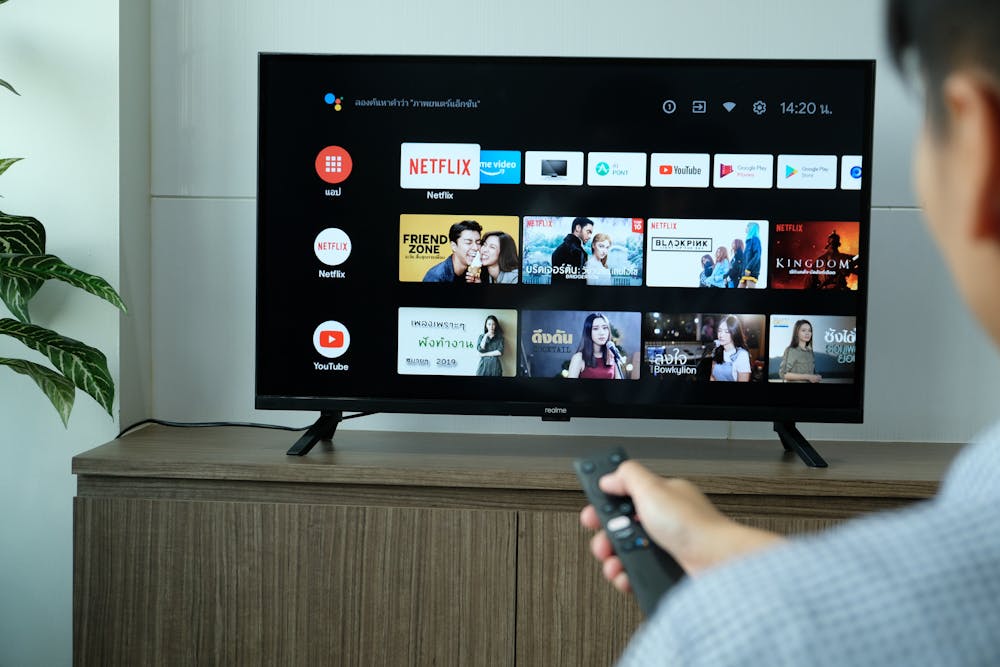 Free-to-air Australian channels will need to have their own shortcuts.
Shutterstock
Free-to-air Australian channels will need to have their own shortcuts.
Shutterstock
However, the order of tiles is left up to the manufacturer – and, importantly, users are free to delete or move the tiles as they wish. So ultimate control of the device still rests with the user.
Our research found a clear majority (around 59%) of Australian adults support compulsory preinstallation of broadcaster apps on new smart TVs. Only around 15% of users said they disagreed with compulsory preinstallation. The rest were neutral or unsure.
This suggests any user backlash against the proposed changes will be modest.
What about TV search and recommendations?
While the free-to-air broadcasters will be pleased with this outcome, they have not received everything they asked for.
The broadcast lobby pushed hard for a must-promote rule, which would have placed their content first in the recommendations and search results.
The government has rejected this idea in favour of the more modest must-carry rule. The order of results in search and recommendations will be left up to the manufacturer, as is presently the case.
The long view
Some may argue any intervention in smart TVs is an overreach by government. But the reality is that almost every country regulates television for cultural, industry and security reasons. Many national regulators are considering prominence rules similar to what has been introduced in Australia today.
Smart TVs – as the new distribution platform for television content – clearly need to be moved into the scope of regulation over the long term.
In doing this, government must balance the competing priorities of user autonomy, local industry needs, and existing market arrangements.
The proposed prominence is a step in the right direction – but only the first step in what will surely be a complex process of media reform.
Read more: Apple, Disney and Netflix's streaming battle isn't winner-take-all


