

How the retailing contest between CBDs, shopping centres and online will reshape our cities
- Written by The Conversation
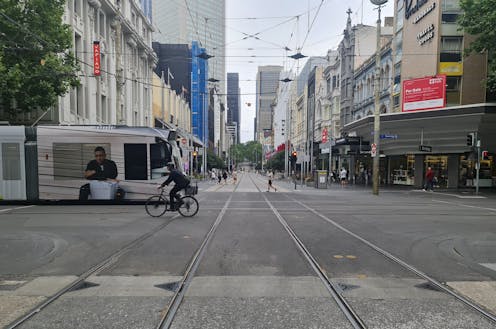
Retail activity has been a defining facet of cities since antiquity. The Greek Agora and Roman Forum may be viewed as the original CBDs – central business districts, or what urban planners call activity centres.
Retail spaces have evolved over time. Urbanisation, mass production and the rise of conspicuous consumption led to the high street and CBD dominating the retail landscape across the Western world from the late 19th century until the mid-20th century.
The 21st-century retail landscape has become more diverse and competitive. The range of physical and virtual retail spaces, retailers, products and prices leaves consumers spoilt for choice.
Retailing is more than just about consumption. It’s Australia’s fourth-largest employment sector and plays a major role in shaping our cities. Retail helps define a city’s identity and brand and thus attract visitors. But the retail landscape and consumer behaviour are changing, and changing fast!
Read more: What makes an ideal main street? This is what shoppers told us
The place to be and be seen
In Australia (and elsewhere), the CBD was at the epicentre of the evolution of discrete retail spaces. It offered a smorgasbord of independently owned shops, national and international chain stores and department stores. These were located in laneways, shopping arcades, main streets and multistorey shopping centres.
Centrality, easy public transport access and a largely suburban-based commuter workforce explain the dominance of the CBD in the 20th century.
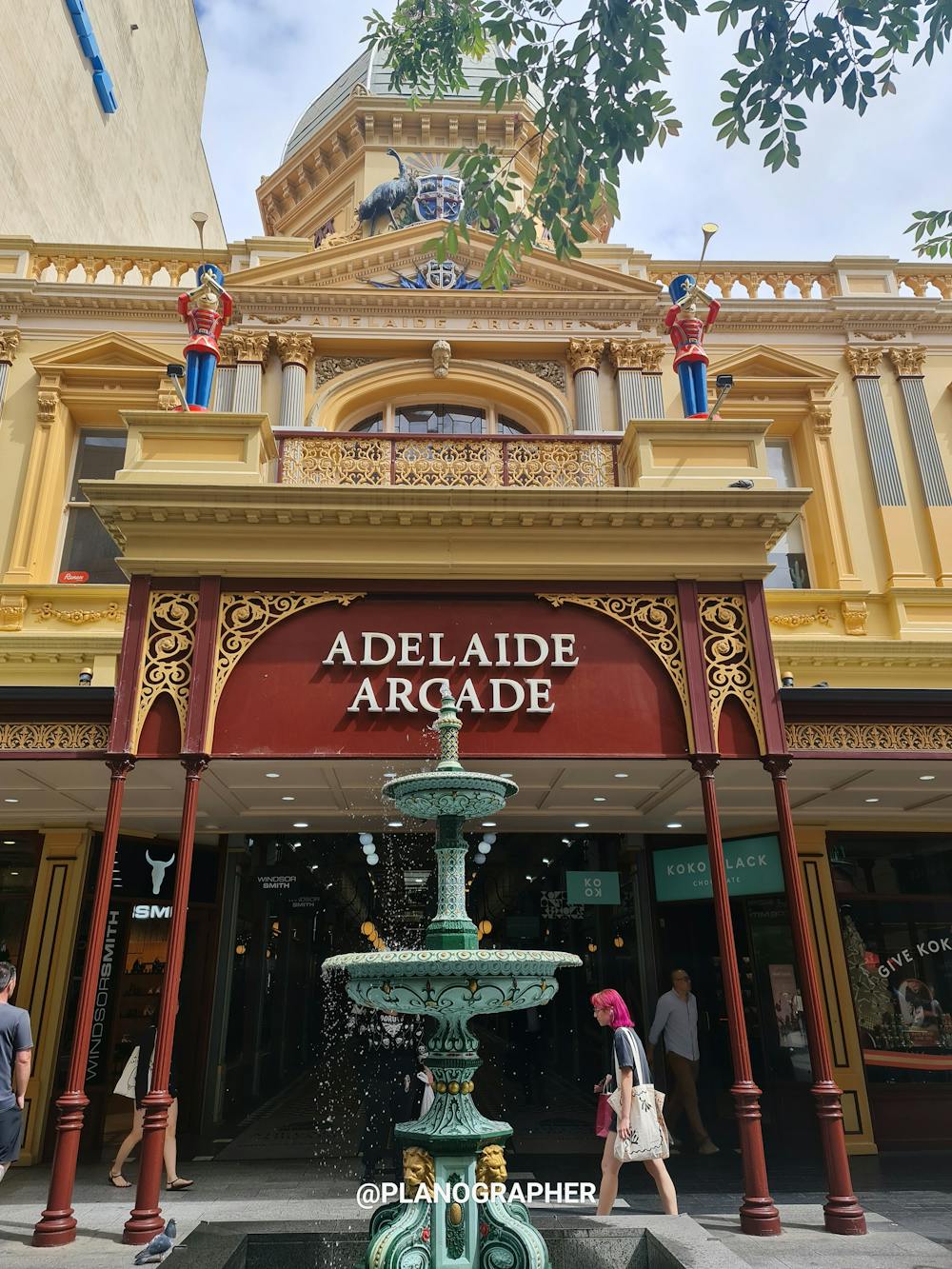
A visit to the CBD on a Saturday was more than just a utilitarian shopping trip. It could be an urban exploration, a leisure pursuit, a pleasure-seeking adventure, a social event.
Children accompanying their parents were mesmerised by the intensity of urbanism and retail choice. Teenagers and young people, much like 19th-century flaneurs, paraded with their peers, their fashion denoting their subcultural affiliation.
For adults, the CBD offered a chance to indulge in retail therapy via window shopping and pleasurable consumption. For others a trip to the CBD allowed them to treat themselves and meet friends at the department store cafe.
In short, the CBD was the place to see and be seen.
CBD’s retail crown slips
The dominance of the CBD began to slip with the emergence of suburban shopping centres in the late 1950s – thank you, Victor Gruen. Rapid suburban growth, social mobility and increased car use drove an explosion in suburban shopping centres from the 1960s through to the 1980s.
According to the Shopping Centre Council of Australia, an average of 22 shopping centres a year have been built since the first centre, Brisbane’s Chermside, appeared in 1957.
Competition between CBD retailers and shopping centres intensified in the 1980s and 1990s. With the rise of online retailing in the past decade or so, these bricks-and-mortar retailers have had to lift their game again.
Retailing matters. Aussie consumers spent a whopping A$353 billion on retail goods in 2022 compared with $275.3 billion in 2018 – a 28.2% increase.
Over the same period, online retail spending increased by 132% from $27.5 billion to $63.8 billion. It now accounts for just over 18% of retail spending in Australia, up from 10% in 2018.
The “4 Cs” underpin the rise of online shopping: convenience, choice, competitive prices and COVID-19 (which ramped up the shift).
Read more: Big, bigger, biggest: Black Friday, Cyber Monday and Singles Day
COVID and working from home led to Australian CBDs, especially Melbourne and Sydney, losing considerable ground, while suburban shopping centres gained in terms of shopper numbers and spending.
Although zombified CBDs at the height of pandemic restrictions are in the rear-view mirror, working from home lingers. This is especially true for Melbourne where office occupancy averages 53% – way behind Perth (91%), Adelaide (85%), Sydney and Brisbane (both 75%).
Capital city councils, state governments and bodies such as the Committee for Sydney, Urban Development Institute of Australia and the Property Council of Australia have taken or advocated action to draw people back to the CBD.
Actions include everything from free parking and public transport, tactical urbanism or temporary changes to the streetscape such as pedestrian plazas, pop-up bike lanes, and parklets, outdoor dining, public events and vouchers, through to changes in planning regulations to speed up high-density residential development.
Read more: How COVID all but killed the Australian CBD
Cathedrals of consumption … and then some
Before and since COVID-19 major shopping centres across Australia have undergone multi-million-dollar refurbishments and redesign. They include centres in Adelaide (Marion), Brisbane (Chermside, Pacific Fair), Melbourne (Chadstone, Fountain Gate), Perth (Carousel, Karrinyup) and Sydney (Parramatta, Macquarie Centre). The centres have increased floorspace and diversified retail, entertainment and food and beverage offerings.
Suburban shopping centres are more than cathedrals of consumption. Mega-malls such as Chadstone (215,000m²), Fountain Gate (178,000m²) and Chermside (177,000m²) stand out as major hubs of economic activity and employment, tourist attractions and social and community spaces.
To help secure a ready customer base, upmarket hotels and luxury residential developments have been built, or are earmarked for development, as part of major shopping centres. Many more such residential developments in Australia (and the US) are likely over the next decade or so.
Read more: The suburbs are the future of post-COVID retail
Devil in the retail
The competition between bricks-and-mortar retailers in CBDs, suburban shopping centres and online retailers peaks each year with the onset of Black Friday and Cyber Monday in late November, closely followed by the Christmas shopping season and New Year sales.
Read more: Really need those new shoes? Why you might spend up big at the Black Friday sales
Whatever big changes come next – in terms of what we buy, where and how – will have implications well beyond the retail sector. The structure and function of cities, plus our relationship with the city and retail spaces, are likely to change.
With the rise of online shopping and on-demand delivery, can we, for example, expect to see our streets and skies soon filled with autonomous robots and drones?
Autonomous delivery raises major questions about retail, urban and residential design, infrastructure provision, employment, human behaviour and, ultimately, regulation. Therein lies the devil in the retail.


