

Want to buy a home telescope? Tips from a professional astronomer to help you choose
- Written by The Conversation
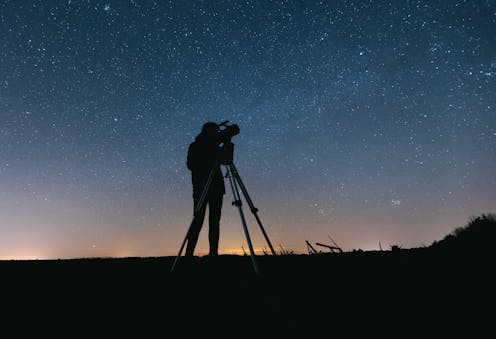
While the unaided eye or binoculars can reveal much of the night sky, a telescope reveals so much more. Seeing Saturn’s rings or the Moon’s craters with your own eyes can be an “oh wow” moment.
However, choosing the right telescope can be tricky. There are telescopes with lenses and telescopes with mirrors. Telescopes that are moved by hand and others that are electronically controlled. Telescopes also come in a range of sizes, with a trade-off between light-gathering power, portability and price.
While there’s much to consider, changes in pricing and technology mean spectacular views of the universe are more accessible than just a decade ago.
Read more: Want to get into stargazing? A professional astronomer explains where to start
How big should the aperture be?
Aperture is fundamental for telescopes. The bigger the light-collecting lens or mirror, the fainter the objects you can see. Double the aperture from 50mm diameter to 100mm diameter, and the light-collecting area quadruples.
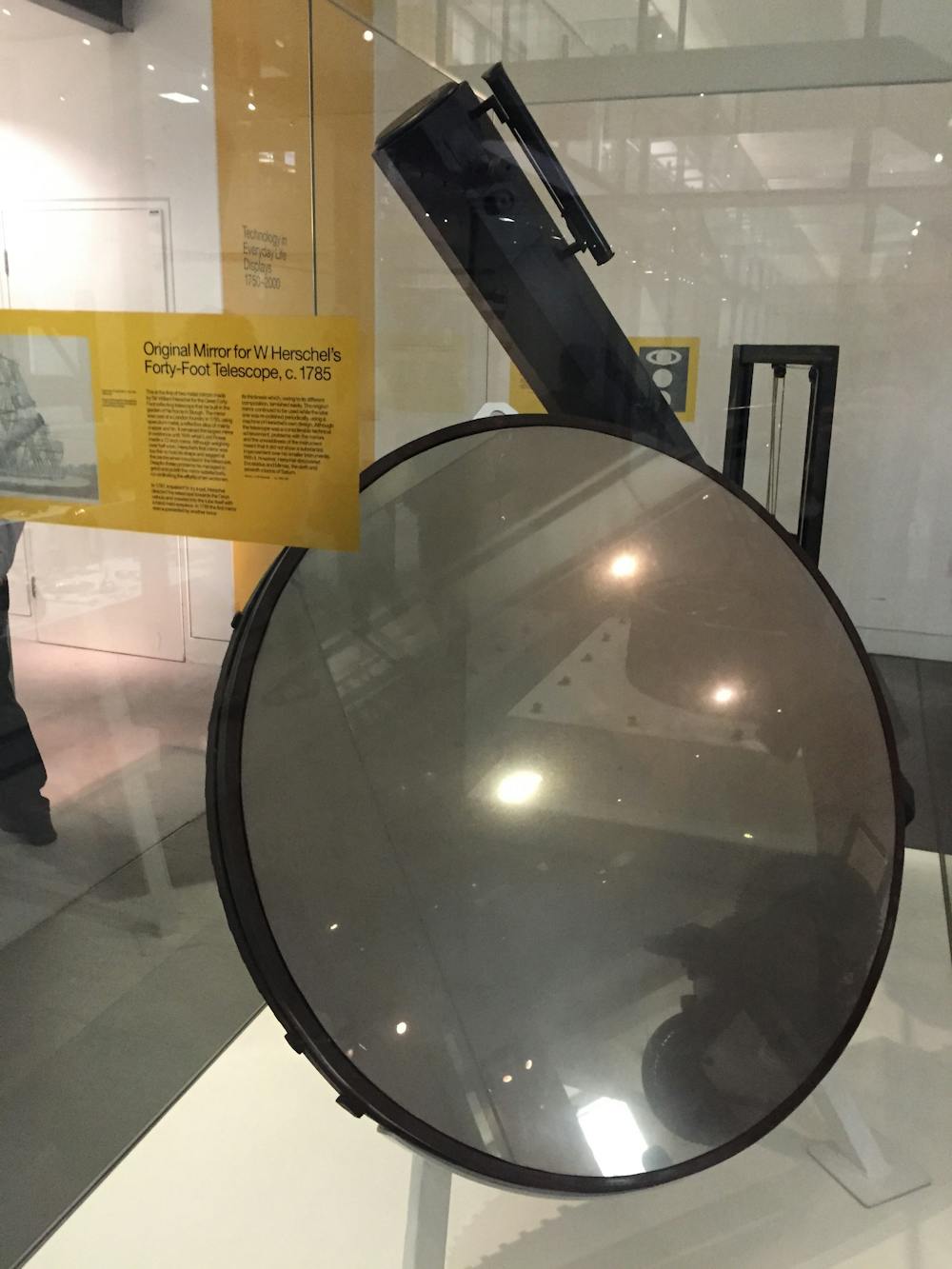
The aperture also limits the level of detail you can see, due to the diffraction (interference) of light.
Again, bigger is better – a larger aperture telescope will produce sharper images than a smaller aperture telescope of comparable design. Earth’s turbulent atmosphere also blurs images, which can limit the detail seen when the aperture is more than 150mm.
Sometimes cheaper telescopes are advertised by magnification, but a small telescope with extreme magnification just makes blurry images bigger without revealing more detail.
Refractor or reflector?
Should you buy a telescope with a refracting lens or a reflecting mirror? It depends what you want to look at, and your budget.
Refracting telescopes
Refracting telescopes can be good for viewing objects on Earth and in the sky. Refracting telescopes with short focal lengths (where light is brought to a focus near the lens) can be quite compact and good for low magnification views, which is great for sweeping across dark country skies.
However, there are catches. While 70mm aperture refracting telescopes can be quite affordable, bigger refractor telescopes are often more expensive than comparable reflecting telescopes.
Refracting telescopes also suffer from chromatic aberration – where different colours aren’t brought to a common focus – and this is particularly noticeable at high magnification when stars get coloured halos. This can be mitigated using complex lens designs, but that adds to the cost.
Reflecting telescopes
Reflecting telescopes use mirrors to focus light. These tend to be larger and don’t suffer from chromatic aberration.
Dobsonian telescopes have a simple Newtonian optical design and wooden mounts, and are a very cost effective (if sometimes bulky) option for larger apertures. Schmidt-Cassegrain and Maksutov telescopes, which use a combination of lenses and mirrors, are more compact (a big plus), but also more complex and expensive.
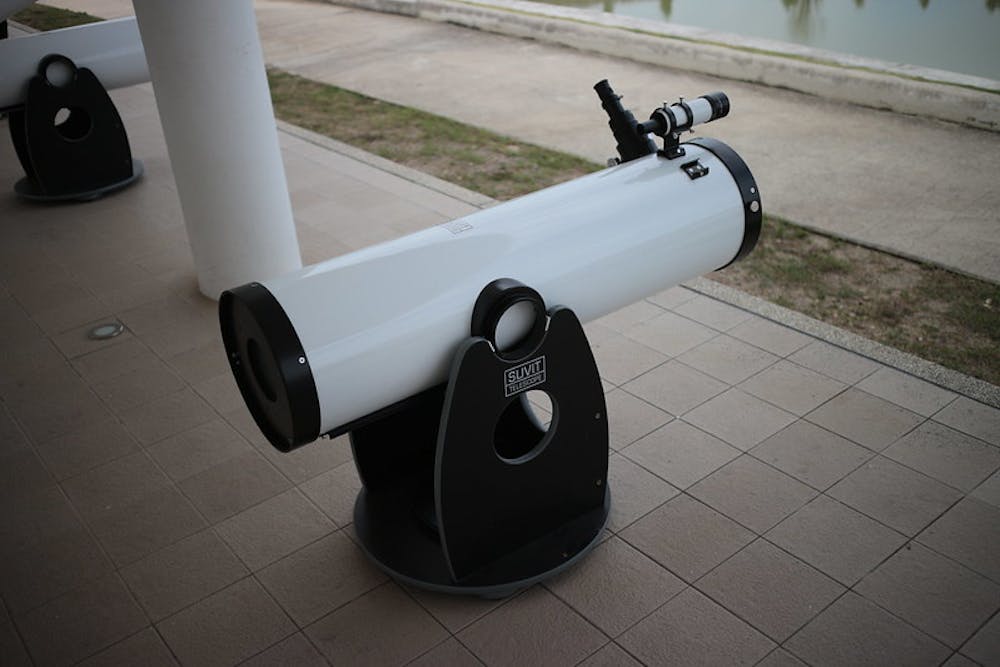 Dobsonian telescopes are an affordable option for a large aperture telescope.
Wutthichai Charoenburi/Flickr, CC BY
Dobsonian telescopes are an affordable option for a large aperture telescope.
Wutthichai Charoenburi/Flickr, CC BY
How do I find things in the sky? Depends on the mount
Want to look at a celestial object? You will need to point your telescope in the right direction, keep it steady, and follow the object as it moves across the sky (due to Earth’s rotation).
To do this, a telescope needs a mount, which is often sold with the telescope but can also be bought separately. Mounts fall into two broad categories.
Equatorial mounts have an axis aligned with Earth’s axis, so a single motor can compensate for Earth’s rotation. These mounts were essential for taking long exposure images with telescopes prior to computers and tend to be relatively heavy.
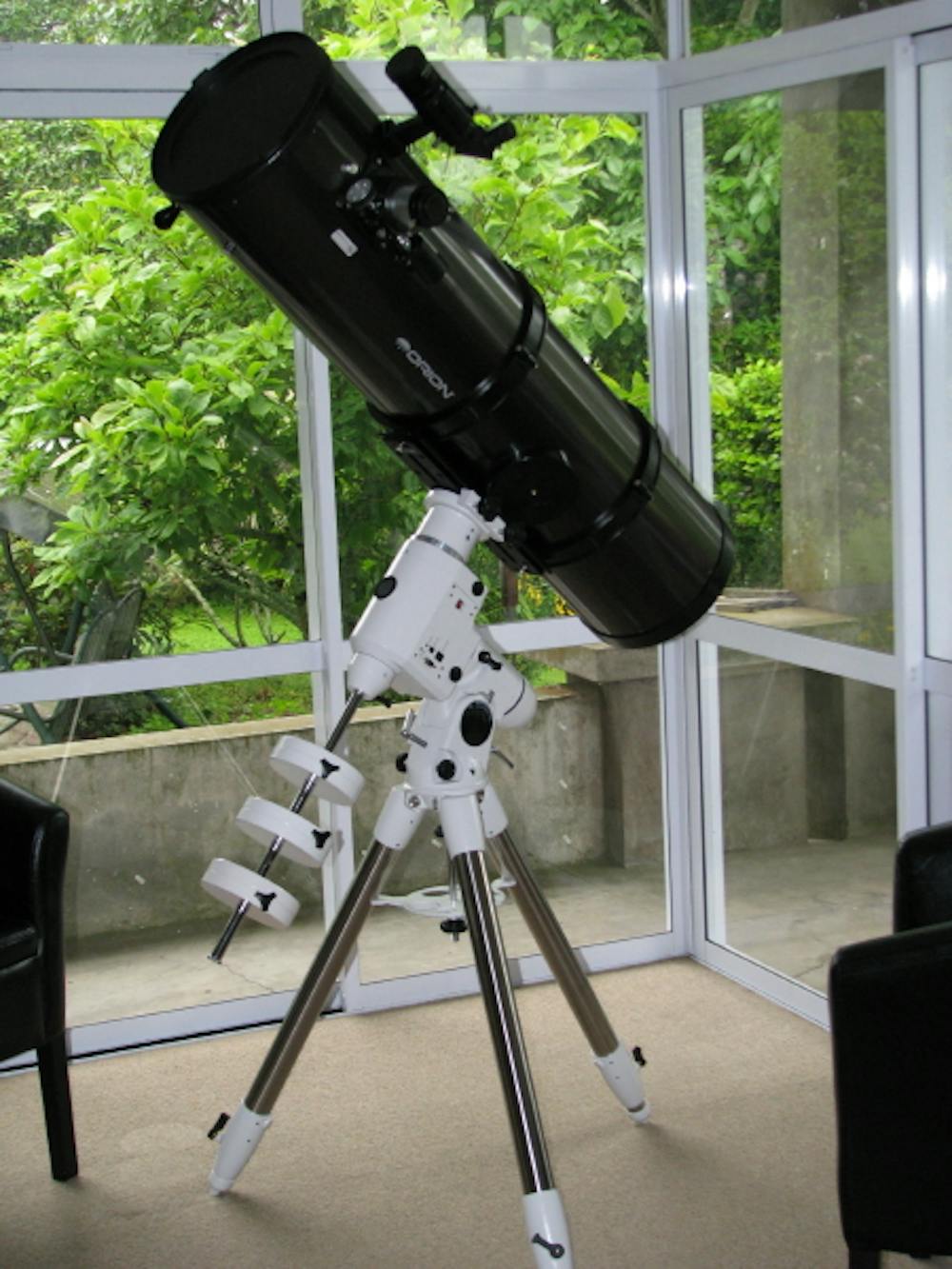 Telescopes need mounts so they can be positioned and securely held in place.
Mike White/Flickr, CC BY-NC-ND
Telescopes need mounts so they can be positioned and securely held in place.
Mike White/Flickr, CC BY-NC-ND
Alt-azimuth mounts have a vertical and a horizontal axis (how a camera is mounted on a tripod, for example), and tend to be cheaper and lighter than equatorial mounts. With the advent of cheap computing, they can now be used to automatically point at and track celestial objects.
To point a telescope at celestial objects you can move it manually or have electronics assist you, including “goto” mounts with motors that shift the telescope for you.
A completely manual telescope will be cheaper than a telescope with automation, but you will need to navigate the sky yourself.
Electronic assistance for navigating the sky is rapidly evolving and getting cheaper. Many telescopes on the market now use GPS and a smartphone app, which simplifies the process and makes everything more portable.
Do I need a finder scope?
Regardless of how you point your telescope, having a 30–50mm aperture auxiliary “finder” scope can be useful for small telescopes and essential for larger telescopes.
Large telescopes typically view a tiny patch of the sky, which makes finding your way tricky. A finder scope with a wider view and crosshairs simplifies things. Even telescopes with goto electronics often need to be calibrated with bright stars and locating them is easier with a finder scope.
What about the eyepiece?
An essential part of most telescopes is the eyepiece you look through. Sometimes decent telescopes are sold with quite cheap eyepieces, but it can be relatively inexpensive to upgrade to a better one.
A good start is a low-magnification eyepiece for sweeping views, and a high-magnification eyepiece for planets.
Plössl eyepieces are affordable and provide good views. More complex eyepieces that provide better views are also available, and far cheaper than they once were.
If you want to look at the Sun, you must get a specially designed solar filter. Never point a telescope (including the finder scope) at the Sun without filters – it can permanently damage eyes and shatter lenses.
What if I want to take astro photos?
Taking basic astronomical photos has become much easier with smartphones. While you can hold a phone to the telescope eyepiece for a photo of the Moon or a planet, you will get better results with an adapter that holds your phone securely in place.
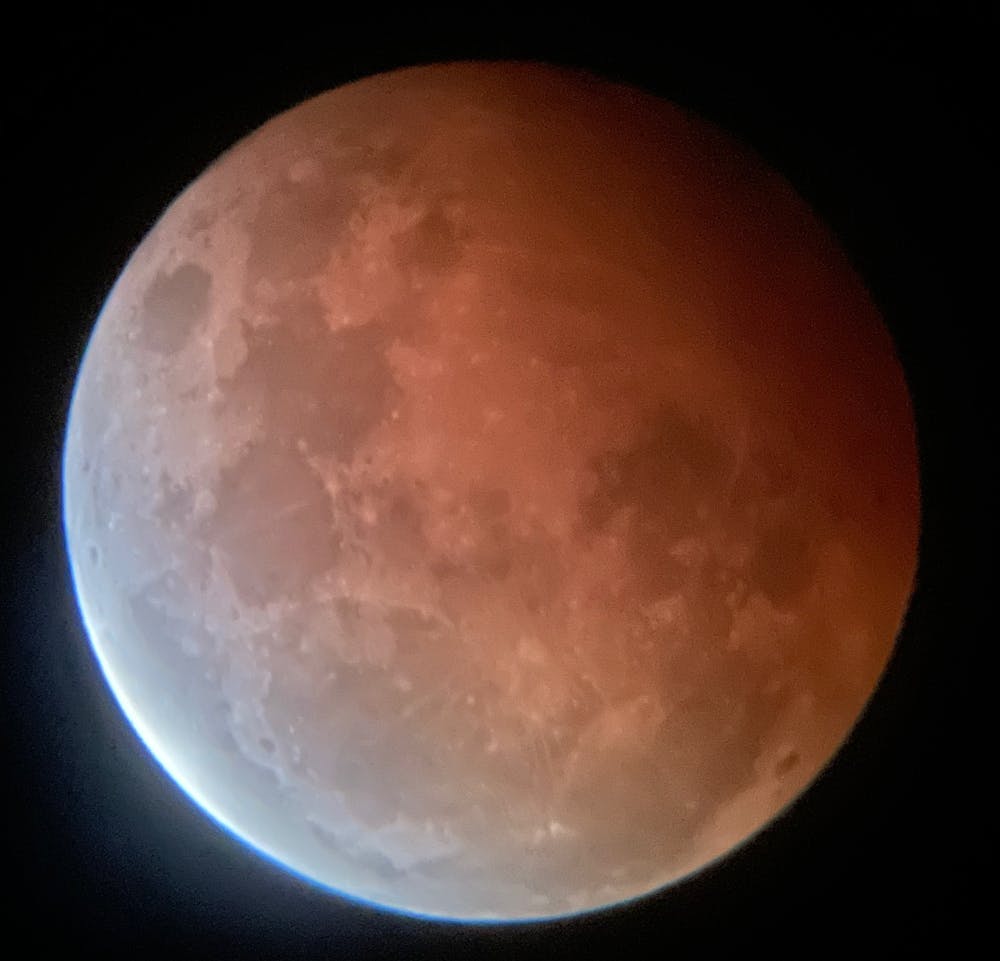 A photo of a lunar eclipse taken with a small telescope and iPhone.
Michael Brown
A photo of a lunar eclipse taken with a small telescope and iPhone.
Michael Brown
Of course, better images can be taken with astronomy-specific cameras that can take very short exposures (for planets) or very long exposures (for fainter nebulae and galaxies). For long exposures, automatic tracking of celestial objects is essential, and that adds to a telescope’s price.
Smart telescopes are a relatively recent addition to the market. These goto telescopes have no eyepieces and only capture images electronically. As modern detectors are more sensitive than our eyes, they can capture quite spectacular images with a relatively small portable telescope, even when there’s light pollution.
However, you do lose the experience of seeing the universe directly with your own eyes through the eyepiece.
Try before you buy!
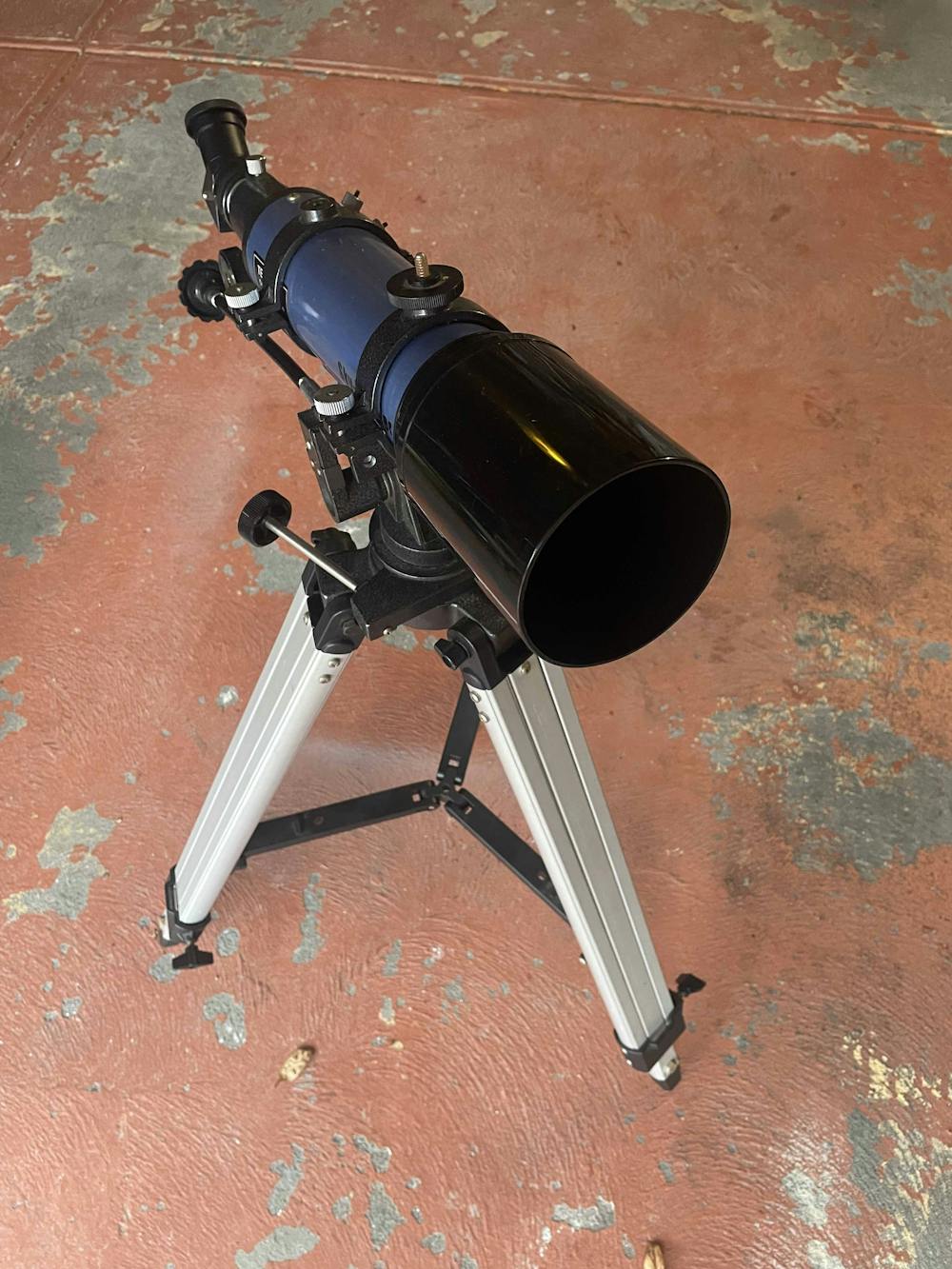 A second-hand bargain, like this 70mm refractor telescope, may be lurking in someone’s garage.
Michael Brown
A second-hand bargain, like this 70mm refractor telescope, may be lurking in someone’s garage.
Michael Brown
If there’s a local amateur astronomical society, you can sign up or attend a star party. There should be plenty of telescopes, and owners happy to wax lyrical about them.
A specialist shop can also give a direct experience of a telescope: its size and how it works (with limitations during daytime). For example, you may find a telescope is too bulky or technical for your needs.
Online shopping can save money, but may have less customer support than a local shop. You could also snap up a bargain buying second hand, and a seller may allow you to test their telescope on the Moon and planets before buying.
There’s a lot to take on board before buying a telescope. Aperture, size, cost and other factors need to be considered. But there are many good options out there, and with a good choice you can see some wondrous things. And perhaps have an “oh wow” moment.


