

Baiting foxes can make feral cats even more ‘brazen’, study of 1.5 million forest photos shows
- Written by The Conversation
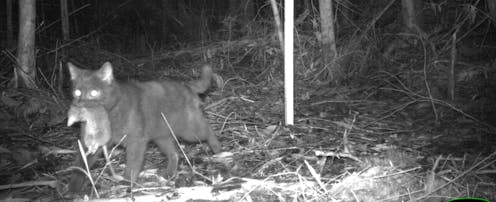
Foxes and cats kill about 2.6 billion mammals, birds and reptiles across Australia, every year. To save native species from extinction, we need to protect them from these introduced predators. But land managers tend to focus on foxes, which are easier to control. Unfortunately this may have unintended consequences.
We wanted to find out how feral cats respond to fox control. In one of the biggest studies on this issue to date, we worked with land managers to set up 3,667 survey cameras in a series of controlled experiments. We studied the effects on cat behaviour and population density.
Our research shows feral cats are more abundant and more brazen after foxes are suppressed.
In some regions, cats need to be managed alongside foxes to protect native wildlife.
This camera trap captured a wide variety of animals, not just cats and foxes, in the Otway Ranges, 2019 (Matthew Rees)Read more: 1.7 million foxes, 300 million native animals killed every year: now we know the damage foxes wreak
Could feral cats benefit from fox control?
Foxes and cats were brought to Australia by European colonisers more than 170 years ago. They now coexist across much of the mainland.
While foxes are bigger than cats, they compete for many of the same prey species.
But most wildlife conservation programs in southern Australia only control foxes. That’s largely because controlling foxes is relatively straightforward. Foxes are scavengers and readily take poison baits. Feral cats, on the other hand, prefer live prey. So they’re much more difficult to control using baits.
Consequently, foxes have become the most widely controlled invasive predator in Australia, while feral cat control has been relatively localised.
Some native species have thrived following fox control or eradication, but others have continued to decline. For example, one study found numbers of common brushtail possums, Western quolls and Tammar wallabies increased following fox control in southwest Western Australia. However, seven other species crashed: dunnarts, woylies, southern brown bandicoots, western ringtail possums, bush rats, brush-tailed phascogales and western brush wallabies.
People suspected controlling foxes could inadvertently free feral cats from competition and aggression, particularly if there were no dingoes around.
Experimenting with fox control
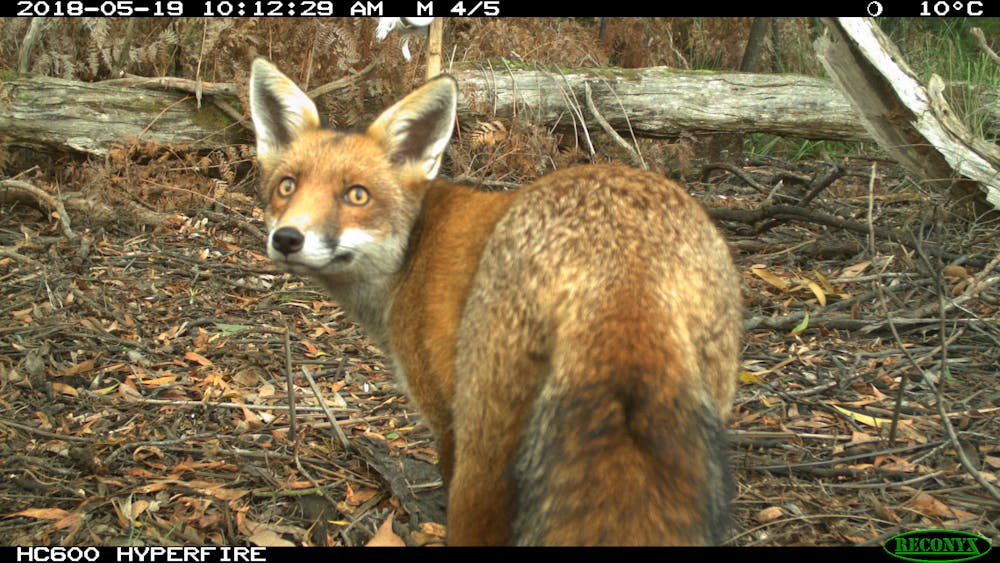
To investigate how cats respond to fox control programs, we worked with land managers to run two large experiments in southwest Victoria. Foxes are the top predator in these forests and woodlands, because dingoes have already been removed.
We studied cat behaviour and population density before and after fox control in the Otway Ranges. In a separate study, we compared conservation reserves with and without fox control in the Glenelg region.
We put out 3,667 survey cameras over seven years. The cameras photograph animals as they walk by, allowing us to analyse where and when invasive predators and native mammals are active.
From these photographs, we were also able to identify individual feral cats based on their unique coat markings.
When multiple photographs of one cat were taken by several different cameras, we could track their movement. Combining information on the tracks of all the cats in an area allowed us to estimate cat population density.
It was a painstaking process. We went through almost 1.5 million images manually to check for animals, eliminate false triggers and identify individual cats.
Future research is exploring using artificial intelligence to streamline the process, but the computer still needs to be taught what to look for.
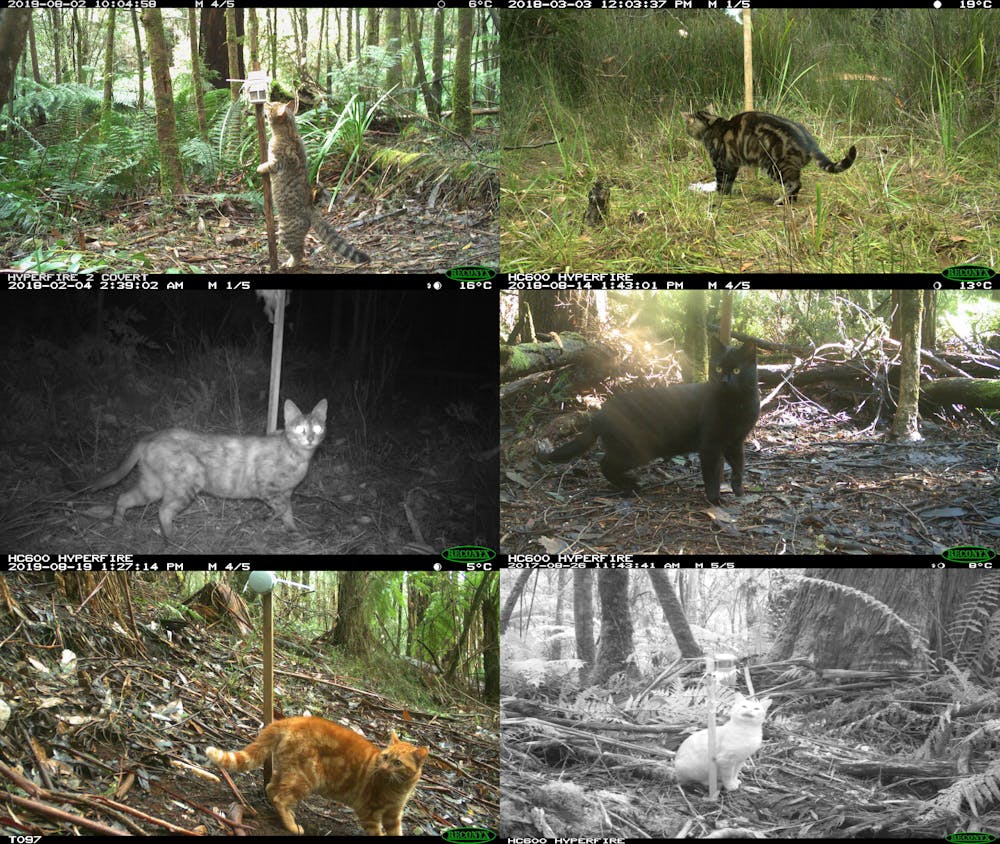 We identified 160 different feral cats across two fox control programs in south-west Victoria.
Matthew Rees
We identified 160 different feral cats across two fox control programs in south-west Victoria.
Matthew Rees
What we found
We found sustained, intensive baiting for foxes worked. Areas with more poison baits had fewer foxes. Replacing baits regularly was also worthwhile.
Feral cat density was generally higher in areas with fox control. The strength of this effect varied with the extent and duration of fox management. We found up to 3.7 times as many cats in fox-baited landscapes.
Productive landscapes also supported more cats. There was about one feral cat per square kilometre in wet forests, compared with less than half as many in dry forests.
Feral cat behaviour also varied with fox control and forest type, including how visible cats were, how far they moved, and what times of day they were active.
Feral cats appeared more adventurous where fox populations were suppressed. In dry forests, for example, foxes were largely nocturnal, as were most native mammals. Feral cats became more active at night when there were fewer foxes, potentially giving them access to different prey species.
We found some threatened species, such as long-nosed potoroos, were doing much better in areas with long-term fox control, although others, such as southern brown bandicoots, showed no improvement.
We don’t know how fox control affected smaller native rodents and marsupials, which are likely to be most at risk from increased cat predation.
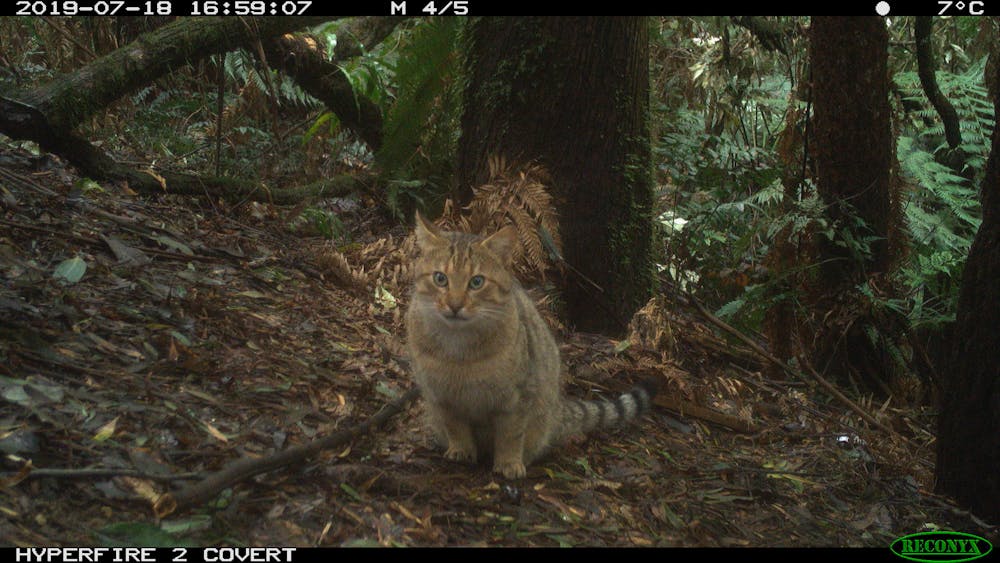 Areas where foxes were controlled had more feral cats. They also tended to be behave differently.
Matthew Rees
Areas where foxes were controlled had more feral cats. They also tended to be behave differently.
Matthew Rees
A conservation balancing act
Broad-scale fox control is an important tool in the ongoing battle to protect Australia’s wildlife. Fox baiting is relatively simple and effective. But we have to balance the known benefits of fox control against potential unintended consequences.
Our study reinforces the need to carefully consider what could happen if you only control one pest animal, and to monitor carefully rather than assume that fox control will benefit all native species. We are not saying people should stop fox baiting, because there are clear benefits to species such as long-nosed potoroos. But we need to keep an eye on the cats and might need to also manage their impacts on native prey.
As feral cats are notoriously difficult to control lethally, indirect management may also be helpful. For example, promoting dense understorey vegetation for native prey to hide in or removing other sources of food that boost cat numbers such as pest rabbits.
Integrated pest management is challenging and expensive but likely needed, especially where feral cats or other pests are thriving alongside foxes.
Read more: 10-year feral cat plan brings us a step closer to properly protecting endangered wildlife


