

Resource management is always political – the Fast-track Approvals Bill is just honest about it
- Written by The Conversation
The government’s Fast-track Approvals Bill has been widely criticised for potentially handing too much power to three cabinet ministers, and raising the risk of conflicts of interest and political interference in environmental management.
Ironically, the bill also helps demonstrate why the original Resource Management Act (RMA) was always doomed to fail – and what its replacement will have to get right.
The RMA has long been blamed for high compliance costs and red tape that delay mining, infrastructure and housing developments, and which make farming harder and less viable. Much of which is true.
But five major reviews of the RMA over the past 33 years have found the legislation itself was fundamentally sound – it has been its implementation that was flawed.
The previous Labour government sought to address these problems by replacing the RMA with the Natural and Built Environments Act. But the current government repealed this, and has reinstated the RMA while it conducts its own resource management reform.
But if the RMA’s main flaw was in its implementation, rather than its substance, what are the prospects for any replacement law?
Frog or coal?
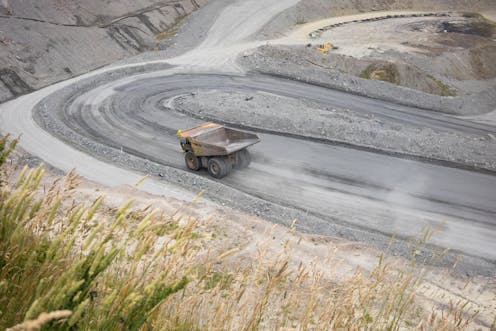
The Fast-track Approvals Bill would give a troika of pro-development cabinet ministers the ability to decide what projects are put on the fast-track path.
The environmental impacts of approved projects may then be considered by technical advisory panels. The panels can recommend projects be declined, but the ministers can override those findings.
Many select committee submissions object to this politicisation of environmental resource management. But such objections also expose the intrinsic problem of the Resource Management Act in the first place: its failure to account for the reality that natural resource management is always political.
This should not be surprising – after all, politics is about who gets what, when and how. In short, and to paraphrase Resource Minister Shane Jones, does Freddy Frog get to keep his pond or does the mining company get to drain it for the coal underneath?
More widely, is economic growth supported more by an appeal to nature-based tourism (supported by the existence of Freddy’s pond) or from mining the coal? The answer is political: frog or coal?
Depoliticising resource management
The designers of the RMA sought to depoliticise such decisions. District and regional planning was required to follow a textbook policy analysis procedure sought by Treasury. This technocratic requirement was specifically intended to prevent political interference.
Decision makers also had to consider the environmental effects of proposed resource-use activities, underlining the importance of scientific knowledge. Plans and resource consent decisions can all be appealed to the Environment Court, adding another technocratic layer.
Also, local governments sought to avoid legal appeals and associated costs by appointing independent commissioners, rather than councillors, to decide resource consent applications.
Effectively, the RMA removes politicians from resource management decision making – but not politics. Instead, it privileges other types of knowledge and decision makers.
As a result, the resource management industry is now dominated by planners, scientists and lawyers. Together, they define what information and whose values are valid when making resource-use decisions. And for the main part, their decisions are unaccountable, except to the courts.
No avoiding politics
The Fast-track Approvals Bill upends this “post-political” consensus of the past 33 years by placing politicians once again at the forefront of environmental management decision making.
It reminds us that resource-use decisions affect people, prioritise some uses over others, and are always contentious. It also reminds us why the notion of depoliticising these processes was so attractive when the RMA was drafted in the late 1980s.
Back then, memories were fresh of large-scale state energy projects and environmental protest, including the damming of Lake Manapouri to generate energy for the aluminium smelter at Tiwai Point. West Coast beech forests and central North Island rimu and tawa stands were being clear-felled by the government Forest Service.
The 1975-1984 National government of Robert Muldoon saw the Taranaki synthetic fuels plant and Clyde Dam completed. Muldoon was using his own fast-track legislation, the National Development Act 1979, to force construction of another aluminium smelter at Aramoana (powered by the Clyde Dam) when he lost the 1984 election.
Critics are now comparing the Fast-track Approvals Bill to the old National Development Act. But the questions this raises go beyond whether history is repeating.
If we accept that politicians in democratic systems represent the interests of their constituents, how do we justify laws – such as the RMA – that are designed to disempower political decision makers?
The challenge for this and any government is how to reintroduce representational politics into New Zealand’s natural and physical resource management, while at the same time providing the necessary safeguards to avoid abuse of that political power.


