

Lupus is more common and severe in Aboriginal and Torres Strait Islander peoples. Learning why is crucial
- Written by The Conversation
Lupus is an inflammatory autoimmune illness, where the body’s immune system mistakenly attacks itself. Lupus can affect virtually any part of the body, although it most commonly affects the skin, joints and kidneys.
The symptoms of lupus, also known as systemic lupus erythematosus (or SLE), can range from mild to life-threatening. It can result in significant disability, economic burden and lower quality of life.
Lupus most commonly affects women of childbearing age and is among the top ten causes of death for young women in the United States.
Lupus is more common, and more severe, among people of certain ethnicities, including people of Asian and African ethnicity, as well as First Nations peoples in Australia and worldwide.
Health effects of colonisation
Following colonisation in 1788, government policies have discriminated against Aboriginal and Torres Strait Islander peoples. This has created long-standing oppression and structural racism, which many Aboriginal and Torres Strait Islander peoples still experience today.
As a result, health outcomes are poorer for Aboriginal and Torres Strait Islander peoples compared to the general Australian population, with life expectancy eight years lower, on average.
Many Aboriginal and Torres Strait Islander peoples also experience significant socioeconomic disadvantage.
Lupus is no exception
Lupus is two to four times more common in Aboriginal and Torres Strait Islander peoples compared to those who do not identify as Aboriginal or Torres Strait Islander. Lupus is also more common in Aboriginal and Torres Strait Islander children, with rates four to 18 times that of the general Australian child population
Lupus also tends to present with different symptoms, and is more severe, in Aboriginal and Torres Strait Islander peoples. For example, Aboriginal and Torres Strait Islander peoples tend to develop more of the severe, life-threatening or organ-threatening symptoms of lupus, such as kidney problems. And they tend to develop less of the milder, non-life threatening symptoms of lupus, such as skin rash and arthritis.
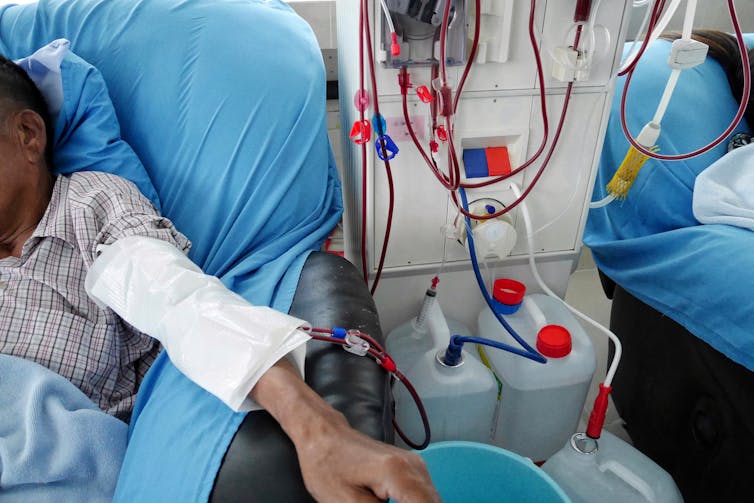
As a result, Aboriginal and Torres Strait Islander patients with lupus have high rates of kidney failure, and are more likely to require dialysis than non-Aboriginal and Torres Strait Islander patients.
Death is also more common. Aboriginal and Torres Strait Islander peoples with lupus are up to six times more likely to die than non-Aboriginal and Torres Strait Islander peoples with lupus. Death also often occurs at a younger age and shorter disease duration in Aboriginal and Torres Strait Islander peoples with lupus.
Why is it more common and more severe?
The reasons for the increased rates and severity of lupus in Aboriginal and Torres Strait Islander peoples are not well understood. However, it’s likely that socioeconomic factors, environmental factors and biological factors all play a role. To date, no published studies have specifically explored this.
A number of socioeconomic factors may contribute to increased rates and severity of lupus in Aboriginal and Torres Strait Islander peoples. These include:
- increased likelihood of living in rural and remote areas with reduced access to specialist care
- language barriers
- lack of trust in the health system, due to structural racism and a lack of cultural sensitivity.
Environmental factors, such as increased exposure to certain infections, may also contribute.
Certain molecules, such as genes and proteins, belonging to what we call biological “pathways” drive lupus severity in non-Aboriginal and Torres Strait Islander peoples.
For example, in people of Asian ethnicity with lupus, a particular pathway (called the “type 1 interferon pathway”) which causes inflammation is often active.
However, what we don’t know is which pathway(s) are active in lupus affecting Aboriginal and Torres Strait Islander peoples.
What can we do about it?
Once researchers identify the active biological pathways, new medicines could be developed.
Drugs already in use which target these genes or proteins could also be better selected for patients who are likely to benefit from them. This may help treat lupus more effectively in Aboriginal and Torres Strait Islander peoples in the future.
Other strategies to improve outcomes for Aboriginal and Torres Strait Islander peoples with lupus include:
- improving access to specialist care for patients living in rural and remote areas
- eliminating structural racism in health care
- raising awareness of lupus in Aboriginal and Torres Strait Islander communities.
To design these management strategies and identify additional areas of need, it will be vital to work with Aboriginal and Torres Strait Islander peoples in a community-led, holistic way, with strong Aboriginal and Torres Strait Islander governance. Only then will we achieve better outcomes for Aboriginal and Torres Strait Islander peoples with lupus.


