

The plight of the pig-nosed turtle, one of the unlucky 13 added to Australia’s threatened species list
- Written by The Conversation
Australia’s unique biodiversity is under siege. The national list of species threatened with extinction is growing, with eight animals and five plants added just last month.
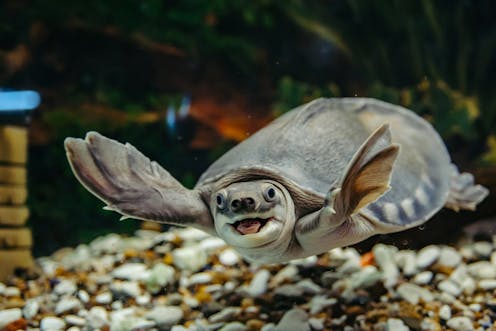
Among them is the pig-nosed turtle, a peculiar creature found in catchments of the Northern Territory. Once teeming with life, these seasonal floodplains are now fragmented and degraded from land clearing, water extraction and feral animals.
The crisis facing the pig-nosed turtle is a microcosm of the broader challenges confronting Australia’s wildlife. A staggering 2,224 species and ecological communities are currently threatened with extinction, with turtles among the most vulnerable.
The survival of the pig-nosed turtle and countless other species depends on our ability to act decisively. By prioritising environmental protection and making sustainable choices, we can ensure a future in which Australia’s unique biodiversity thrives.
More endearing features of the pig-nosed turtle
The pig-nosed turtle is the last of its kind. It is the only remaining species in its family.
The species is found in the tropical northern rivers of Australia and the southern rivers of New Guinea.
Its peculiarities are not confined to its strange nose. The top of its shell is covered with skin, which means it is more delicate than most turtles. It can even get sunburnt.
Most freshwater turtles simply have paws with webbed fingers, whereas sea turtles have flippers with fused bones. But pig-nosed turtles are different again, with flippers mostly made of elongated fingers. This makes them the bats of the turtle world.
Mother turtles lay eggs in the sandy bank beside the water and then leave them alone. When the water level rises and the eggs are swamped, the baby turtles hatch out explosively.
Species such as these unique turtles are culturally important and have been part of First Nations culture for thousands of years. So their decline represents a loss not just for the environment but also for Australia’s cultural heritage.
Turtle troubles
In the Northern Territory, pig-nosed turtle populations have very low genetic diversity. This makes them highly susceptible to threats such as diseases.
Their range is already restricted to relatively few locations, leaving them more at risk from disturbances.
Along with climate change, damage to nesting areas by Asian water buffalo and cattle, and the possible future threats of disease and water extraction, these factors all contributed to the new listing of pig-nosed turtles as vulnerable to extinction.
Climate change has already altered flood patterns, contributing to a decline in habitat quality. But it threatens to make the turtle’s existence even more perilous in the future, because temperature during egg incubation determines a hatchling’s sex. If it’s too warm, they all become female.
We have previously reported on the threatened species listing process including particular challenges for freshwater turtles in Australia. We noted the pig-nosed turtle’s dependence on continuous water flows, even in the dry season. This is threatened by development of Australia’s northern rivers.
Until recently, Australia recognised eight (32%) of its 25 freshwater turtle species as threatened with extinction. But we believe almost half (48%) of all Australian freshwater turtle species now meet the criteria for listing as threatened with extinction under Commonwealth legislation.
Unfortunately there are some species for which no scientific research has been done, and others for which we simply don’t have enough data to evaluate their status adequately. So the true number of threatened species could be greater still.
Conservation efforts undone by weak environmental laws
Citizen science initiatives such as the 1 Million Turtles Community Conservation Program show that Australians care deeply about turtles and are willing to contribute to their survival.
People all over Australia are rescuing turtles from roads and creating islands to protect turtle eggs from foxes. Building on this enthusiasm, we can create a powerful movement to protect these iconic animals.
But the progress of conservation programs can be easily undone if we don’t put better legislation in place to protect our wildlife.
How we can turn things around
Australia has the worst mammal extinction record in the world. We cannot afford to repeat this mistake with our turtles, frogs or other unique wildlife. And yet the number of threatened species continues to grow, pushing us further from the “zero extinctions” goal.
The pig-nosed turtle was added to the threatened species list along with three freshwater fish, three lizards, one frog, one rainforest tree, two flowering shrubs, a daisy and an orchid species. That brings the total to 661 animals, 1,457 plants and 106 ecological communities.
Current environmental laws are clearly inadequate. Tougher penalties for habitat destruction, more investment in conservation, and greater efforts to tackle climate change will be crucial if we are to halt and reverse species decline.
Australia has an opportunity to demonstrate its commitment to protecting natural and cultural heritage. This will require a collaborative effort involving governments, scientists, Indigenous communities and the public. It’s not too late for our beloved pig-nosed turtle, but the window of opportunity is closing.


