

Warm winters are waking snakes early. Here’s what that means for them and us
- Written by The Conversation
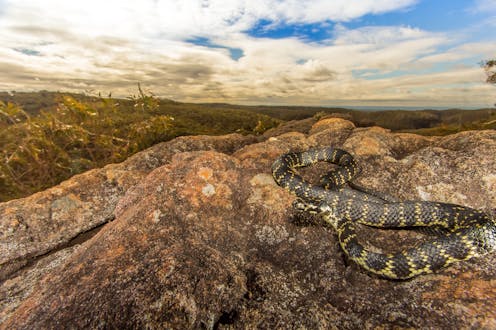
For people in southeast Australia, springtime means soaking up the sun and getting our vitamin D levels back to baseline. But we’re not the only ones likely to be basking. Snakes are getting out and about, too.
A flurry of snake sightings in southern states during spring is nothing new. Snakes emerge from their winter hiding holes when the weather warms.
But we are often asked: will climate change lead to more encounters with our scaly neighbours? It’s a fair question.
Evidence suggests climate change could make snakes come out of hiding earlier. But it’s also likely to cause population declines or shifts in the long run, as snakes adjust to the new conditions.
So what conditions do snakes like?
Snakes are “ectotherms”. This means their internal body temperature depends on the surrounding environment and varies throughout the day and the season. People, on the other hand, are endotherms. We maintain a constant body temperature around 37°C.
Many snakes prefer a lower body temperature of 28–32°C. Cooler-climate species like to keep their bodies cooler still. But even then, they aren’t really “cold-blooded” if they can help it.
Unless it’s really hot, snakes need to chase the heat as soon as they wake up. This enables them to rapidly raise their body temperature to the optimal level so they can go about their daily or nightly routine. They can’t cool themselves by panting or sweating, so they need to shelter from the heat if it’s too hot.
In Australia, snake activity follows distinct patterns in the tropical north and more temperate south.
In the north, where temperatures are consistently warm, snakes avoid the harsh heat and are most active during early mornings, night time, and following the wet season (April to June).
In the south, snakes go into hiding during the cooler months. They slow their metabolism to almost zero and essentially sleep (or “brumate”) through the winter.
These southern snakes get ready to hunker down in autumn as the days begin to shorten. Sensing shorter days in winter keeps them asleep, preventing them from using fat stores or eating food they will not be warm enough to digest. That’s why even a warm sunny day in the middle of winter may not wake them up.
A combination of daily temperatures and daylight hours in spring then triggers southern snakes to wake up and begin the breeding season.
How will climate change modify snake activity?
Australia is likely to warm up to 5°C by the end of this century under a high-emissions scenario. What would that mean for snake activity?
When wild tiger snake body temperatures and activity were measured in Perth’s spring, the snakes only emerged from shelter once their bodies reached 16°C – provided it wasn’t raining. An increase in daily temperatures would mean these tiger snakes start (and end) their days earlier. They may also, at least initially, emerge earlier in the season.
Studies around the world have found snakes becoming active for more days of the year, and feeding more as daily average temperatures increase.
Does this mean we should be concerned about increasing snake populations?
No. The increase in temperatures means most snakes should be avoiding the peak summer heat and we may see less of them. We may also find more snakes become nocturnal.
Even if we do see more snakes, this may not mean the snake population has increased – perhaps the opposite. As snakes generally don’t want to be seen, increased visibility could indicate snakes are stressed. This may be an early warning sign of population decline.

Does climate change threaten Australian snakes?
Ten years ago, one study assessed the potential impact of climate change on Australian elapids (front-fanged venomous snakes) — the most common family of snakes in Australia. The range of most (65%) species was expected to shrink. A smaller proportion (13%) of species was predicted to expand their range, these being the semi-arid and arid-zone species.
Among commonly encountered species, red-bellied black snakes and tiger snakes were expected to suffer range contractions under four different models and scenarios. But the eastern brown snake could go either way.
Climate change is also increasing the frequency and intensity of extreme wildfires across the globe. While many Australian animal species are adapted to fire, some already on the brink might be pushed over the edge by climate change-driven shifts in fire regimes. For example, the Black Summer fires razed more than 70% of the endangered broad-headed snake’s habitat. These fires caused population crashes of 26–34% in this imperilled snake species.
Ultimately, snakes may become active earlier but may suffer declines in the long run as they adjust to the new climate.
 The range of red-bellied black snakes is likely to decrease as the climate changes.
Ken Griffiths, Shutterstock
The range of red-bellied black snakes is likely to decrease as the climate changes.
Ken Griffiths, Shutterstock
What does this mean for snake bite risk in Australia?
If changes in climate do increase encounters between humans and snakes – and the jury is still out at this stage – there is always the possibility this could lead to more snake bites.
But we can influence the outcome by choosing how to behave around snakes. If we’re vigilant — alert but not alarmed — when we’re in snake habitat, the chances of a bite are low (just make sure you know first aid).
A snake seen and left alone poses little threat to humans. If we wish to avoid bites, we must also supervise children and pets (and keep dogs on leads, and cats indoors). Raise children to become snake smart as early as possible. Remember to look where you are stepping, listen, and leave snakes alone.


