

‘Violence at all levels’: UN report into the abuse of women and girls in sport is a wake-up call for Australia
- Written by The Conversation
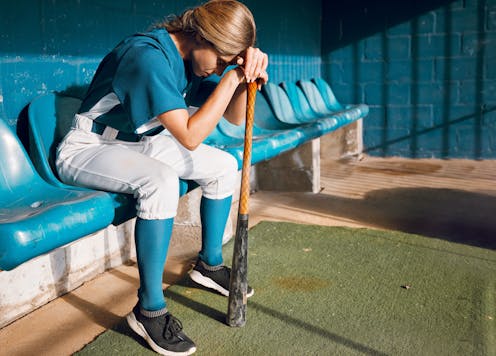
This week the United Nations (UN) Special Rapporteur on violence against women and girls presented a report detailing the violence experienced by women and girls in sport globally.
The report provides a global snapshot of the abuse women athletes experience, who is most likely to perpetrate the violence, and makes recommendations on what should been done to promote safety of women and girls.
Off the back of the Paris Olympic and Paralympic games, where Australia cheered on the record-breaking success of women athletes, the report should be a wake-up call for Australian sports and clubs.
Abuse of women and girls in sport
Drawing on more than 100 submissions and consultations with 50 people, the report finds:
Women and girls in sport face widespread, overlapping and grave forms and manifestations of violence at all levels.
These abusive behaviours include coercive control, physical violence, corporal punishment, verbal abuse, social exclusion, bullying and identity abuse.
The impacts of this violence are wide-ranging: physical injuries, insomnia, fear and anxiety, reduced self-confidence, substance misuse, eating disorders, self harm, and decline in athletic performance and participation.
These impacts can extend well beyond the athlete’s involvement in their sport.
Women and girls also experience economic violence in sport. For example, when women athletes do not have control over their earnings, or when they are coerced into signing exploitative contracts.
The report notes women athletes also experience heightened rates of abusive and harassing behaviours in online settings. This includes sexual harassment and threats, racism, ridicule, body shaming, sexualised comments, stalking, doxing and revenge porn.
Perpetrators are wide-ranging. They include coaches, managers, spectators, teachers, peers, sports lawyers, referees and medical staff.
The report describes sexual harassment and abuse as “rampant” and acknowledges the high rate of sexual violence, in particular with relationships between coaches and athletes.
This includes grooming of younger athletes, where power and control dynamics, combined with an abuse of trust between an adult and child athlete, provide the conditions for sexual abuse to proliferate.
It follows a 2023 report from the UN Educational, Scientific and Cultural Organisation (UNESCO) and UN Women, which estimates 21% of girls worldwide have experienced at least one form of sexual abuse as a child in sport.
Is this a problem in Australia?
Australians often pride themselves on how sports bring the nation, communities and families together but we too have a wide-reaching problem in this area.
In 2021, a review of Swimming Australia found women athletes and coaches had experienced physical and mental abuse while the “Change the Routine” review of Gymnastics Australia revealed child abuse and neglect, misconduct, bullying, abuse, sexual harassment and assault towards gymnasts.
More recently, a review by Sports Integrity Australia into Australian volleyball, which revealed systemic verbal and physical abuse of athletes, prompted a formal apology to past athletes.
And a 2024 Deakin University study showed 87% of Australian sportswomen had experienced online harm within the past year.
A lack of accountability and consequence
In the traditionally male-dominated culture of sport, abusers have often gone unsanctioned, while those who experience abuse often leave their sport early and with significant consequences to their careers, financial stability, and mental and physical wellbeing.
There are examples where abuse has been minimised or ignored by those in leadership to protect the reputation of the team or the sporting code, and where coaches have been able to move between teams without consequence.
Take, for example, the sexual abuse of young female gymnasts by United States coach Larry Nassar.
The first complaint against Nassar was made in 1997. Despite this, and the numerous other complaints which followed, Nassar remained in his coaching position with USA Gymnastics and Michigan State University until 2015. In December 2017 he was convicted of numerous counts of sexual abuse of minors.
Outcomes of investigations by sporting bodies often remain confidential. For example, in 2017 the Fremantle Dockers and the AFL were criticised for their use of a “confidentiality agreement” in settling a sexual harassment matter.
This impunity demonstrates a significant lack of accountability.
The barriers to reporting abuse in sport
There are significant barriers to reporting.
Women elite athletes may fear losing their funding and sponsorship deals if they report abuse.
In Australia, the Royal Commission into Institutional Responses to Child Sexual Abuse heard child athletes are most at risk of experiencing abuse by a person of authority (such as a coach) when they are about to achieve their best performance.
As the UN Report states, it is at this time that “there is very little to gain by revealing the abuse and too much to lose”.
This must change.
When sporting codes put a desire to win above safeguarding and accountability, the clear message sent to victims is that violence is excusable, and that sporting heroes are immune to the consequences of their abusive actions.
Raising awareness around early identification of abusive behaviours is key.
The UN report reveals athletes often feel uncertain and uncomfortable in identifying early forms of abusive behaviours and lack information on what supports are available to them when they do.
Ensuring a suite of reporting pathways is also critical. There is no one-size-fits-all model.
Why Australia should take the lead
Participating in sport has significant benefits. But sport settings must be safe for all.
Many sporting organisations and clubs have recognised the problem of abuse of women and girls in sport, rolling out respect and responsibility programs, sexual harassment policies, as well as clearer reporting and investigation policies.
This is a good start but must be built on.
Indeed, the safety of women and girls must be a key focus of the Australian High Performance “Win Well” strategy for the Brisbane 2032 Olympic and Paralympic Games.
Recent initiatives and policy changes should be monitored to examine how they work and whether they deliver safer outcomes for women and girls in sport at all levels.
Responses to proven allegations of abuse must hold perpetrators to account. And critically, investigations must be independent, transparent and timely.
The UN report reminds us “sports is a microcosm of society”.
Violence against women and children in Australia has been declared a national emergency – ensuring the safety of women and girls in all sport settings is one critical component of addressing that crisis.


