News Daily


Men's Weekly

Australia

  • Written by The Conversation
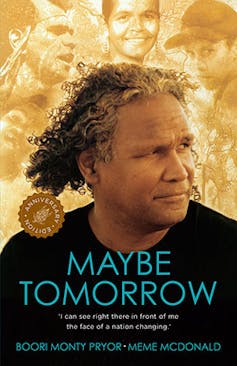
Maybe Tomorrow by Boori Monty Pryor and Meme McDonald.

Celebrity chef Jamie Oliver’s new fantasy novel for primary students, Billy and the Epic Escape, features a First Nations character.

As The Guardian reports, it features a “young First Nations girl living in foster care in an Indigenous community near Alice Springs who gets abducted by the novel’s villain”.

The book was published without consultation with any Indigenous individual or community and has been met with condemnation from Indigenous groups. The National Aboriginal and Torres Strait Islander Education Corporation says it contributes to the “erasure, trivialisation, and stereotyping of First Nations people’s and experience”.

Billy and the Epic Escape has since been pulled from the shelves by its publisher and Oliver has issued an apology.

There are plenty of other, much more suitable options out there if schools want to use contemporary Indigenous texts in their classrooms.

Why is Jamie Oliver’s book a problem?

As Amy Thomson’s 2024 research on English teaching shows, Indigenous voices and stories are sorely missing from Australian classrooms.

While the curriculum encourages teachers to select texts from diverse sources, “the influences of British colonisation manifests in Australian English teachers’ text selection as they continue to choose texts from the ‘canon’”.

Other research also shows how prioritising traditional texts (such as Shakespeare) can silence Indigenous perspectives in the classroom.

But it is essential Indigenous voices and stories of lived experience are prioritised in our pursuit of truth telling and reconciliation in Australia.

In another 2024 paper, Thomson shows how portrayals of Indigenous peoples in fiction have an impact on how children and young people relate to and understand Indigenous people, cultures and histories.

Other Indigenous researchers have stressed the importance of young people engaging with truthful representations of Indigenous Australians and our resilience through First Nations-authored literature.

Through Indigenous texts, the impact of colonisation is not restricted to the past – we show young people our cultures are still here and colonisation is a complex and ongoing process.

At the same time, we know some educators are worried about teaching and talking about Indigenous content. They fear they will make mistakes or misrepresent Indigenous knowledge and perspectives.

Read more: Jamie Oliver wrote First Nations characters the wrong way. Non-Indigenous writers need to listen to Indigenous writers first

There are so many other options

There is an abundance of First Nations-authored texts and stories to include in today’s Australian classrooms for both primary and high school students.

Maybe Tomorrow by Boori Monty Pryor and Meme McDonald.
Allen & Unwin. For example, Kunggandji and Birri-gubba author Boori Monty Pryor writes his books based on his lived experience as an Aboriginal man. Maybe Tomorrow details hardship but celebrates resilience. Pryor engages in truth telling through laying bare the impacts of colonisation and his own experiences of racism, while showcasing his own strength as he overcomes his struggles with mental health. The cover of Anita Heiss' book Bila Yarrudhanggalangdhuray
Simon and Schuster. Wiradyuri woman Anita Heiss writes both fiction and non-fiction. This includes novels, such as Bila Yarrudhanggalangdhuray, celebrating the true history of this country. Heiss also conveys contemporary representations of First Nations women in fictional texts such as Manhattan Dreaming. Heiss also curates anthologies, such as Growing up Aboriginal in Australia, which demonstrate the diversity of our lived experiences. Our Pet Pelican by Carol and Laura Mooka Black Inc Press. Torres Strait Islander author Aunty Carol Mooka and illustrator Lauren Mooka, beautifully articulate real events in their story Our Pet Pelican. Featuring Kriole language, this book is an example of how the lived experience of Indigenous Australians have lessons we can learn from today. These are just three examples of rich, Indigenous-authored texts. There is also a national repository of Indigenous Australian authors and storytellers called Blackwords if teachers are unsure where to start. What else can schools do? Schools and teachers should work closely with Indigenous community members and colleagues when embedding Indigenous content into their teaching. Co-design is a way of working respectfully and collaboratively with First Nations people to avoid Jamie Oliver-type situations. As our research shows, if it is done properly, co-design centres Indigenous leadership and voices in decision-making every step of the way (it is more than mere consultation). If co-design were used well in the Jamie Oliver scenario, there would have been a team of diverse Indigenous experts working with the content writers from conception to publication. We know literature can allow readers to imagine others’ experiences and build empathy and compassion. These are qualities that are essential for truth telling and reconciliation. As other academics have noted, reading is a way of listening. This is something Indigenous peoples have been asking of non-Indigenous Australians for many years.

Read more https://theconversation.com/jamie-olivers-novel-really-missed-the-mark-there-are-plenty-of-fantastic-first-nations-books-if-schools-look-for-them-243359

Why Retail Cleaning Plays a Key Role in Customer Experience

In retail environments, cleanliness directly shapes how customers perceive a brand. Retail cleaning is not just about appearance but about creating a space where shoppers feel comfortable, confident, and welcome. From small boutiques to large shopping centres, a clean retail environment... Read more

Cleaner Floors, Healthier Homes: Lefant M3L Arrives as Australians Prioritise Pet-Friendly Hygiene

As pet ownership continues to rise, Australians are placing greater emphasis on maintaining a hygienic indoor environment for both family members and their animals. Issues such as dander, loose fur, and tracked-in dirt require consistent cleaning to support better home... Read more

How Home Removalists Save Time, Money, and Energy During Your Move

Moving to a new home is an exciting chapter in life, but the process of getting there can be overwhelming. From packing and organizing to transportation and unpacking, relocation involves a long list of tasks that can consume both your... Read more

Fulfilment Australia: Streamlining ECommerce Operations for Business Growth

As eCommerce continues to thrive, efficient order fulfilment has become one of the most critical components of customer satisfaction and business success. Companies across the nation are turning to professional fulfilment Australia providers to manage inventory, packaging, and shipping operations... Read more

Evaporative Cooling Cleaning Melbourne: Keeping Your System Fresh, Efficient, and Healthy

As Melbourne’s summers grow hotter, many homes rely on evaporative cooling systems to stay comfortable. While these systems are energy-efficient and environmentally friendly, they require regular maintenance to perform at their best. Professional Evaporative Cooling Cleaning Melbourne services are essential... Read more

4 Benefits of Exploring Australia in an Off Road Caravan

Australia’s vast landscapes offer a kind of freedom that can only be fully experienced on the open road. For travellers seeking caravans for sale, choosing one built for adventure can transform any journey into a memorable one. This article will... Read more