

In a global nursing shortage, NZ’s reliance on overseas-trained staff is not sustainable
- Written by The Conversation
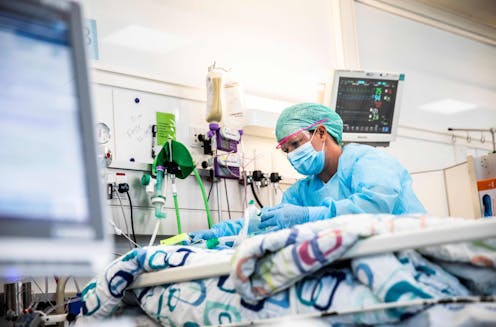
The global shortage of trained nurses has been described as a health emergency by the International Council of Nurses.
In response, Australia and other countries have developed nursing workforce strategies to protect their health systems. But there has been no response to calls for a similar approach in New Zealand.
Registered nurses make up the largest proportion of the healthcare workforce, in New Zealand and elsewhere. A sustainable supply of culturally and clinically competent nurses is fundamental to a safe health system. But because of funding constraints, New Zealand is grappling with both a nursing shortage and an oversupply.
Earlier this year, hundreds of experienced international nurses registered to work in New Zealand struggled to find jobs. At the same time, nurses continue to report being short-staffed, with no back-filling for staff on leave or off sick.
It is difficult to respond to rapid changes in demand because the time it takes to train a nurse creates a significant supply lag. But not maximising nursing investment makes little strategic sense and I argue New Zealand urgently needs a workforce strategy.
Investing in growing our own
Preparing a registered nurse for practice requires significant investment. It takes three years of full-time undergraduate or two years of full-time postgraduate study.
The study pathway is intensive, with at least 1,000 hours spent in clinical learning across multiple health settings in primary and community care, mental health and hospital services. This includes undertaking rostered and rotating shift work as preparation for registered nursing practice.
The Tertiary Education Commission investment in undergraduate nursing represents around a third of all undergraduate health funding and 7% of all undergraduate funding in the tertiary sector.
In 2023, 1,784 new New Zealand-educated registered nurses were available for employment in the system. This represents a cumulative national investment of around $70 million.
“Cost-containment” cuts previously led Te Whatu Ora Health New Zealand to freeze employment of graduate nurses into the hospital system. This risks not only losing these valuable new health professionals but also reducing new enrolments into nursing programmes.
Nursing programmes are financially challenging. Many nursing graduates incur considerable debt related to their tuition fees (around NZ$30,000 across the whole programme), plus the additional costs associated with the clinical learning requirements (immunisations, clinical equipment, uniforms and travel).
Recent announcements in Australia of financial support for health students to address placement poverty (financial hardship during unpaid clinical placements) have been welcomed. There are no plans for similar initiatives in New Zealand.
Potential triple impact on nursing
Addressing the financial barriers to nursing students completing their education and subsequent employment is critical to achieving equitable access to healthcare and universal health coverage.
Creating a sustainable nursing workforce has a triple impact in supporting better health outcomes, the economic growth of communities and gender equality.
The latest government policy statement on health sets an objective for a culturally competent and homegrown workforce that reflects the population of New Zealand.
According to the Nursing Council’s 2023 annual report, New Zealand’s current nursing workforce is making slow progress toward better reflecting the population it serves. But we have a solution within the current body of nursing students.
Of the 8,885 students enrolled in nursing bachelor programmes in 2023, 18% identified as Māori, 15% as one or more Pacific ethnicities, and 25% as Asian. This student body (if retained) will have a positive impact on the current profile of nursing in New Zealand.
There is also an international expectation that developed countries reduce their reliance on the recruitment of qualified nurses from less developed countries, which places their health systems in peril. New Zealand ranked second in the OECD in having the lowest proportion of domestically educated nurses in 2021, at just 70.1%.
Most other OECD countries in that year reported that 90-95% of their nurses were domestically educated. Australia is an outlier at 82%.
But now New Zealand’s proportion of domestically-trained nurses has declined even further to only 53.7%. Our current reliance on internationally qualified nurses is not a sustainable strategy and risks not delivering on government workforce policy and equity targets for Māori.
Where to from here
Registered nurses are critical to the sustainability of health systems globally. New Zealand will not be able to continue to pull from overseas jurisdictions. We need to grow and keep our own domestic nursing graduates to meet government targets around the health workforce.
The are some potential solutions already in place. The current voluntary bonding scheme could start in the final year of the pre-registration programme to address some of the placement poverty issues.
Te Whatu Ora Health New Zealand could explore models such as the New South Wales state government’s GradStart approach which provides a job with the option of metro-to-rural or rural-to-rural employment exchanges offered through a supported central system.
There is a critical need for the development and resourcing of a New Zealand nursing workforce strategy that considers recruitment (growing our own) and retention (keeping them). Both are critical elements of a sustainable workforce plan informed by Te Tiriti o Waitangi.
This would support the system to proactively plan for and resource a more sustainable approach to protect the investment we have already made in nursing education.


