

From a US$300 billion climate finance deal to global carbon trading, here’s what was – and wasn’t – achieved at the COP29 climate talks
- Written by The Conversation
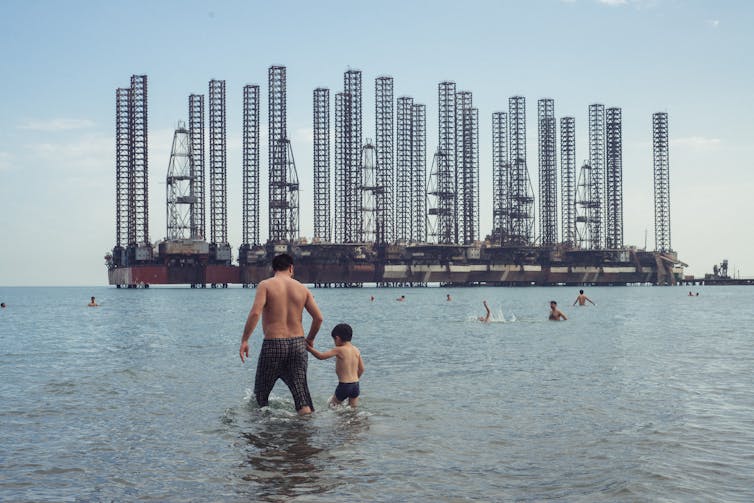
The petroleum-laden dust has settled on this year’s United Nations climate summit, COP29, held over the past fortnight in Baku, Azerbaijan. Climate scientists, leaders, lobbyists and delegates are heading for home.
The meeting achieved incremental progress. Negotiators agreed on a new climate finance target of at least US$300 billion a year by 2035 (A$460 billion), up from US$100 billion now. These funds would help developing nations shift away from fossil fuels, adapt to the warming climate and respond to loss and damage from climate disasters.
Nations also agreed on the essential rules for a global carbon trading market, the last agreement needed to make the 2015 Paris Agreement fully operational.
As UN climate chief Simon Stiell said in the final session, the 29th Conference of the Parties (COP29) meeting showed the Paris Agreement was delivering on climate action, but national governments “still need to pick up the pace”.
I attended COP29 as an expert in international climate law and litigation. I observed the finance negotiations firsthand and represented a new alliance of Australian and Pacific universities supporting international climate cooperation.
At the outset, expectations for the conference were low. The United States had just voted for the return of climate denier Donald Trump. And Azerbaijan President Ilham Aliyev declared oil and gas a “gift of God” at an opening event.
But even with these considerable headwinds, progress was made.
Progress on climate finance
The world’s rich countries currently contribute US$100 billion a year to climate finance for developing nations. It pays for measures to reduce greenhouse gas emissions and adapt to climate change by making systems more resilient.
Two years ago, countries agreed to create a new “loss and damage” fund for nations dealing with climate disasters, launched at the summit in Dubai last year.
At these COP29 talks, Australia announced it would contribute A$50 million (US$32 million) to this fund. Climate change is already costing developing countries huge sums, estimated at US$100-$500 billion a year.
These flows of funding from rich countries are essential for developing nations to increase their emissions reduction, as well as respond to climate damage.
The COP29 deal sets a target of at least US$300 billion per year by 2035, with richer countries leading delivery.
While this goal represents a tripling of the previous target, it falls far short of the $400-$900 billion many developing countries had called for in finance from rich governments.
Disappointed developing country representatives labelled it “a paltry sum” and a “joke”. It also falls short of what experts say is needed by 2035 to meet global climate finance needs.
Recognising this gap, the text calls on “all actors to work together” to scale up finance from all public and private sources to at least US$1.3 trillion per year by 2035. Ways this might be achieved will be presented at COP30 in Belém, Brazil, a year from now.
Making the international carbon market a reality
COP29 also reached an agreement that settles longstanding disputes about making the international carbon market a reality. This hard-won deal delivered global standards for carbon trading, opening up new ways for developing countries to boost their renewable energy capacity.
These rules will pave the way for country-to-country trading of carbon credits. Each credit represents a tonne of carbon dioxide either removed from the atmosphere or not emitted. The deal will give countries more flexibility in how they meet their emissions targets.
It’s not perfect. Concerns linger on whether the rules will ensure trades reflect real projects and how transparent and accountable the market will be.
But the agreement will boost the importance of carbon credits and could increase incentives to protect carbon “sinks” – such as rainforests, seagrass meadows and mangroves – with flow-on nature benefits.
New national climate goals
By February 2025, all 195 Paris signatories have to announce more ambitious emission targets. Some countries announced their new plans at COP29.
The most ambitious was the United Kingdom, which upped its 2030 goal of a 68% cut to reducing 81% below 1990 emissions by 2035.
Next year’s host, Brazil, released new targets for a 59%–67% drop below 2005 levels by 2035.
But Brazil didn’t amend its 2030 ambitions and plans to boost oil and gas production 36% by 2035.
The United Arab Emirates announced target cuts of 47% before 2035, ahead of net zero by 2050. But this pledge was criticised by climate campaigners because the UAE is projected to boost oil and gas production 34% by by 2035.
The host, Azerbaijan, did not release its goals. Many other countries, including Australia, also held off from announcing new targets in Baku.
Indecision on fossil fuels
Fossil fuels were the elephant in the room. At last year’s COP in Dubai, nations finally agreed to include wording on:
transitioning away from fossil fuels in energy systems, in a just, orderly and equitable manner, accelerating action in this critical decade, so as to achieve net zero by 2050 in keeping with the science
But at this year’s COP, there was no decision on how, exactly, to begin this transition – and fossil fuels are not explicitly mentioned in the outcome documents.
Delegates from oil giant Saudi Arabia repeatedly tried to block mention of fossil fuels across all of the negotiating streams.

Trump’s return wasn’t a deal-breaker
The consequences of Trump’s re-election for climate action were much discussed. But I observed a surprising amount of acceptance and even optimism for climate cooperation.
The US is the world’s second-largest emitter, after China. Trump has promised to ramp up the country’s oil and gas production, and pull the US from the Paris Agreement as he did during his first term.
But climate action continued regardless – especially in renewables giant China, which hit its 2030 renewable target this year. The US is no longer the main player in climate negotiations, and many countries are much further down the road of cutting emissions. Few show signs of backtracking.
As the US bows out, it creates a vacuum. At COP29, middle powers such as Canada, the UK and Australia stepped up.
Negotiators from a progressive High Ambition Coalition – including small island states, the European Union and Latin American countries such as Columbia – played an important role in pushing to urgently increase finance for climate action.
China, for its part, is clearly eyeing off the position of climate leader about to be vacated by the US. And leaders of progressive US states attended COP29 to show parts of the US are still on board with climate action.
 Passing the baton? US deputy envoy Rick Duke talks to China’s climate envoy Liu Zhenmin at the Chinese pavilion in Baku.
Peter DeJong/AP
Passing the baton? US deputy envoy Rick Duke talks to China’s climate envoy Liu Zhenmin at the Chinese pavilion in Baku.
Peter DeJong/AP
Australia’s hosting bid for 2026 talks in limbo
Australia’s bid to host COP31 in 2026 alongside Pacific nations was tipped to win, given it had the support from nearly all of the 29 “Western European and Other States” group of nations which will decide the host this time. Many observers expected an announcement at the end of COP29.
But no decision was made, as the rival bidder, Türkiye, did not withdraw its bid.
An announcement is now likely in mid-2025 – after Australia’s next federal election.
What now?
Many people are disappointed by COP29. It did not bring transformative change. The huge jump in climate finance called for by developing countries, and many in civil society, didn’t eventuate.
It came as 2024 is on track to be the hottest on record, and the costs of extreme weather have risen to more than US$2 trillion over the last decade.
But this year’s talks were still a step forward, affirming international climate cooperation at a time of significant geopolitical tensions globally. As the UN’s Simon Stiell said:
the UN Paris Agreement is humanity’s life-raft; there is nothing else […] We are taking that journey forward together.


