

‘It’s the worst feeling’ – young New Zealanders regret their vaping addictions but feel unsupported to quit
- Written by The Conversation
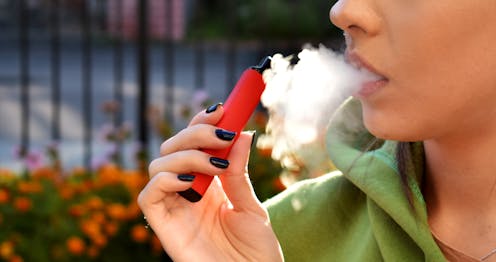
Vaping rates among young people continue to be a major public health concern, both in Aotearoa New Zealand and elsewhere.
New vape legislation currently before the health select committee proposes a ban on disposable vapes and restrictions on retailers (except specialist vape shops) which would no longer be able to display vaping products.
Currently, vaping products are widely available and aggressive marketing of youth-oriented designs and flavours has encouraged experimentation among young people.
These products contain nicotine and have powerful addictive potential. They also carry other risks, such as increasing young people’s susceptibility to lung inflammation, infection or injury.
The 2023/24 NZ Health Survey found 10.5% of people aged 15 to 17 vaped daily. Among young adults aged 18 to 24, 26.5% were vaping daily.
The latest ASH Year 10 Snapshot Survey, which involves adolescent students aged 14 to 15, reported that vaping has imposed a heavier burden on Māori, with 22% of Māori Year 10 students vaping daily, compared to 10% among all Year 10 students.
But how are young people experiencing vaping, and how does it affect their lives?
To address this question, we undertook in-depth interviews with 20 adolescents (aged 16 to 18) who live in Aotearoa and consider themselves moderately to heavily addicted to vaping.
Our research explains how addiction affected their wellbeing, interpersonal relationships and self-view.
Young people feel repulsed by their vaping addiction
Initially, participants found vaping offered pleasurable new sensations and helped them to fit in with their peers. But their views changed as they recognised they had become addicted.
They began to feel highly resentful of the hold vaping had over them and it became disgusting rather than pleasurable.
It’s not even a fun thing [anymore] […] I got sick of [having this] device in your mouth [to] blow out flavoured smoke. That sounds gross. I really hate it.
Nearly all wanted to quit, but their addiction felt overwhelming and some began feeling fatalistic and doomed to continue vaping.
I’m probably slowly killing [my lungs], killing myself. I’ll worry about it [when it happens].
Many participants felt judged by adults in their lives, particularly family members but also teachers and people they encountered in public spaces. These participants resented comments and criticisms, which often came without offers of support.
It’s the worst feeling. I got into [vaping], I know that’s my fault, but it’s hard to get out.
To avoid judgements that left them feeling worse, some hid their vaping, which increased feelings of isolation. Many worried about how adults viewed them and felt their reputation would be damaged if someone they knew saw them vaping.
A lot of people shun [it]. So, I wouldn’t usually walk down the street with [a vape]. I wait until I’m somewhere more secluded.
Young people blame themselves and feel lost
Perceived judgement from others made the regret, guilt and intense self-blame participants experienced worse because they saw no escape from their addiction.
Few considered how vaping companies had targeted them, or how inadequate government regulation had failed them; many blamed themselves and wished they could turn the clock back.
There [are so many] downsides. If I [could change things], I would 100% [never] touch a vape […] I would pay thousands if I could go back.
[I never thought] this would happen to me. But, at the end of the day it’s nobody else’s fault.
These feelings severely affected several participants’ mental wellbeing and they had withdrawn and felt anxious and depressed.
I personally just don’t even look at myself anymore, because I don’t recognise myself […] it takes a [big toll] on self-image.
Tackling young people’s vaping with robust policies
We found that vaping addiction negatively affected participants’ relationships and how they saw themselves. They felt judged and unsupported in managing their addiction to vaping.
These findings reinforce the need for stronger upstream policies that protect young people from aggressive marketing. Ending the sale of disposable vaping products is an important first step and we are pleased the health select committee has recommended amending the law and to end vape discounting and loyalty programmes.
However, more could and should be done to reduce the availability of vaping products and limit attributes that appeal particularly to young people. This includes:
ending vaping product sales in generic retailers such as dairies and service stations, and limiting product sales to age-restricted (R-18) specialist shops
capping vape retailer numbers and reducing outlet density, particularly in more deprived areas
restricting all (current and future) general and specialist vape retailers from operating within 500 metres of schools and marae
monitoring the impact of a ban on disposable vape sales (as the government plans to do) to ensure companies do not undermine the measure.
Targeted cessation programmes could also help young people to quit, but these must take an empathetic approach and respond to their particular needs.


