

Labor’s dumping of Australia’s new nature laws means the environment is shaping as a key 2025 election issue
- Written by The Conversation
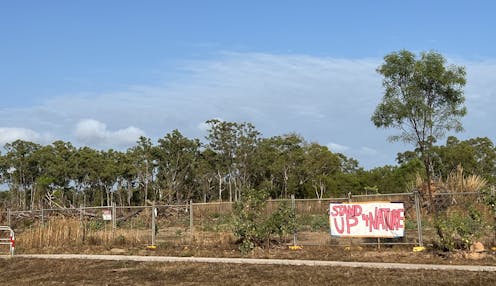
Prime Minister Anthony Albanese has shelved the proposed reforms to Australia’s 25-year-old environment laws, citing a lack of parliamentary support for the changes.
The decision breaks Labor’s 2022 election commitment to overhaul the protections. The Albanese government is now the latest in a string of governments that have tried and failed to reform the law known formally as the Environmental Protection and Biodiversity Conservation (EPBC) Act.
This is despite two major independent reviews calling for wholesale change.
Labor’s capitulation does not, however, change the facts. Australia’s natural environment is deteriorating rapidly. Laws are urgently needed to protect our nation’s valuable natural assets.
Establishing effective laws is an investment that will benefit Australia’s biodiversity, economy, cultural values, health and wellbeing. Nature is now a key 2025 election issue.
How did we get here?
An independent review of the EPBC Act, known as the Samuel Review, was completed in 2020 under the former Coalition government. It found that without urgent changes, most of Australia’s threatened plants, animals and ecosystems will become extinct.
Federal Environment Minister Tanya Plibersek promised to act on the review’s recommendations, via a plan Labor badged as “Nature Positive”.
The centrepiece of reform is to set national environmental standards that would be overseen by an independent regulator and watchdog called Environmental Protection Australia (EPA). But reform was split into three stages.
Stage one legislated for national markets in nature repair and expanded the requirement to assess potential impacts on water resources under the EPBC Act. The so-called “water trigger” now captures “unconventional gas” projects such as shale gas recovery in the Northern Territory’s Beetaloo Basin. The law passed in December 2023, but the markets are not yet functioning.
Stage two of the reforms, including establishing a federal EPA, came before the Senate in late 2024. Plibersek had reportedly made a deal with the crossbench to secure passage. But this deal was scuttled by Albanese at the eleventh hour.
Stage two was relisted for discussion in the upcoming first parliamentary sitting week of 2025, this week. But on Saturday, Albanese told The Conversation the government would, again, not be proceeding with the reform this term.
The reforms have been delayed for so long that we are now closer to the next statutory review of the laws, due in 2029, than to the last one.
Stage three, which covers the bulk of substantive reform recommended in the Samuel Review, is yet to be seen publicly.
What will happen after the next election?
Albanese must go to the polls by May 17, but there is speculation the election may be as early as March. So what is the likely fate of these environmental reforms in the next term?
A Roy Morgan poll on Monday found if a federal election were held now, the result would be a hung parliament. So the result is looking tight.
Government control of the Senate is rare. So whoever is in power after the election is very likely to rely on crossbench support for any reforms.
Albanese has ruled out forming a coalition with the Greens or crossbenchers in the event of a hung parliament. However, Opposition Leader Peter Dutton says he would negotiate with independents to form government.
A returned Albanese majority government would probably revisit the scuttled deal on stage two. With elections in the rear-view mirror, Albanese may be prepared to wear some political pain early in the next term to secure a deal. He would also still need to roll out the bulk of the Nature Positive reforms, the detail of which remains hidden behind a vague “stage three” banner.
A minority Albanese government may face a tougher ask: demands from an environmentally progressive crossbench for major commitments to environmental reform in return for promises of support on budget and confidence.
A Coalition government would be coming from a very different angle. Dutton has painted Nature Positive as a “disaster” for the economy, expressing particular concern about impacts on the mining sector.
The Coalition’s environmental agenda is increasingly focused on “cutting green tape” – in other words, reducing bureaucratic hurdles for developers – and repealing bans on nuclear power stations. Finding crossbench support in the Senate for this agenda could be challenging.
The Greens have vowed to make environmental protection a key election issue, urging voters to cast their ballot for nature this election.
A recent poll published by the Biodiversity Council shows 75% of Australians support strengthening national environmental law to protect nature. Only 4% are opposed and the rest are undecided.
But converting a high level of broad support into votes is another thing altogether – especially during a cost-of-living crisis.
Crystal clear consequences
The political crystal ball remains cloudy. But when it comes to the state of Australia’s environment, the picture is clear.
The environment continues to decline and the consequences are increasingly serious. These consequences extend beyond further irreversible loss and the increasing cost of environmental repair, to include the economic and social consequences of losing more of the natural assets on which our quality of life depends.
The building blocks of successful reform are all on the table, where the Samuel Review put them in 2020.
When will governments accept that kicking the can down the road is selling us all down the drain?


