

When a 1-in-100 year flood washed through the Coorong, it made the vital microbiome of this lagoon healthier
- Written by The Conversation
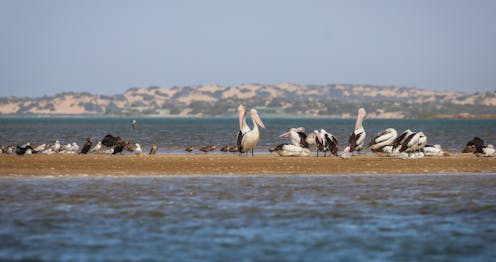
You might know South Australia’s iconic Coorong from the famous Australian children’s book, Storm Boy, set around this coastal lagoon.
This internationally important wetland is sacred to the Ngarrindjeri people and a haven for migratory birds. The lagoon is the final stop for the Murray River’s waters before they reach the sea. Tens of thousands of migratory waterbirds visit annually. Pelicans, plovers, terns and ibises nest, while orange-bellied parrots visit and Murray Cod swim. But there are other important inhabitants – trillions of microscopic organisms.
You might not give much thought to the sedimentary microbes of a lagoon. But these tiny microbes in the mud are vital to river ecosystems, quietly cycling nutrients and supporting the food web. Healthy microbes make for a healthy Coorong – and this unassuming lagoon is a key indicator for the health of the entire Murray-Darling Basin.
For decades, the Coorong has been in poor health. Low water flows have concentrated salt and an excess of nutrients. But in 2022, torrential rains on the east coast turned into a once-in-a-century flood, which swept down the Murray into the Coorong.
In our new research, we took the pulse of the Coorong’s microbiome after this huge flood and found the surging fresh water corrected microbial imbalances. The numbers of methane producing microbes fell while beneficial nutrient-eating bacteria grew. Populations of plants, animals and invertebrates boomed.
We can’t just wait for irregular floods – we have to find ways to ensure enough water is left in the river to cleanse the Coorong naturally.

Rivers have microbiomes, just like us
Our gut microbes can change after a heavy meal or in response to dietary changes.
In humans, a sudden shift in diet can encourage either helpful or harmful microbes.
In the same way, aquatic microbes respond to changes in salinity and freshwater flows. Depending on what changes are happening, some species boom and others bust.
As water gets saltier in brackish lagoons, communities of microbes have to adapt or die. High salinity often favours microbes with anaerobic metabolisms, meaning they don’t need oxygen. But these tiny lifeforms often produce the highly potent greenhouse gas methane. The microbes in wetlands are a large natural source of the gas.
While we know pulses of freshwater are vital for river health, they don’t happen often enough. The waters of the Murray-Darling Basin support most of Australia’s irrigated farming. Negotiations over how to ensure adequate environmental flows have been fraught – and long-running. Water buybacks have improved matters somewhat, but researchers have found the river basin’s ecosystems are not in good condition.

The Coorong is out of balance
A century ago, regular pulses of fresh water from the Murray flushed nutrients and sediment out of the Coorong, helping maintain habitat for fish, waterbirds and the plants and invertebrates they eat. While other catchments discharge into the Coorong, the Murray is by far the major water source.
Over the next decades, growth in water use for farming meant less water in the river. In the 1930s, barrages were built near the river’s mouth to control nearby lake levels and prevent high salinity moving upstream in the face of reduced river flows.
Major droughts have added further stress. Under these low-flow conditions, salt and nutrients get more and more concentrated, reaching extreme levels due to South Australia’s high rate of evaporation.
In response, microbial communities can trigger harmful algae blooms or create low-oxygen “dead zones”, suffocating river life.
The big flush of 2022
In 2022, torrential rain fell in many parts of eastern Australia. Rainfall on the inland side of the Great Dividing Range filled rivers in the Murray-Darling Basin. That year became the largest flood since 1956.
We set about recording the changes. As the salinity fell in ultra-salty areas, local microbial communities in the sediment were reshuffled.
The numbers of methane-producing microbes fell sharply. This means the floods would have temporarily reduced the Coorong’s greenhouse footprint.
 Christopher Keneally sampling for microbes in the Coorong in 2022.
Tyler Dornan, CC BY
Christopher Keneally sampling for microbes in the Coorong in 2022.
Tyler Dornan, CC BY
When we talk about harmful bacteria, we’re referring to microbes that emit greenhouse gases such as methane, drive the accumulation of toxic sulfide (such as Desulfobacteraceae), or cause algae blooms (Cyanobacteria) that can sicken people, fish and wildlife.
During the flood, beneficial microbes from groups such as Halanaerobiaceae and Beggiatoaceae grew rapidly, consuming nutrients such as nitrogen, which is extremely high in the Coorong. This is very useful to prevent algae blooms. Beggiatoaceae bacteria also remove toxic sulfide compounds.
The floods also let plants and invertebrates bounce back, flushed out salt and supported a healthier food web.
On balance, we found the 2022 flood was positive for the Coorong. It’s as if the Coorong switched packets of chips for carrot sticks – the flood pulse reduced harmful bacteria and encouraged beneficial ones.
While the variety of microbes shrank in some areas, those remaining performed key functions helping keep the ecosystem in balance.
From 2022 to 2023, consistent high flows let native fish and aquatic plants bounce back, in turn improving feeding grounds for birds and allowing black swans to thrive.
 A group of black swans cruise the Coorong’s waters.
Darcy Whittaker, CC BY
A group of black swans cruise the Coorong’s waters.
Darcy Whittaker, CC BY
Floods aren’t enough
When enough water is allowed to flow down the Murray to the Coorong, ecosystems get healthier.
But the Coorong has been in poor health for decades. It can’t just rely on rare flood events.
Next year, policymakers will review the Murray-Darling Basin Plan, which sets the rules for sharing water in Australia’s largest and most economically important river system.
Balancing our needs with those of other species is tricky. But if we neglect the environment, we risk more degradation and biodiversity loss in the Coorong.
As the climate changes and rising water demands squeeze the basin, decision-makers must keep the water flowing for wildlife.


