

Good boy or bad dog? Our 1 billion pet dogs do real environmental damage
- Written by The Conversation
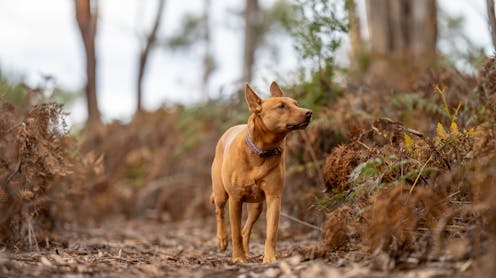
There are an estimated 1 billion domesticated dogs in the world. Most are owned animals – pets, companions or working animals who share their lives with humans. They are the most common large predator in the world. Pet cats trail far behind, at about 220 million.
We are all too aware of the negative effects of cats, both owned and feral, on wildlife. Feral dogs too are frequently seen as threats to biodiversity, although dingoes can have a positive role. By contrast, our pet dogs often seem to get a free pass.
This is, unfortunately, based more on feelings than data. Our beloved pet dogs have a far greater, more insidious and more concerning effect on wildlife and the environment than we would like to be the case.
In our new research, we lay out the damage pet dogs do and what can be done about it.
Dogs are predators. They catch many types of wildlife and can injure or kill them. Their scent and droppings scare smaller animals. Then there’s the huge environmental cost of feeding these carnivores and the sheer quantity of their poo.
We love our pet dogs, but they come with a very real cost. We have to recognise this and take steps to protect wildlife by leashing or restraining our animals.
The predator in your home
Dogs are domesticated wolves, bred to be smaller, more docile and extremely responsive to humans. But they are still predators.
Pet dogs are responsible for more reported attacks on wildlife than are cats, according to data from wildlife care centres, and catch larger animals.
Pet dogs off the leash are the main reason colonies of little penguins are nearing collapse in Tasmania.

In New Zealand, a single escaped pet dog is estimated to have killed up to 500 brown kiwis out of a total population of 900 over a five-week period.
Once off the leash, dogs love to chase animals and birds. This may seem harmless. But being chased can exhaust tired migratory birds, forcing them to use more energy. Dogs can kill fledglings of beach-nesting birds, including endangered birds such as the hooded plover.
The mere presence of these predators terrifies many animals and birds. Even when they’re on the leash, local wildlife are on high alert. This has measurable negative effects on bird abundance and diversity across woodland sites in eastern Australia.
In the United States, deer are more alert and run sooner and farther if they see a human with a leashed dog than a human alone.
Several mammal species in the United States perceived dogs with a human as a bigger threat than coyotes.
Dogs don’t even have to be present to be bad for wildlife. They scent-mark trees and posts with their urine and leave their faeces in many places. These act as warnings to many other species. Researchers in the US found animals such as deer, foxes and even bobcats avoided areas dogs had been regularly walked compared to dog exclusion zones, due to the traces they left.

Keeping dogs healthy and fed has a cost
The medications we use to rid our pet dogs of fleas or ticks can last weeks on fur, and wash off when they plunge into a creek or river. But some of these medications have ingredients highly toxic to aquatic invertebrates, meaning a quick dip can be devastating.
Researchers have found when birds such as blue tits and great tits collect brushed-out dog fur to line their nests, it can lead to fewer eggs hatching and more dead hatchlings.
Then there’s the poo. In the US, there are about 90 million pet dogs, while the UK has 12 million and Australia has 6 million.
The average dog deposits 200 grams of faeces and 400 millilitres of urine a day. This translates to a tonne of faeces and 2,000 litres of urine over a 13 year lifespan. Scaled up, that’s a mountain of waste.
This waste stream can add to nitrogen pollution in waterways, alter soil chemistry and even spread diseases to humans and other wildlife. More than 80% of the pathogens infecting domesticated animals also infect wildlife.
Dogs largely eat meat, meaning millions of cows and chickens are raised just to feed our pets. Feeding the world’s dogs leads to about the same emissions as the Philippines and a land use “pawprint” twice the size of the UK.
No one likes thinking about this
People love their dogs. They’re always happy to see us. Their companionship makes us healthier, body and mind. Many farms couldn’t run without working dogs. We don’t want to acknowledge they can also cause harm.
Dogs, of course, are not bad. They’re animals, with natural instincts as well as the domesticated instinct to please us. But their sheer numbers mean they do real damage.
Many of us have a large dog-shaped blind spot. Little Brutus wouldn’t have done something like that, we think. But Brutus can and does.
Choosing to own a dog comes with responsibilities. Being a good dog owner means caring not just for the animal we love, but the rest of the natural world.


