

Plans to stockpile critical minerals will help Australia weather global uncertainty – and encourage smaller miners
- Written by The Conversation
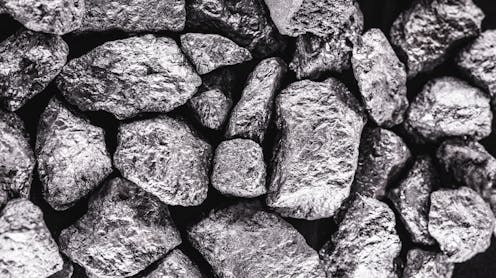
The world needs huge quantities of critical minerals to make batteries, electric vehicles, wind turbines, mobile phones, computers and advanced weaponry.
Many of these minerals lie under Australian soil. Australia is able to produce 9 out of 10 mineral elements required to produce lithium-ion batteries, such as lithium, nickel and cobalt. It also has the highest total reserves of battery minerals.
But at a time of major geopolitical upheaval, critical minerals are also contested. China controls many critical mineral supply chains, allowing it to dominate clean energy technologies. The ongoing United States–China trade war has intensified competition for access to critical minerals.
It’s against this backdrop that Labor has proposed a A$1.2 billion strategic reserve of critical minerals. It’s a timely and welcome step in the right direction.
Why is this reserve needed?
Critical minerals are vital to the industries of the future. But supply can be hard to secure and disruptions can be devastating.
After US President Donald Trump jacked up tariffs on China, Beijing responded by clamping down on critical mineral exports. Almost 80% of US weaponry depends on Chinese critical minerals.
China now dominates mining and refining of many critical minerals. Beijing controls 90% of the world’s rare earth refining, 80% of lithium refining and 68% of nickel refining. The US and other nations are belatedly trying to catch up.
Mining has long been a major Australian industry, particularly iron ore and coal. But Australia has huge reserves of many critical minerals, producing the largest volume of lithium ore in the world as well as stocks of cobalt, manganese, rutile and others. Australian miners Lynas and Australian Strategic Materials are two of the few rare-earth mining companies not owned by China.
That’s where this strategic reserve comes in. If it comes to fruition, the federal government would buy agreed volumes of critical minerals from commercial projects, or establish an option to purchase them at a given price. It would then keep stockpiles of these key minerals to prevent market manipulation by China and stabilise prices by releasing or holding stocks strategically.
The reserve would give Canberra more leverage in negotiating with trading partners and enable a rapid response to supply disruptions. Government backing for the industry would boost onshore processing, scale up domestic production and encourage more high-wage, high-skill jobs in regional areas.
Which minerals will be stockpiled? That’s yet to be determined. The list of ‘critical minerals’ can vary between countries, and a mineral critical to one nation may not be to another.
Australia lists 31 critical minerals while Japan lists 35, the US lists 50 and the European Union 34. Australia’s list is unique in that it reflects global demand, not domestic dependency.
The minerals most commonly included in these lists include cobalt, gallium, indium, niobium, tantalum, platinum group minerals and rare earth elements.
Why is the government intervening?
In 2023, major miners produced close to a billion tonnes of iron ore in Western Australia.
By contrast, critical mineral volumes are small. For instance, only 610 tonnes of gallium were mined in 2023. Major miners such as Rio Tinto, BHP and Vale don’t tend to bother.
Critical mineral markets are often opaque and highly concentrated. The barrier to entry is high. Globally, the market for the 31 critical minerals on Australia’s list is valued at around A$344 billion – about the size of the global aluminium market.
That leaves it to mid-tier and small miners to bridge the gap between rapidly growing demand and supply. The problem is, raising capital is often very difficult. The price of critical minerals can fluctuate wildly. The price of lithium and nickel have fallen sharply over the last two years due to market oversupply.
The strategic reserve would make it easier for these miners by providing access to capital through loans from Export Finance Australia and private investors, reducing financial uncertainty and cost overruns and acting as a buffer against market volatility.
For instance, mid-tier miner Illuka Resources is building Australia’s first rare earths refinery in Western Australia. The project already has significant government support, but it is likely to need more.
Despite Australia’s significant mineral resources, it faces an uphill battle to gain market share. China’s dominance has been driven by low production costs; low environmental, social and goverance standards; and a competitive labour market. But intensifying geopolitical competition between China and the US means Australian minerals would likely be sought by the US.
How can Australia best play its hand?
In volatile market conditions, cheaper operations have a significant advantage, while new mines face an uphill battle.
Australia’s critical minerals hub framework could help offset capital costs. Smaller miners could form cooperatives to share infrastructure and manage logistics, processing and access to international markets. Sharing infrastructure such as roads, rail, energy and ports would reduce the investment risk.
There are other challenges to overcome, such as the long lead times of 10 years or more to go from discovery to production, limited access to low-cost renewable energy and a shortage of technical and scientific capabilities.
Labor’s strategic reserve would help. But it won’t be enough to make Australia into a critical mineral giant. The government should consider:
- building more regional processing hubs with shared infrastructure and microgrids
- offering royalty exemptions, tax incentives and energy subsidies early on
- giving incentives to retrofit facilities to produce critical minerals found alongside main ores, such as cobalt found alongside copper and antimony with gold
- encouraging models where rare earths are concentrated in Australia and processed overseas in partner countries
- establishing Centres of Excellence on critical minerals and creating shared libraries of intellectual property to support research, avoid duplication and optimise resource allocation.
Overall, the proposed reserve is an excellent idea. Government intervention will be necessary to absorb and mitigate risks from price fluctuations and geopolitical shocks.


