

‘He stopped me from talking to male colleagues’: new research shows how domestic violence so often starts with isolation and control
- Written by The Conversation

When it comes to domestic violence, cases involving catastrophic physical violence are the ones that most often make it into the media.
But our new research shows there are often signs of trouble long before such tragic outcomes – before couples move in together or get married.
We asked a large group of women about how domestic violence (also known as intimate partner violence) they’d experienced had started and escalated.
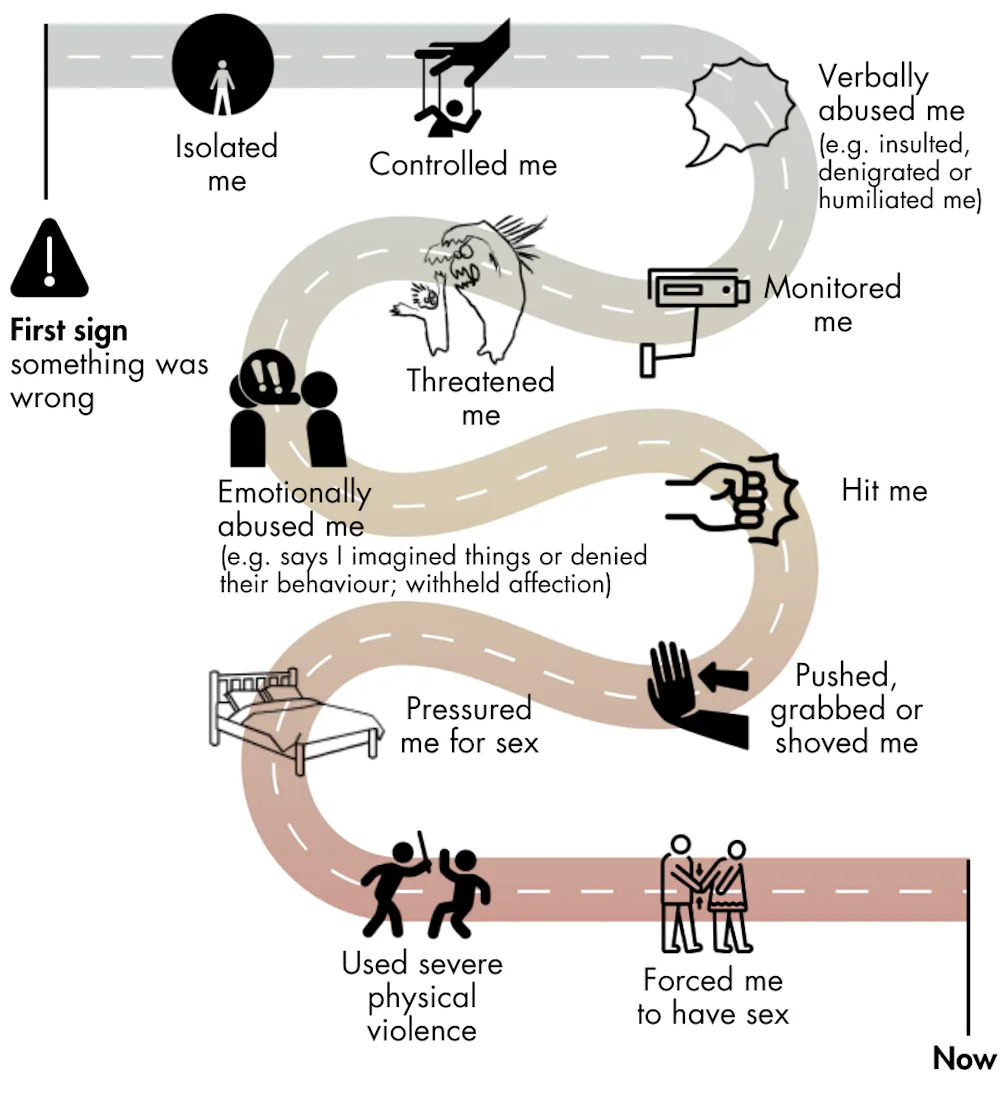
A general pattern emerged. First came psychological abuse, then physical abuse, then sexual abuse.
So if women, health workers and others can recognise the signs of psychological abuse early on, there’s a chance to intervene before abusive behaviour progresses.
How does this relate to coercive control?
The types of psychological abuse women told us about indicate they’d experienced coercive control.
Coercive control is defined as a pattern of restrictive, manipulative and dominating behaviours used to undermine a partner’s autonomy and freedom. While it can occur in any type of relationship, it is most commonly perpetrated by men against women partners and is underpinned by inequitable gender roles and misogynistic attitudes.
Another way of describing coercive control is a pattern of behaviours that aim to prevent a partner from being in charge of their life. For instance, this could mean controlling who a partner can see, what they can wear, or where they can go. Or it could mean questioning a partner’s sanity when they raise concerns about abusive behaviour.
There’s been growing awareness of the impact of coercive control and domestic violence more broadly on women’s health and wellbeing. There’s also growing awareness that coercive control can escalate to catastrophic abuse against women and children, including homicide.
So, Australian states and territories have scrambled to tackle the issue legally. Queensland recently joined New South Wales in making coercive control a standalone criminal offence.
What we did and what we found
We wanted to know more about the progression of domestic violence and if there were key stages to intervene to help prevent the worst harms.
So we surveyed a nationally representative sample of 815 Australian women who had experienced domestic violence in the past five years and asked them to create a timeline of their relationship.
Women started with the earliest warning signs that something was wrong and then added what happened around important life events, such as moving in together, having children, seeking help or leaving. Women could describe their experiences in their own words.
When we analysed all the timelines together, we created a summary of the general sequence of abuse over time.
First, there were attacks to a survivor’s mind, then her physical body, then her sexual self.
Psychological abuse an early sign
Psychological abuse was present in almost all relationships early in the timeline. It usually emerged before moving in together or getting married.
The earliest indicator of abuse was being isolated from others, as one woman said:
He stopped me from talking to male colleagues.
Controlling a woman’s day-to-day activities happened next. One survivor told us how her money and car were used against her:
He kept my belongings from me […] to prevent me from leaving.
Then, as one woman said, there was other emotional abuse:
If I said anything he didn’t like, a brick wall would be erected […] I wouldn’t be spoken to for two to three days.
Another said:
He called me crazy when he had done something wrong.
On average, women told us physically abusive behaviours first appeared after a major life commitment, such as marriage or moving in together.
In general, sexual abuse by a partner first emerged after the psychological and physical abuse started.
For survivors who had a child during the relationship and whose partner was sexually abusive, the worst of that sexual violence generally came sometime after giving birth.
For many survivors, a growing concern about the impact of abuse on their children occurred around the same time as leaving their relationship and trying to get help.
What next?
This research sets out clear opportunities for prevention and early intervention.
We need to train health professionals to look for signs and ask about psychological abuse when their patients are contemplating life transitions. This includes raising awareness and targeted resources for staff working in pregnancy care.
Future research should see if these patterns of abuse apply in different diverse groups of survivors.
We also need better community education, particularly for young women, about the features of psychological abuse that occur early in relationships, before physical and sexual abuse.
As one participant told us:
More domestic violence campaigns should focus on emotional abuse. We focus so much on the physical, but I can feel immediately when I am hit. It takes longer to feel gaslighting, manipulation and other emotionally heavy abuse. It lingers with you. It alters the way you think and traps you far worse than the physical does.
The National Sexual Assault, Family and Domestic Violence Counselling Service – 1800 RESPECT (1800 737 732) – is available 24 hours a day, seven days a week for any Australian who has experienced, or is at risk of, family and domestic violence and/or sexual assault.


