

Lyssavirus is rare, but deadly. What should you do if a bat bites you?
- Written by The Conversation
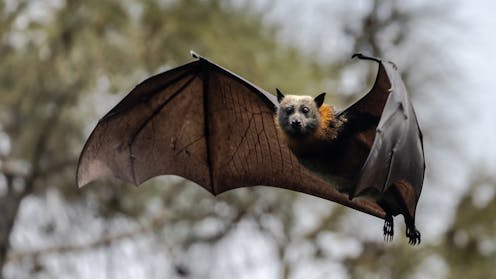
A man in his 50s has died from lyssavirus in New South Wales after being bitten by a bat several months ago.
This is Australia’s fourth human case of bat lyssavirus and the first confirmed case in NSW since the virus was first identified in 1996 in a black flying fox in Queensland.
So what is lyssavirus? And how can you protect yourself if you come into contact with a bat?
A close relative of rabies
Australian bat lyssavirus belongs to the Rhabdoviridae family, the same group of viruses that causes rabies.
It primarily infects bats. Active monitoring suggests fewer than 1% of healthy bats carry the virus, though prevalence rises to 5–10% in sick or injured bats.
In bats, the virus often causes no obvious symptoms, though some show neurological signs such as disorientation, aggression, muscle spasms and paralysis. Some will die.
The virus has been confirmed in all four mainland flying fox species (Pteropus alecto, P. poliocephalus, P. scapulatus and P. conspicillatus) as well as the yellow-bellied sheathtail bat (Saccolaimus flaviventris), a species of microbat.
However, serological evidence – where scientists test for antibodies in bats’ blood – suggests other microbats could be susceptible too. So we should be cautious with all Australian bat species when it comes to lyssavirus.
Rare, but potentially deadly
Unlike rabies, which causes roughly 59,000 human deaths annually, predominantly in Africa and Asia, human infection with bat lyssavirus is extremely rare.
Australian bat lyssavirus, as the name suggests, is unique to Australia. But other bat lyssaviruses, such as European bat lyssavirus, have similarly caused rare human infections.
Human infection with bat lyssavirus occurs through direct contact with infected bat saliva via bites, scratches or open skin. It can also occur if our mucous membranes (eyes, nose, mouth) are exposed to bat saliva.
There’s no risk associated with bat faeces, urine, blood, or casual proximity to roosts.
If someone has been exposed, there’s an incubation period which can range from weeks to more than two years. During this time the virus slowly moves through the body’s nerves to the brain, staying hidden and symptom-free.
Treating the virus during the incubation period can prevent the illness. But if it’s not treated, symptoms are serious and it’s invariably fatal.
The nature of the illness in humans mirrors rabies, beginning with flu-like symptoms (fever, headache, fatigue), then quickly progressing to severe neurological disease, including paralysis, delirium, convulsions, and loss of consciousness. Death generally occurs within 1–2 weeks of symptom onset.
All four recorded human cases in Australia – three in Queensland (in 1996, 1998 and 2013) and the recent NSW case – have been fatal.
There’s no effective treatment once symptoms develop
If someone is potentially exposed to bat lyssavirus and seeks medical attention, they can be treated with post-exposure prophylaxis, consisting of rabies antibodies and the rabies vaccine.
This intervention is highly effective if initiated promptly – preferably within 48 hours, and no later than seven days post-exposure – before the virus enters the central nervous system.
But no effective treatment exists for Australian bat lyssavirus once symptoms develop. Emerging research on monoclonal antibodies offers potential future therapies, however these are not yet available.
So what’s the best protection? And what if a bat bites you?
Pre-exposure rabies vaccination, involving three doses over one month, is recommended for high-risk groups. This includes veterinarians, animal handlers, wildlife rehabilitators, and laboratory workers handling lyssaviruses.
It’s important for members of the public to avoid all direct contact with bats. Only vaccinated, trained professionals, such as wildlife carers or veterinarians, should handle bats.
Public education campaigns are essential to reduce risky interactions, especially in bat-populated areas.
If you get bitten or scratched by a bat, it’s vital to act immediately. Wash the wound thoroughly with soap and water for at least 15 minutes, apply an antiseptic (such as betadine), and seek urgent medical attention.
This tragic case in NSW underscores that while extremely rare, bat lyssavirus is an important public health threat. We need to see enhanced public awareness and ensure vaccination for high-risk groups, alongside ongoing bat monitoring and research into new treatments.


