News Daily


Men's Weekly

Australia

  • Written by The Conversation
Weapons and violence: how does Australia stack up against other similar countries?

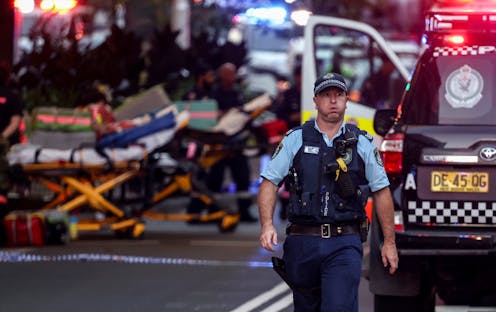
Across five days in April 2024, seven people were killed in five separate knife-related attacks in Sydney.

Two in particular caught huge media attention: the deadly Westfield Bondi attacks and the Wakeley church attack on Bishop Mari Emmanuel.

Three further attacks, including a stabbing that left one teenager dead, deepened the suspicion of worsening knife crime.

But amid the horror of these events and the following media debates, it is important not to lose sight of Australia’s many successes in tackling knife crime, let alone the far more lethal question of gun crime.

Weapons and violence are rarely out of the media cycle in Australia, leading many to fear this country is becoming less safe for everyday people. Is that really the case, though? This is the second story in a four-part series. Fears of a worsening situation In the months that followed, the media reported a wave of knife-related crimes. This included: In each incident, the suspects arrested were teenagers. These events have put the spotlight of knife crime and has already led to the fast-tracking of a ban on machetes in Victoria, and tightening legislation in New South Wales on knife possession and powers to search would-be suspects. The rapid succession of these events led to New South Wales Police Commissioner Karen Webb stating in the aftermath of the Wakeley church attack: Knife crime is an issue that has been on the agenda across Australia and New Zealand for many months and years now. It’s not new. So, what does the data say about the broader trends? Read more: Is Australia becoming a more violent country? What are the trends in Australia? Crime trends, particularly the most violent crime, have largely fallen over the past two decades. The exception to this trend is family, domestic and sexual violence, which remains an urgent concern and, given its complexity, deserves separate attention. Despite this, overall trends in crime, including the most violent, have fallen dramatically since the 1990s. This is part of a global pattern that criminologists call “the great crime drop”. With less violent crime, there is going to be a corresponding drop in use of weapons. Even so, Australian Bureau of Statistics (ABS) data shows a proportional decrease in the use of both firearms and knives in violent offences. In 2023, just 13% of these incidents involved a firearm (down from a high of 22% in 2019), while 24% involved a knife (down from a high of 34% in 2018). In 34% of cases, no weapon was used. The data underline a general decline of knife and firearm use. In NSW, data from the Bureau of Crime Statistics and Research (BOCSAR) paints a very similar picture of stable or declining weapon use across a range of violent offences. Yet, it also reveals the geographical inequality of where such weapons are used, particularly for robbery. The mapping of these incidents tells a story of localised, rather than general, risk: robbery is fairly evenly clustered around population dense areas of central Sydney, Liverpool, Parramatta and the corridor to Penrith. Robbery with a firearm is, of course, much rarer but it is heavily concentrated in just one suburb, Claymore, which sits north of Campbelltown to Sydney’s south. Between April 2024 to March 2025, data show Claymore had 79 robberies involving a firearm per 100,000 residents. The next highest suburb, Kingswood, had only 26 incidents per 100,000. The mapping of robberies with a weapon not a firearm, most typically a knife, again reveals further localised patterns. This points to a need for more targeted, community focused initiatives, rather than blanket restrictions and search powers. What about similar countries? Although firearm and knife restrictions are state and territory based, Australia still has some of the toughest in the world. Firearm restrictions and licensing was largely a reaction to the 1996 Port Arthur massacre, when 35 were killed by a lone gunman. However, data from the Australia Institute estimate more firearms are owned by civilians today than before the Port Arthur massacre. Of course, Australia’s population has grown from around 18 million in 1996 to 28 million today. Despite this, by global comparisons, gun ownership in Australia is relatively low. Data from the Centre for Armed Violence Reduction, for example, estimate Australia ranks below France and above Denmark, but still has almost three times the number of licit and illicit firearms than the UK. The US remains the global outlier on gun ownership in the developed world, with a staggering estimated 121 firearms per 100. Comparing deaths from stabbing globally is much more difficult. However, available estimates generally highlight, once again, the relative safety of Australia. What more can be done? It is important not to minimise the tragedies and harms still routinely caused by knife and firearm violence across Australia. However, the data show how Australia’s efforts to restrict weapon use has been largely successful. But more can be done. More rigid enforcement of existing laws is not enough; it must also include significant investment in preventative measures. Providing young people with positive alternatives to crime, such as education, employment opportunities, and mental health support, is crucial to breaking the cycle of violence that is all too often localised. This is about seeking out and implementing solutions that address the symptoms of this violence as well as the root causes that drive it. The authors would like to thank the Centre for Armed Violence Reduction for sharing their data and contributing to this article.

Read more https://theconversation.com/weapons-and-violence-how-does-australia-stack-up-against-other-similar-countries-260103

Why Cloud Services Are Now Essential for Business Growth and Security

In today’s fast-moving digital environment, understanding how cloud services support long-term stability has become a priority for businesses across Australia. As expectations shift and workplaces adopt more flexible models, organisations are turning to cloud services to keep systems running smoothly... Read more

Steel Cutting Services: Precision That Shapes Modern Construction

In today’s construction, manufacturing, and fabrication environments, steel cutting services play a vital role in turning raw steel into practical, usable components. From large-scale infrastructure projects to bespoke architectural features, the accuracy and quality of steel cutting directly influence the... Read more

Lighting Stores Perth: Expert Guidance for Inspired and Functional Spaces

Choosing the right lighting can completely change how a space feels, functions, and flows. Trusted lighting stores Perth play a crucial role in helping homeowners and businesses make confident lighting decisions that go beyond appearance alone. Lighting influences mood, productivity, comfort... Read more

Why Retail Cleaning Plays a Key Role in Customer Experience

In retail environments, cleanliness directly shapes how customers perceive a brand. Retail cleaning is not just about appearance but about creating a space where shoppers feel comfortable, confident, and welcome. From small boutiques to large shopping centres, a clean retail environment... Read more

Cleaner Floors, Healthier Homes: Lefant M3L Arrives as Australians Prioritise Pet-Friendly Hygiene

As pet ownership continues to rise, Australians are placing greater emphasis on maintaining a hygienic indoor environment for both family members and their animals. Issues such as dander, loose fur, and tracked-in dirt require consistent cleaning to support better home... Read more

How Home Removalists Save Time, Money, and Energy During Your Move

Moving to a new home is an exciting chapter in life, but the process of getting there can be overwhelming. From packing and organizing to transportation and unpacking, relocation involves a long list of tasks that can consume both your... Read more