

A great pessimist and unapologetic traditionalist: László Krasznahorkai wins the 2025 Nobel Prize in Literature
- Written by The Conversation
Hungarian writer László Krasznahorkai has won the 2025 Nobel Prize in Literature for “his compelling and visionary oeuvre that, in the midst of apocalyptic terror, reaffirms the power of art”.
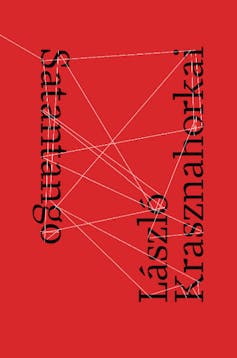
Krasznahorkai is the author of nine novels, numerous collections of short fiction and essays, and several screenplays, including co-writing the epic seven-hour film adaptation of his first book Satantango (1985). He is one of the most distinctive, recognisable writers in the world today.


 Krasznahorkai’s marvellous collection Seiobo There Below (2008) heaps precious treasures against the landslide: the paintings of Filipino Lippi and Giovani Bellini, the Amida Buddha statue in the Zengen-ji temple, the Acropolis, the Noh masks of Ito Ryōsuke.
Like Ezra Pound in his Cantos, Krasznahorkai tallies magnificent artistic achievements to serve as necessary, but never sufficient, correctives to the slurry of contemporary culture.
His contributions to world film culture, in three major collaborative “slow cinema” ventures with director Béla Tarr, stand head and shoulders above the standard fare of these past 30 years. They have added considerably to his international reputation.
Krasznahorkai’s marvellous collection Seiobo There Below (2008) heaps precious treasures against the landslide: the paintings of Filipino Lippi and Giovani Bellini, the Amida Buddha statue in the Zengen-ji temple, the Acropolis, the Noh masks of Ito Ryōsuke.
Like Ezra Pound in his Cantos, Krasznahorkai tallies magnificent artistic achievements to serve as necessary, but never sufficient, correctives to the slurry of contemporary culture.
His contributions to world film culture, in three major collaborative “slow cinema” ventures with director Béla Tarr, stand head and shoulders above the standard fare of these past 30 years. They have added considerably to his international reputation.
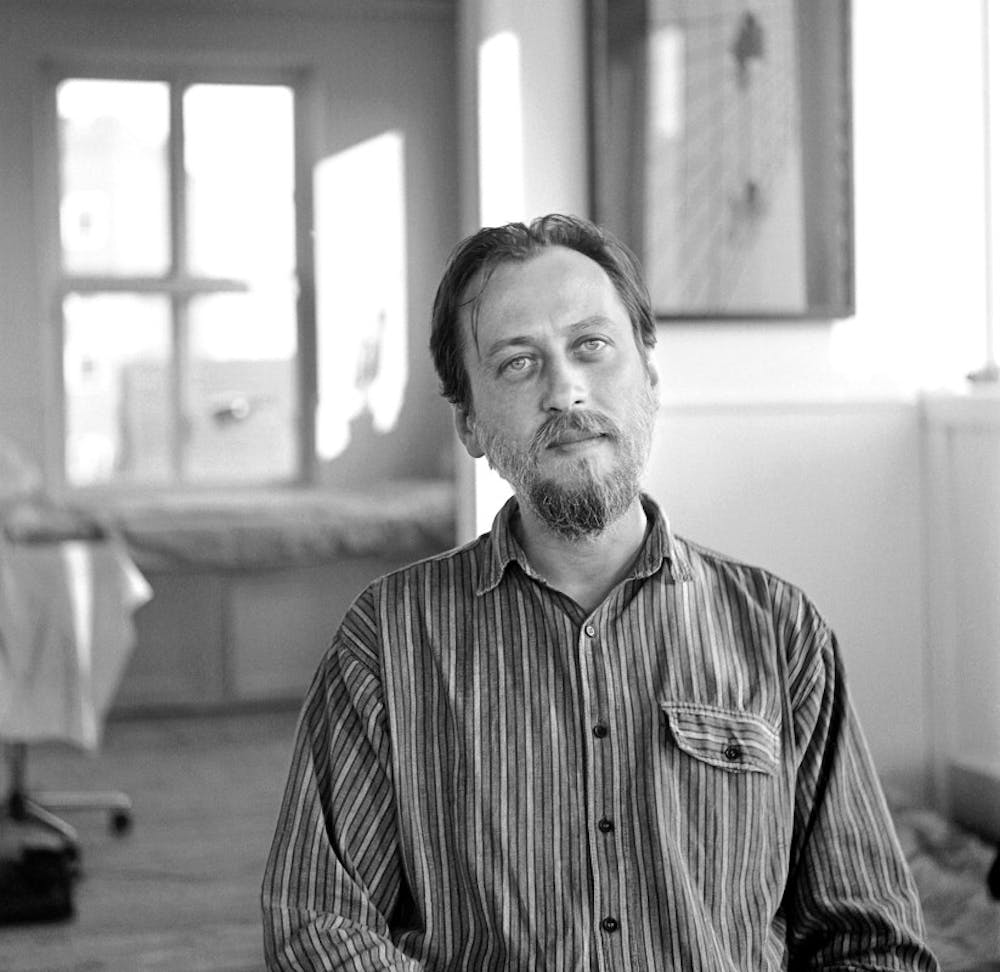 László Krasznahorkai in 1990.
Lenke Szilágyi, via Wikimedia Commons, CC BY-SA
Krasznahorkai has been extremely well-served by his dauntless English translators, George Szirtes (who managed the earlier work) and Ottilie Mulzet (who took on the later). Without them, it is doubtful he would have the recognition he does today.
That recognition, having now reached its zenith, has yet to be matched by a comparable understanding of his achievement. Asked about his source of inspiration, Krasznahorkai responded:
The bitterness. I am very sad if I think of the status of the world now. This is my deepest inspiration. This could be also an inspiration for the next generation or generations in literature. Inspiration to give something for the next generation, somehow to survive this time because these are very, very dark times and we need much more power in us to survive this time than before.
It is to be hoped that the Nobel Prize will finally force a reckoning with one of contemporary literature’s great pessimists.
László Krasznahorkai in 1990.
Lenke Szilágyi, via Wikimedia Commons, CC BY-SA
Krasznahorkai has been extremely well-served by his dauntless English translators, George Szirtes (who managed the earlier work) and Ottilie Mulzet (who took on the later). Without them, it is doubtful he would have the recognition he does today.
That recognition, having now reached its zenith, has yet to be matched by a comparable understanding of his achievement. Asked about his source of inspiration, Krasznahorkai responded:
The bitterness. I am very sad if I think of the status of the world now. This is my deepest inspiration. This could be also an inspiration for the next generation or generations in literature. Inspiration to give something for the next generation, somehow to survive this time because these are very, very dark times and we need much more power in us to survive this time than before.
It is to be hoped that the Nobel Prize will finally force a reckoning with one of contemporary literature’s great pessimists.


