

Is it OK to drink in front of your kids? New research shows the age they’re most influenced
- Written by The Conversation
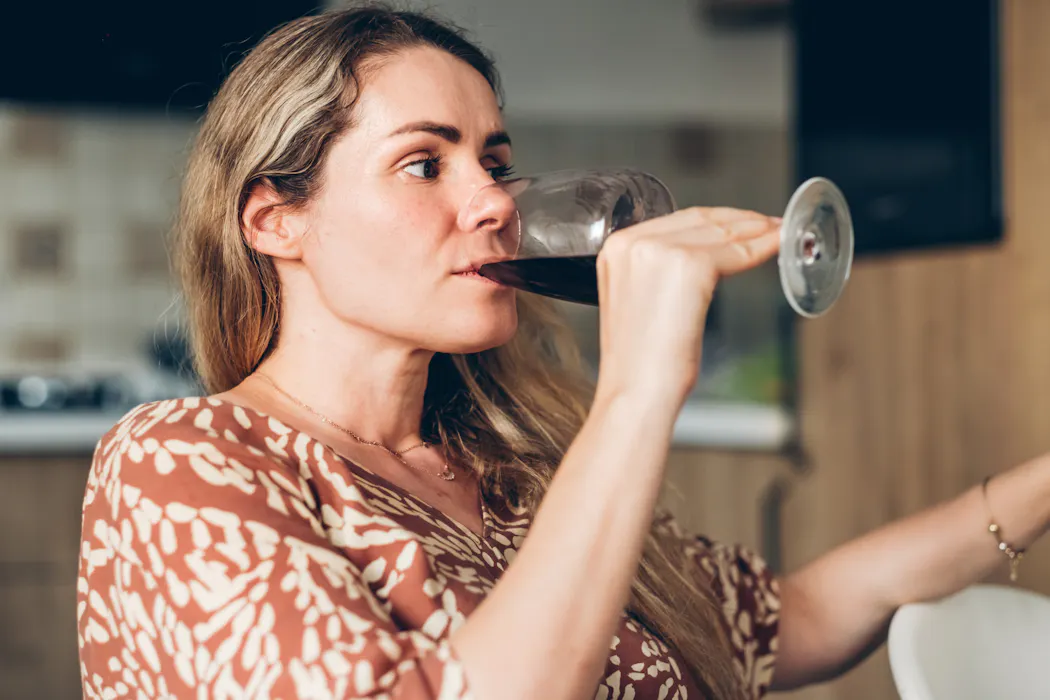
It’s a Friday evening and you pour a glass of wine while your teenager sits at the kitchen bench scrolling their phone. They barely look up. But they notice more than you think.
My new study found the drinking habits parents model at home carry over to their children.
The influence is strongest during a specific window: when children are aged 15 to 17. This is the stage when teens begin navigating social situations with alcohol and start deciding what “normal” drinking looks like.
It doesn’t mean you have to give up alcohol altogether. But there are behaviours you can tweak to improve the chance your children will have a healthy relationship with alcohol as they grow up.
Tracking influence over 23 years
My study used 23 years of nationally representative Australian data from the Household, Income and Labour Dynamics in Australia (HILDA) survey. This tracked more than 6,600 people over time, drawing on more than 43,000 observations.
To estimate parental influence, I linked each person’s drinking at a given age to their mother’s and father’s average drinking when that person was aged 12–18. I then compared how strongly those links showed up at different stages of life.
I found parental influence is strongest when children are aged 15–17, declines through the twenties, and rebounds at 28–37 for those who have become parents.
The effect runs mostly along same-sex lines. Mothers influence daughters most clearly, and fathers influence sons. There is no detectable father-to-daughter effect.
There is some crossover from mothers to sons, particularly during adolescence and again in the late twenties and thirties.
When adult children become parents themselves, they appear to revisit the drinking habits they grew up with. Daughters draw on their mothers’ examples; sons who become fathers begin to follow paternal patterns they had not previously adopted.
Genetics vs household norms
The evidence points more toward household norms than genetics. When I compared birth parents with non-birth parents – a broad category that includes step, adoptive, foster and other non-biological caregivers – the mother-to-daughter link held firm regardless of biological connection.
That suggests daughters are learning behaviour, not inheriting a fixed trait. For sons, the picture is more mixed, but the overall message is the same: what children observe matters.
None of this means a single glass of wine in front of your teen will do damage. The study measures repeated patterns of drinking over years, not one-off moments.
What appears to matter is the background signal: how often alcohol appears, how much, and what role it seems to play in everyday life. Is it the centrepiece of every celebration? The first response to a bad day? Or something that shows up occasionally, without fanfare?
How teens’ ideas about alcohol are shaped
My findings fit with broader evidence on how parents shape children’s drinking. A review of long-term (longitudinal) studies found parental modelling, limiting adolescents’ access to alcohol, monitoring, relationship quality and clear communication were all linked to lower levels of drinking in adulthood.
Another Australian study found parents’ heavy drinking episodes were associated with a higher likelihood teenagers had drunk alcohol. Children seem to learn not just whether adults drink, but what place alcohol has in ordinary family life.
Australian longitudinal research has also found parental supply of alcohol to teenagers – even with good intentions – is linked to heavier drinking and more alcohol-related problems down the track, rather than teaching children to drink responsibly.
The good news is broader trends are moving in the right direction. Far fewer Australian teens drink now than two decades ago. In 2001, about 70% of 14-to-17-year-olds had drunk alcohol in the previous year. By 2022–23, that figure was around 30%.
Similar declines have been documented across many high-income countries. The possible reasons include changing cultural attitudes, better education about risk and, as my study suggests, shifts in parental behaviour that flow down through families.
So what can parents actually do?
The practical goal is not perfection. It’s harm minimisation – shaping household norms so that alcohol is less central, less emotionally loaded and less available.
The evidence supports:
keeping your own drinking moderate and low-key. Australian guidelines recommend no more than ten standard drinks a week for adults, and not drinking at all is the safest option for under-18s
not supplying alcohol to teenagers, even with good intentions. Australian research suggests parental supply is linked to heavier drinking and more alcohol-related problems later on
setting clear rules and having calm, consistent conversations about alcohol. In one longitudinal study, teens drank least when strict rules were paired with good-quality, regular communication
being especially deliberate with your alcohol choices when your children are 15 to 17, because that is when family influence appears to bite hardest.
If your children are already adults, your example may still matter. My study found parental influence re-emerges when adult children start families of their own — particularly for daughters. The habits you modelled years ago can resurface when your grown-up children are deciding what kind of household they want to run.
Parents don’t control everything. Friends, stress and the broader social environment matter too. But what parents can shape is the background – the slow, steady signal about what alcohol is for and how much of it is normal.


