

The Rings of Power is suffering a racist backlash for casting actors of colour – but Tolkien's work has always attracted white supremacists
- Written by The Conversation
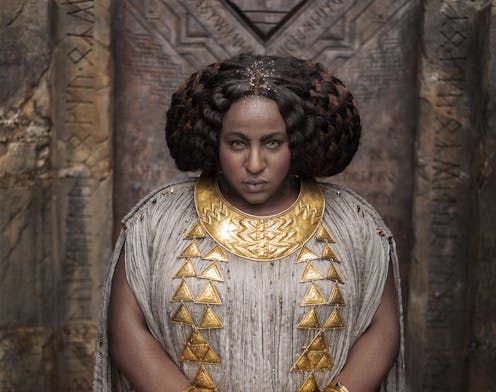
Since Amazon announced actors of colour among the cast of its new series The Rings of Power in February this year, criticisms of their inclusion have gained media attention.
The coverage typically positions criticisms of The Rings of Power as “backlash” from true, “diehard” fans resisting so-called “wokeness”.
This misrepresents the situation. There are also fans who welcome the increased diversity over what is seen in Tolkien’s novels and previous adaptations. Racist abuse of actors of colour and a “review bombing” campaign against The Rings of Power suggest that there is more going on than just fan disagreement about Tolkien’s world.
As Tolkien researcher Craig Franson explains, far-right political actors are whipping up the controversy, weaponising it to help get fascist talking points into the mainstream. Franson shows that the right-wing “outrage machine” stirred up “a massive hate mob” through mainstream right-wing press.
Fans who feel they are defending Tolkien’s legacy are being used as pawns to serve dangerous anti-democratic and anti-egalitarian agenda and siding, whether they mean to or not, with racist extremists.
Fascist appropriation of Tolkien’s work may seem surprising given his anti-Nazi statements, which include calling Hitler a “ruddy little ignoramus.” It is not new, however. In the 1970s, the books became a favourite of Italian fascists who even held a Camp Hobbit festival to promote their politics.
In the early 2000s, the now former extremist Derek Black Jr started a chat forum dedicated to the Lord of the Rings on a major white supremacist website when Peter Jackson’s films came out. He told The New York Times:
I figured you could get people who liked with such a white mythos, a few turned on by white nationalism.
Not all racism is fascist (a specific political ideology), but the far-right always has racist elements in its ideologies.
Why do racists like Tolkien and Middle-Earth?
Tolkien made statements against Nazis and also apartheid, but this is not the same as being anti-racist or pro-equality. His condemnation of Hitler, he wrote in the same letter, was for
ruining, perverting, misapplying, and making forever accursed, that noble northern spirit, a supreme contribution to Europe, which I have ever loved, and tried to preserve in its true light.
The comment shows that he believed that some people were essentially different to and better than others. This notion is foundational to racism.
Tolkien’s belief in racial difference translated to Middle-earth. Within the imaginary species (elves and humans in particular) there are hierarchies. Some humans are inherently better than others; we see this when Faramir talks about “High, Men of the West… the Middle Peoples, Men of the Twilight… the Wild, the Men of Darkness” in The Two Towers.
Individuals from “High” races may have moral failings and become evil, but collectively they do not serve it. Physical characteristics (like hair and skin colour) are linked to non-physical traits in ways that reflect the logics of real-world racism.
There are traces of evidence that Tolkien did not imagine “good” peoples as exclusively white. The ways these are expressed still sometimes reinforce racial hierarchies. In The Return of the King, some people who fight against Sauron are counted as
men of Gondor, yet their blood was mingled, and there were short and swarthy folk among them" because some of their ancestors are not “High, Men of the West.
"Good” species and races in Middle-Earth are constructed through references to European cultures (especially northwestern Europe), and the “bad” races are constructed through orientalist stereotypes. Tolkien’s letters show the ways that real-world ideas about race influenced Middle-Earth. He wrote “I do think of the ‘Dwarves’ like Jews: at once native and alien in their habitations.”
In a 1958 letter about a film treatment of The Lord of the Rings he wrote:
Orcs are … squat, broad, flat-nosed, sallow-skinned, with wide mouths and slant eyes; in fact degraded and repulsive versions of the (to Europeans) least lovely Mongol types.
There is evidence that he revised his representation of Dwarves between The Hobbit and The Lord of the Rings to try move away from anti-Semitic stereotypes. There is no such evidence for Orcs even though he wrestled with the moral problem of a purely “evil” species of beings.
The combination of racial stereotypes and hierarchies built into Middle-Earth make Tolkien’s work appealing to racists and a useful political tool for the far-right. There is, however, more to the world and stories he created.
Being troubled by racism is also not just a new “woke” reading of Tolkien’s writing. C.S. Lewis wrote a review in 1955 of Lord of the Rings that reported some readers “imagine they have seen a rigid demarcation between black and white people” draw along clear moral lines.
Given Lewis was Tolkien’s friend, it’s not surprising that he defended the books. A letter in the fanzine Xero from 1963 expressed concern about “subtle racism,” hierarchies within humanity, and “monochromatic” representation of elves and orcs in Middle-Earth.
The contradiction in Tolkien’s world
The need to overcome differences to form alliances and make the world better is a central theme in Tolkien’s writing. Evil is defeated only when different peoples of Middle-Earth, such as Elves, Dwarves and Humans, fight against it together.
The prosocial values of cooperation and acting for the good of others are embedded in Tolkien’s stories of Middle-earth. They are also at odds with racism and fascism which see “others” as not only different but inferior, dangerous, not to be trusted, that is, as enemies.
Scholar and fan Dimitra Fimi has written:
Tolkien’s racial prejudices are implicit in Middle-Earth, but his values – friendship, fellowship, altruism, courage, among many others – are explicit, which makes for a complex, more interesting world.
Protecting Tolkien’s legacy
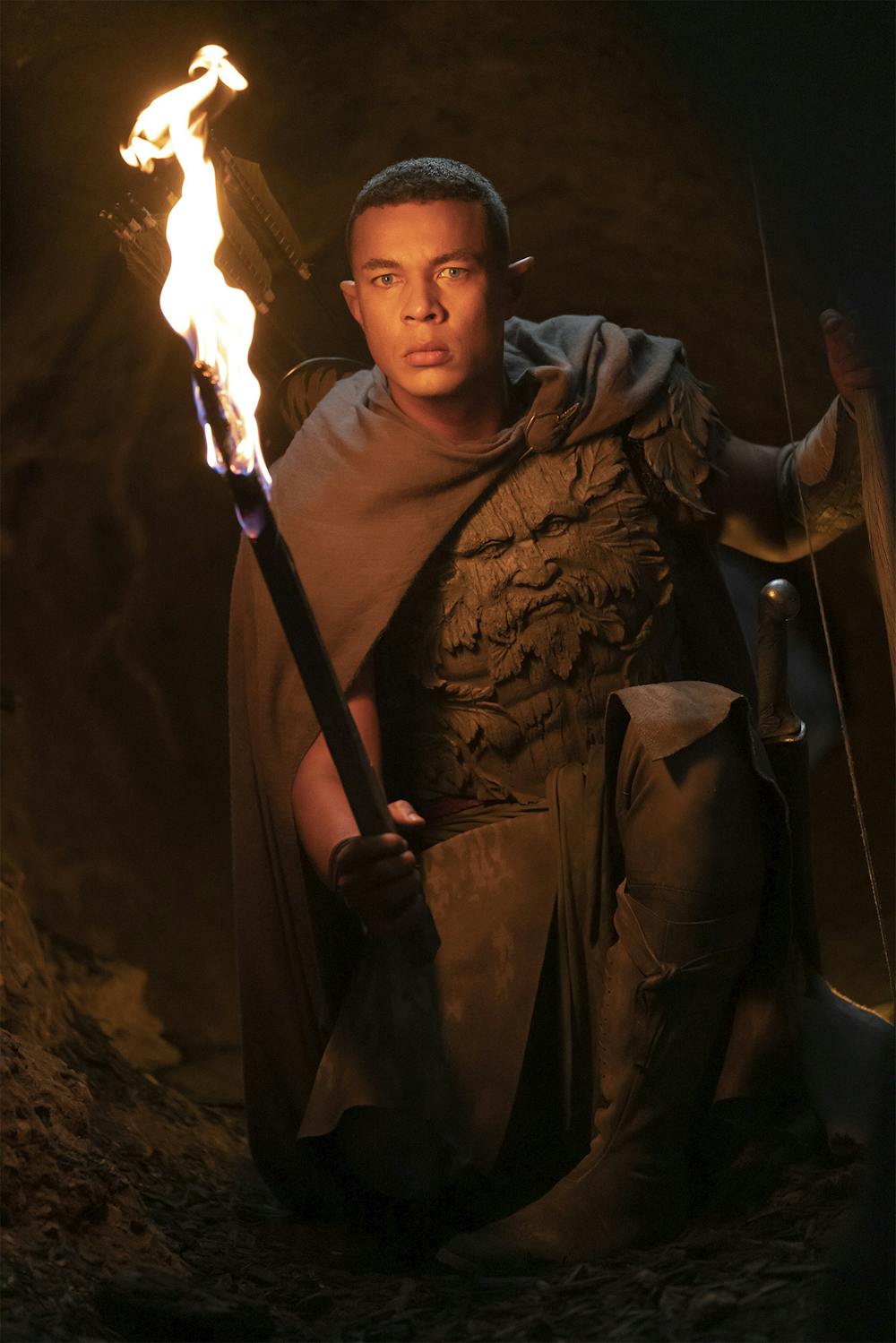
Casting actors of colour to play Elves, Dwarves and Harfoots in The Rings of Power does not insert beings who are not white into the imaginary world of Middle-Earth. They were already there, constructed through out-dated (even for Tolkien’s time) concepts of racial difference among humans and false stereotypes about real peoples.
Tolkien’s imagination was vast and varied, but it was not without limits. The world he created reflected some of the worst aspects of reality with its racist stereotypes and hierarchies.
All adaptations, including of Tolkien’s writings, change their source material in ways that reflect the time and place in which they are made.
With The Rings of Power, Amazon, the Tolkien Estate (headed by his grandson Simon) and their partners have decided to protect the positive, humane aspects of Tolkien’s legacy which represented the best, rather than the limits, of his imagination.


