News Daily

The Times

Australia

  • Written by The Conversation
Friday essay: George Orwell is everywhere, but Nineteen Eighty-Four is not a reliable guide to contemporary politics

In January 2017, Donald Trump’s advisor Kellyanne Conway was quizzed on White House press secretary Sean Spicer’s false claims about the number of attendees at the president’s inauguration. When pressed on why Spicer would “utter a provable falsehood”, Conway said that Spicer was offering “alternative facts”.

Her wording was widely characterised as “Orwellian”. Everywhere from Slate to the New York Times to USA Today, journalists were linking the new administration to George Orwell’s dystopian fiction. Less than a week after Conway’s claim, the sales of Orwell’s Nineteen Eighty-Four had gone up an estimated 9,500%.

In a serious case of “I know you are but what am I?”, Republicans have gotten in on the act, accusing the left of being the fulfilment of Orwell’s dark prophesy. In April this year, for instance, Donald Trump Jr. tweeted: “Historically, was there ever a despotic regime that didn’t have the equivalent of a Ministry of Truth?”

Almost everyone in every quarter sees Orwellian undertones in the manoeuvrings of their opponents. Like Elvis, Orwell has been spotted everywhere.

But we should be suspicious, not simply because the designation is thrown around so freely and is plastic enough to fit almost all political phenomena indifferently, but because one of the legacies of Nineteen Eighty-Four itself is to leave us with a more finely tuned sense of what such propaganda looks like. Orwellian strategies are harder to propagate because of, well, the overwhelming success of Nineteen Eighty-Four.

The Orwellian paradox

Some historical nuance is required. Orwell was responding to mid-twentieth century political regimes – Stalinist Russia, in particular. He was ringing the alarm bells on a new phenomenon: state control had moved beyond speech to thought and perception. Winston Smith, the protagonist of Nineteen Eighty-Four, reflects:

The party told you to reject the evidence of your eyes and ears. It was their final, most essential command.
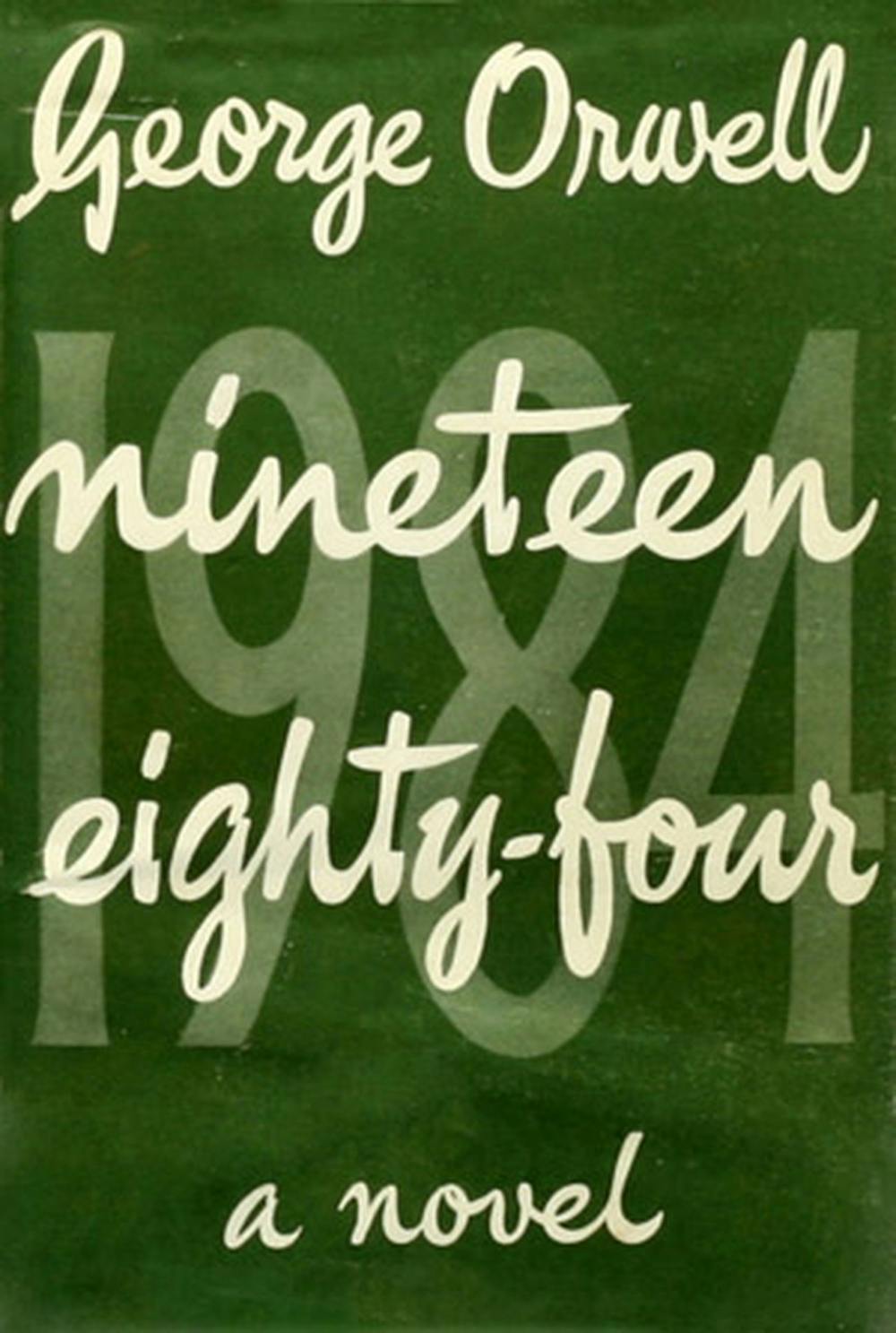
There is a paradox here. Propaganda is a mode of communication – pervasive, insistent, controlled. Orwell shows it flooding the airwaves, invading every workspace and living room through the screens on which the image of Big Brother is ever-present. Yet the goal of this kind of propaganda is to move beyond the phase of control through language to a regime of thought control where such communication has become redundant. The world of Big Brother is austere in every way – colourless, devoid of all entertainments and sensory pleasures – so language itself is subject to the principle of reduction and elimination. The Party officials in charge of Newspeak are in the business of “cutting language down to the bone”. They are destroying scores of words every day so that “thoughtcrime” will ultimately become impossible, because there will be no means of articulating it, even inside the confines of your own mind. Thought is already being suppressed in the novel through an embargo on logic and evidence, which starts with a simple reversal of anything that might be regarded as an established truth. This means, conversely, that the regime of Big Brother is threatened by any and every expression of reality-based knowledge. And so: Freedom is the freedom to say that two plus two makes four. If that is granted, all else follows. Big Brother’s propaganda is thus a self-eliminating program, working constantly and assiduously to make itself redundant. Eventually, there will be no words to protest with, or even to think with; there will be no perceptions to express and no realities to intrude upon the counterfactual world the Party is creating. The counter-Orwellian paradox The principles of glasnost (openness) and perestroika (restructuring), which began to take hold in Soviet culture from the end of the “real” year 1984, served to dismantle the regime that prevailed in the USSR for much of the 20th century. Alternatives became possible again; enquiry and conjecture were licensed; inventiveness was set free. And here is the counter-Orwellian paradox. Under the new policy of openness, propaganda could thrive again. For what is propaganda if not a system of alternatives, as Kellyanne Conway so astutely grasped? The principle here is not to force one alternative on a population. By rendering any alternative as a priori plausible, this form of propaganda casts doubt on “official” accounts. All they can offer is a version of truth, one that will necessarily reflect their own agendas. In February this year, Dmitri Kiselev, a fast-talking Russian version of Fox News commentator Sean Hannity and a prime-time host with the Kremlin’s official media outlet Rossiya Segonya, stated this outright: Objectivity is a myth that is proposed and imposed on us. Similarly, in 2017, Fox News’ version of Dmitri Kiselev, Sean Hannity, went on CBS and told Ted Koppel: I don’t pretend that I’m fair and balanced and objective. You do. When the program went to air, Hannity blasted CBS and called it “fake news”. Russian theorist Alexander Dugin, author of The Fourth Political Theory. Mehdi Bolourian/Wikimedia Commons If we want to understand what is going on here, Orwell is not our guide. We would do better to turn to the writings of Russian political theorist Alexander Dugin. Dugin is an ideologue who aligns himself with Vladimir Putin’s visionary sense of Russian destiny. While he dismisses the suggestion that he is “Putin’s brain”, he is the most influential analyst of the cultural environment Putin has sought to create. In his book The Fourth Political Theory, Dugin makes the case for a new political direction, one that moves away from the modernist regimes of Marxism and fascism, whose extremes of ideological conformity he calls “uninteresting” and “worthless”. The literalism of such regimes of control, he says, makes them “entirely useless”. Without making direct reference to Nineteen Eighty-Four, Dugin’s critique at times echoes the debates at the core of Orwell’s novel. In Nineteen Eighty-Four, the Party official O'Brien makes an extended doctrinal statement. He foresees a world with no need for art, literature or science, a world where curiosity and all forms of “enjoyment of the process of life” are eliminated. Such a world would never endure, protests Winston Smith: It would have no vitality. It would disintegrate. It would commit suicide. Dugin would no doubt take Winston’s side in this exchange. He proposes a cultural model that is much more flexible, cunning and resourceful than anything O’Brien and his masters might envisage. The Fourth Political Theory draws its “dark inspiration” from postmodernism, an ethos Dugin despises, but uses as a Trojan horse to penetrate the defences of the world of liberalism (Dugin’s anathema). All the pleasures and enjoyments banished from the world of Nineteen Eighty-Four come surging back. “I do not really understand why certain people, when confronted with the concept of the Fourth Political Theory,” Dugin writes, do not immediately rush to open a bottle of champagne, and do not start dancing and rejoicing, celebrating the discovery of new possibilities. After all, this is a kind of a philosophical New Year – an exciting leap into the unknown. In this brave new world – which is not Aldous Huxley’s any more than it is Orwell’s – “nothing is true and everything is possible”. The journalist Peter Pomerantsev, a more congenial guide for those who find Dugin’s new ideology hard to stomach, uses this phrase as the title of his book on the propaganda culture surrounding Russian television, where “Everything is PR” is a declared principle. The “postmodern” influence here is, more specifically, the influence of French theorist Jean Baudrillard, who proposed that the “real” was no longer accessible in a world where layers of image replication – “simulacra” – had evolved into an autonomous pseudo-reality. This is the world in which a television celebrity becomes president and the presidency becomes a celebrity media game. In such a world, propaganda thrives and manipulation is rife. With no shared or objective reality, the individual subject of liberalism can gain no traction. According to Dugin, If we lose our identity, we will also lose alterity, the capacity for “otherness”, and the ability to distinguish between self and not-self, and consequently to assume the existence of any alternative viewpoint. The image here is not one of a strong difference being asserted, but of a fragile and slender one under threat; and the threat is real. As alterity is lost, the obsession with creating antagonists increases, as if it were a mode of survival. Jean Baudrillard lecturing at European Graduate School, Saas-Fee, Switzerland, June 2004. Wikimedia commons Mirroring One of the key insights of the French-American cultural theorist René Girard is that adversaries are often involved in an intense and escalating mirroring. They increasingly come to reflect each others’ logics, strategies, and rationales. That this state of affairs can invariably only be seen outside the viewpoint of antagonists (who see between themselves all sorts of radical differences) is of little import. In the parallel cases of the US and Russia, we should look beyond the trivialities and psychopathologies of two men who have had toilets made out of gold for them, who brag about their wealth but evade questions about it, who view women as ornaments, who obsess over the smallest criticisms, and whose “strong man” bluster is always in the service of some nostalgia about a mythical era. Putin and Trump have lavished each other with praise: Putin has described Trump as a “brilliant, talented person”; Trump has called Putin “a strong leader […] a powerful leader”. But the sincerest flattery, as we know, appears as imitation. As Russian television has embraced the world of images, with all its extravagance and glamour and duplicity, it has become more like Fox News, and vice versa. When Russia launched its military operation in Ukraine, the news on Russian state media was editorially committed to official Kremlin positions. One of its methods was to echo Fox News. In February, a prime-time overview of the news of the week – presented by Kiselev – featured an opening monologue from Tucker Carlson’s Fox program. The situation in America since Trump was voted out of office has, if anything, become more dire. As evidence unfolds of his involvement in the January 6 coup attempt and his appropriation of top secret documents as his private property, the legal case against him is fraught with obstacles created by the propaganda enterprise he continues to lead. What should be clear cases of right and wrong under the US Constitution, and of guilt under law, have become a contest over truth in a hall of mirrors. Every accusation prompts an equal and equivalent counter-accusation. The confusion thickens with the strategy of the pre-emptive strike: whatever Trump has done wrong, he has already accused his opponents of doing just that. With the prospects of a MAGA dominated election looming, no one can predict the consequences, but it is clear that American democracy is fighting for its life in a political environment that may be damaged beyond hope of recovery. We need to entertain the idea that Orwell’s success in recognising the propaganda of his day might have incurred a cost – namely, that we are now too confident that we know what propaganda is. Good propaganda is precisely that because it is hard to pick; it rarely wears a neon sign around its neck. Enforced subscription to the Party’s messages has been replaced by voluntary consumption of the Kool Aid. The French philosopher Simone Weil once said that “truth is a need of the soul”. But we are often now satisfied with a more Trumpian, Twitterian logic: “A lot of people agree with me […] a lot of people are saying”. It is not that nothing of the world of Nineteen Eighty-Four remains, or that the novel does not serve as a reminder of what a certain kind of political control can look like. There are, no doubt, statements by Trump and Putin that are, in some sense, “Orwellian”. Regimes with Orwellian characteristics still exist – like Bashar al-Assad’s Syria, for example, which is known for its compulsory slogans (“Assad or we Burn the Country”) and for torturing those who subvert them. But large parts of the world now have fewer uses for the kinds of ideological strong-arming depicted in Orwell’s novel. And this is one of the reasons propaganda is harder to track. If our capacity to detect propaganda only surfaces in relation to what we oppose, we are all the more likely to respond in kind. In a post-Orwellian world, we are producers as well as consumers of the inflated rhetoric, sensational imagery and crazed dramaturgies promoted by those who are all too conscious of what they are doing. As the philosopher Bernard Williams contended 20 years ago, we live in an uncomfortable era. On the one hand, we have a heightened sensitivity about being fooled; on the other hand, we are living with a general scepticism of whether anything at all might answer to “the truth”. We are deeply committed to something we don’t even know whether we believe. How this tension will – or might – be sorted out is not something that will be resolved by philosophers or social theorists. It will be taken up and lived out in that increasingly murky domain that we still call, with less confidence than ever, “politics”.

Read more https://theconversation.com/friday-essay-george-orwell-is-everywhere-but-nineteen-eighty-four-is-not-a-reliable-guide-to-contemporary-politics-190909

Split Corrugated Conduit for Flexible Cable Protection

For wiring assemblies in vehicles, machinery and equipment, choosing suitable cable protection helps keep cables organised and reduces direct contact with surrounding parts. Mojak Plastics supplies plastic tubing and conduit options for different installation needs, and split corrugated conduit can... Read more

Trailers Melbourne Buyers Can Compare: When Box Trailers Make Sense

For many homeowners, businesses and tradespeople, trailers Melbourne customers use every week need to be versatile enough for changing loads. A box trailer can be particularly useful because its enclosed sides help contain cargo while providing a straightforward loading area... Read more

Bottle Label Printing That Balances Design and Readability

Product labels need to attract attention while making information easy to find and understand. On a bottle, the available space may be limited by the container’s shape, so every design decision matters. Bottle label printing should account for visual hierarchy... Read more

Office Cleaning Melbourne: Planning a Consistent Workplace Routine

Businesses looking for office cleaning Melbourne need a plan that reflects the way their workplace operates. A clean office supports day-to-day organisation, helps shared spaces remain presentable and gives employees and visitors a more orderly environment. Eco Green Cleaning Management... Read more

Pinboard Solutions for Offices, Schools and Shared Information Spaces

Why a Pinboard Remains Useful A pinboard provides a simple way to display information that needs to remain visible without being rewritten. Lawdex supplies fabric and cork options for offices, schools, staff areas and other environments. A pinboard can be used... Read more

Retractable Hose Reel: A Practical Guide To Choosing The Right Hose Storage

A retractable hose reel can make hose storage more organised, accessible and practical in workshops, commercial facilities, service areas and other working environments. Instead of leaving a hose coiled across the floor or requiring staff to manually wind it after... Read more