

Australia is poised to be a world leader in offshore wind, but any potential risks to marine life remain poorly regulated
- Written by The Conversation

The strong winds blowing over Australia’s rugged coastlines will soon power many of our homes, as offshore wind farms are poised to begin construction. But our new research the highlights the need to ensure any potential risks to marine life is properly mitigated.
The federal government has recently made a string of announcements as part of its A$20 billion Rewiring the Nation Plan, ahead of last night’s federal budget. This includes $1.5 billion to fast-track the development of offshore wind farms and renewable energy zones in Victoria, as well as funding for the Marinus link (an electricity cable connecting Tasmania and Victoria), and pumped hydro developments.
By embracing what the energy world calls the “big three” – offshore wind, solar power and onshore wind power – Australia’s renewable energy exports alone could be worth $333 billion each year. That’s almost triple what we currently get from fossil fuels.
Our research calls for Australia to put marine spatial planning processes into offshore wind regulation. This considers how infrastructure and ecosystems can co-locate, by mapping out the best sites for generating the most electricity with the least environmental impact.
With effective regulation, Australia’s offshore wind industry can be a leader in ecologically sustainable development.
Why is offshore wind important?
Over the past decade, the costs to build offshore wind infrastructure have decreased by 50% worldwide. It is poised to become a key ingredient in Australia’s energy mix, as the Global Wind Energy Council estimates a massive 4,963 gigawatts of offshore wind potential in Australia.
In fact, if all of Australia’s proposed offshore wind projects were built, their combined energy capacity would be greater than all Australia’s coal-fired power stations.
Victoria is leading the way with a target of reaching 2 gigawatts of offshore wind by 2032, and 9 gigawatts by 2040. This means some 20% of Victoria’s energy mix will come from clean, affordable and reliable offshore wind within the next ten years.
Despite our rich wind resources, there is currently no large-scale offshore wind project operating in Australia, due to a lack of legal framework that commenced operation in 2022. Australia also does not currently hold a federal offshore wind target.
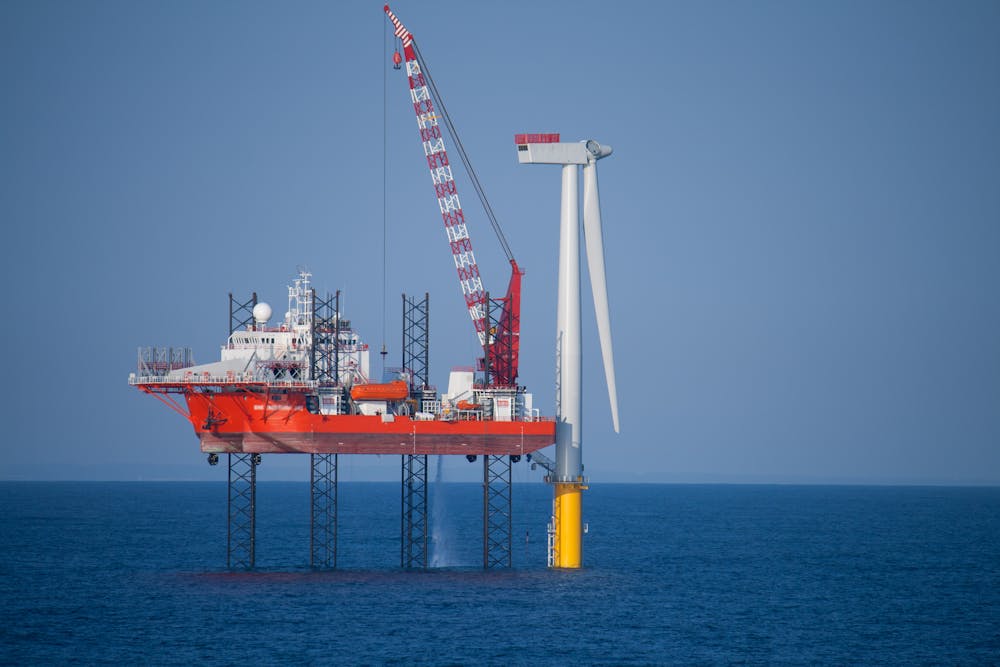
Australia’s lack of regulation
Australia has lack of clear offshore renewable energy planning goals. This has led the Global Wind Energy Council to call for “a clear, transparent, and streamlined leasing and permitting process” in Australia.
The environmental protections currently in place are generic and need greater refinement on the needs of offshore wind.
Before an Australian offshore wind project can start and be granted a commercial licence, the developer must make several important assessments and proposals, including a management plan, to the Offshore Infrastructure Registrar.
This management plan must adhere to Australia’s national environment law, which is designed to promote ecologically sustainable development.
Yet, Australia’s environment law – called the Environment Protection and Biodiversity Conservation (EPBC) Act – has been widely criticised for failing to achieve this aim, particularly following a major independent review in 2021.
Read more: A major report excoriated Australia's environment laws. Sussan Ley's response is confused and risky
How offshore wind farms can impact marine life
Marine spatial planning can provide clear ecological, social and environmental conservation objectives, while mapping important ecological zones to protect.
Research is still emerging on the extent offshore wind farms may impact marine ecosystems. A European Environment Agency report this year points to a few potential impacts, although these are documented in Europe rather than Australia.
This includes underwater noise during construction, which can displace some species, cause auditory injury to nearby mammals and fish, and interfere with the echolocation of animals such as porpoises.
Research has also shown that during operation, some seabird species became either displaced or attracted to the turbines (though collision rates are low).
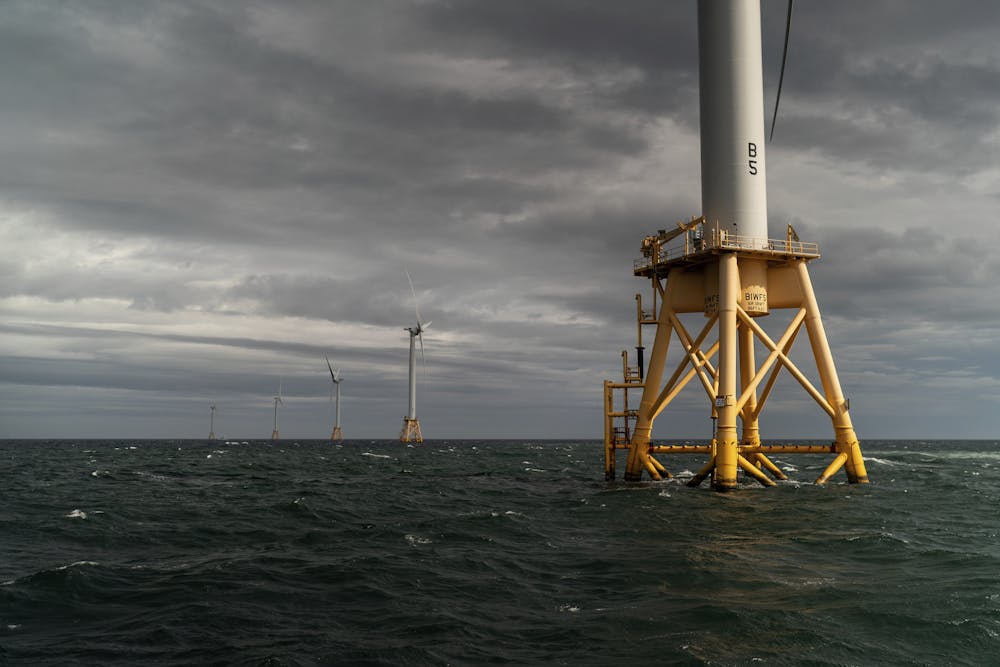 Some wind turbines in the sea can provide habitat.
AP Photo/David Goldman
Some wind turbines in the sea can provide habitat.
AP Photo/David Goldman
On the other hand, depending on its design, offshore wind turbines can provide habitat for some marine species, such as with artificial reefs on their foundations.
These pressures can be managed by effective marine spatial planning. Australia holds marine spatial planning processes for other areas, such as the Great Barrier Reef Marine Park and parts of Victoria.
But we are yet to create any requirements for them in the legal framework for offshore wind at the federal level.
Countries doing it better than us
Several countries have enacted marine spatial planning policies and regulations for their offshore wind sectors.
The European Union has led the way, as 22 coastal member states have adopted marine spatial planning processes. This strong policy framework has enabled the EU to reach 28.4 gigawatts of offshore wind capacity while ensuring environmental protections are in place.
The Netherlands have an ambitious offshore wind target of 70 gigawatts by 2050. This is double what the entire EU has already installed.
The Netherlands is using marine spatial planning to sustainably meet this target. It is supported by the Dutch Ecological Offshore Wind Energy Programme, which is generating baseline scientific knowledge about how to protect sensitive marine environments in assessments determining new project sites.
Read more: Wind turbines off the coast could help Australia become an energy superpower, research finds
One piece of the puzzle
Marine spatial planning is crucial for integrating offshore wind with other ways we use the ocean, such as for fishing and preserving traditional Sea Country. At the same time, it should preserve ecosystems and promote energy justice, where all members of society are granted access to clean energy. Marine spatial planning can strike this balance.
Formulating marine spatial planning objectives in consultation with the offshore wind industry, communities, and other stakeholders is crucial to ensure its success, and building an equitable ocean economy.
Much more must be done to ensure we continue a successful transition away from fossil fuels and avoid the worst impacts of climate change. Offshore wind is just one, exciting piece of the puzzle.


