

'Toxic cover-up': 6 lessons Australia can draw from the UN's scathing report on greenwashing
- Written by The Conversation
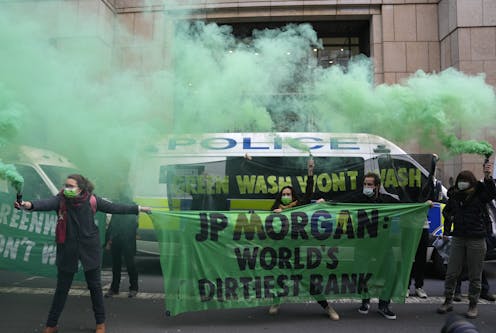
The United Nations this week slammed corporate “greenwashing” and said organisations cannot claim to be net-zero while supporting fossil fuel projects.
The report, released at the global COP27 climate conference in Egypt, called for new rules to ensure emissions pledges were credible and transparent.
UN Secretary-General António Guterres appointed the expert group in March. Releasing its report this week, Guterres had strong words for companies that use “bogus” net-zero pledges to cover up massive fossil fuel expansion:
It is rank deception. This toxic cover-up could push our world over the climate cliff. The sham must end.
Guterres said loopholes in rules around corporate emissions reporting are “wide enough to drive a diesel truck through” and require major tightening. Let’s look at what that means for Australian corporations.
A global problem
Public concern about climate change is vast and growing. This presents a legitimate economic opportunity for businesses and investors that offer climate-friendly products and services.
But being climate-friendly is not always easy. It may involve significant upfront investment. And measuring, verifying and reporting emissions reduction can be complex.
Concerningly, there’s often a big gap between promises and action. For example, one-third of firms on the Forbes Global 2000 list of publicly traded companies have net zero emissions targets. However, two-thirds of them have not outlined how they will achieve the goal, analysis shows.
Australian oil and gas giant Santos is facing legal action in the Federal Court over its net-zero claims.
In some cases, companies make demonstrably false claims about the steps they’re taking on climate change. In fact, the Australian Securities and Investments Commission (ASIC) says a global investigation has found as many as 40% of environmental claims made by companies may be fraudulent.
ASIC has identified greenwashing as a key concern for consumer and market confidence.
The commission is investigating several listed entities, super funds and managed funds over their green credentials claims. Last month, it announced it had fined Tlou Energy more than $53,000 for making alleged false or misleading sustainability-related statements to the ASX.
Our submission to the UN expert group focused on claims made by fossil fuel companies in Australia and overseas. We explained how natural gas is being promoted as a green investment and a source of emissions reduction in ways that mislead environmental regulators and investors.
Greenwashing doesn’t just have disastrous consequences for the climate. It also harms public trust in all net-zero promises which delays support for real efforts.
As Guterres said this week, we must have “zero-tolerance for net-zero greenwashing”. He touted the expert UN report as “a how-to guide” to ensure clarity and accountability for corporate climate pledges.
What Australian entities should consider
The report made a number of recommendations relevant to Australian businesses and financial institutions, as well as state, territory, and local governments.
When such organisations are drawing up a net-zero pledge, it must:
make a fair effort, commensurate with the companies’ contribution to the problem
be in line with official scenarios limiting warming to 1.5℃ and should include interim targets every five years starting in 2025
make real emissions cuts rather than relying on carbon offsets, which are often lacking in regulation and rigour
cover all greenhouse gas emissions, including those occurring along a company’s supply chain and through the use of its products
include specific targets to end the use of, and support for, fossil fuels
Include public progress reports with verified, standardised information.
The report’s recommendations are not legally binding. While it shifts expectations of what constitutes misleading and deceptive conduct under Australian law, the late climate law expert Sarah Flynne has observed the difficulty, to date, in prosecuting greenwashing cases.
Flynne argued successful court action may require a shift away from traditional legal arguments towards more innovative approaches, such as pursuing companies under corporate law. This is the approach being taken in the legal case against Santos mentioned above, which alleges the company breached the Corporations Act and Australian consumer law.
The UN recommendations mean some companies will now be even more heavily scrutinised by investors and the public, such as those relying on carbon offsets to meet their climate pledges.
Companies that commit to net-zero pledges while continuing to build or invest in new fossil fuel projects will also be in the spotlight.
And as the federal government takes steps to meet its own climate commitments, pressure on businesses and governments is also likely to increase.
We are at a crucial moment in history. Humanity must act now if it hopes to secure stabilise Earth’s climate and leave an inhabitable planet for future generations – and corporations must be forced to walk the talk.
This article was written in memory of our former colleague, the late Sarah Flynne. Sarah’s incredible work and vision was evident across her time at the Environmental Defenders Office, Rio Tinto and Curtin University. Her work touched environmental law, renewable energy, economics, finance and property, including housing affordability issues in Western Australia. Sarah was passionate about the need for strong climate change law, both domestically and internationally, and was a formidable force for – not just of – nature.


