News Daily


Men's Weekly

Australia

  • Written by The Conversation
What is the Indo-Pacific Economic Framework, about to be negotiated in Brisbane?

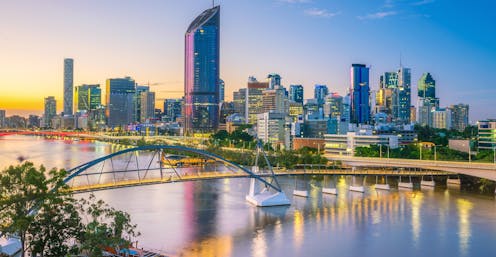
Australia is about to play host to negotiators from 14 countries involved in the Indo-Pacific Economic Framework (IPEF) over six days in Brisbane from Saturday.

They include the United States, Australia, Brunei, Fiji, India, Indonesia, Japan, South Korea, Malaysia, New Zealand, the Philippines, Singapore, Thailand and Vietnam, but not China.

Although as unfamiliar as many of the acronyms in the alphabet soup of trade deals to which Australia is a party, the IPEF has a very specific focus.

The US wants to use it to diversify its supply chains away from China towards its allies and create US-style rules in a region encompassing the Indian and Pacific Oceans and extending from the east of Africa to the west of the United States.

At the launch of negotiations in May the US said the agreement would

enable the United States and our allies to decide on rules of the road that ensure American workers, small businesses, and ranchers can compete in the Indo-Pacific.

And the US is not involved in the two other big regional trade agreements involving IPEF members including Australia:

  • the Regional Comprehensive Economic Partnership (RCEP) of the ten ASEAN nations plus five others including China

  • the Comprehensive and Progressive Trans-Pacific Partnership (CPTPP) of 11 nations excluding China, from which the Trump administration withdrew in 2016.

There is still strong bipartisan US Congressional opposition to legally binding agreements like the CPTPP. This means in negotiating IPEF the US will not offer increased market access to Australia or other member countries.

The “four pillars” of the framework are

  1. trade, in which there will be a general commitment to boost trade among members while recognising labour rights, environmental and other concerns

  2. supply chains, aimed at diversifying away from China and facilitating cooperation among members in the event of major disruptions

  3. clean economy, in which there will be recognition of the role of incentives in encouraging energy transitions

  4. fair economy, in which the members commit to preventing and combating corruption and tax evasion.

India has opted out of the trade pillar but says it will sign up to the other pillars.

This means the IPEF will offer no immediate trade benefits for Australia or other countries, but for developing countries it will offer the prospect of US energy and other projects as an alternative to China’s One Belt One Road initiative.

Christian Gomez/The New American More open process but negotiating documents secret The Albanese government’s policy promises more transparent and accountable trade negotiations, including access to negotiating texts and independent evaluation of their costs and benefits. It has promised this for the IPEF, and both civil society and business organisations have been invited to present their views to IPEF negotiators in Brisbane. But this will be a one-way street because Australia and other IPEF countries have signed agreements with the US pledging to keep all negotiating documents secret until five years after the negotiations. Without access to the details of the proposals, consultation will be extremely limited. Standards on human rights, labour and the environment Civil society groups have made submissions supporting the IPEF goals of higher standards for labour rights and environmental protection, and are asking for them to be made fully enforceable. It remains to be seen whether all IPEF countries will commit to these goals without the carrot of access to the US market, and how commitments would be enforced unless they were legally binding. A strategic balancing act for Australia Australia is a US ally, but China is Australia’s largest export market. Foreign Minister Senator Penny Wong recently said the government’s policy was to deepen regional relationships, building a regional order in which all states can contribute to a strategic equilibrium “rather than be forced to choose sides”. The Albanese government is also hoping its recent success in re-establishing diplomatic contact with China will help ease China’s trade restrictions on Australian barley, wine and lobsters and contribute to regional stability. Read more: We've just signed the world's biggest trade deal, but what is the RCEP? But the US recently announced new trade restrictions against China, including a ban on US exports associated with the manufacturing of computer chips, and secondary restrictions on countries that export these products to China, including IPEF members South Korea and Singapore. Singapore’s prime minister Lee Hsien Loong responded saying a further decoupling between the US and China could “result in less economic cooperation, less interdependency, less trust, and possibly, ultimately, a less stable world.” The negotiations will present a challenge for the Albanese government’s policies on trade transparency, labour and environmental standards and regional stability.

Read more https://theconversation.com/what-is-the-indo-pacific-economic-framework-about-to-be-negotiated-in-brisbane-196122

Is Deep Plane Facelift Safe in Thailand?

When you ask whether a deep plane facelift is safe in Thailand, you’re really asking: “Can I get high-quality surgical care with strong safety standards and reliable follow-up while I’m traveling?” That’s a smart question. But the country name alone... Read more

Why Cloud Services Are Now Essential for Business Growth and Security

In today’s fast-moving digital environment, understanding how cloud services support long-term stability has become a priority for businesses across Australia. As expectations shift and workplaces adopt more flexible models, organisations are turning to cloud services to keep systems running smoothly... Read more

Steel Cutting Services: Precision That Shapes Modern Construction

In today’s construction, manufacturing, and fabrication environments, steel cutting services play a vital role in turning raw steel into practical, usable components. From large-scale infrastructure projects to bespoke architectural features, the accuracy and quality of steel cutting directly influence the... Read more

Lighting Stores Perth: Expert Guidance for Inspired and Functional Spaces

Choosing the right lighting can completely change how a space feels, functions, and flows. Trusted lighting stores Perth play a crucial role in helping homeowners and businesses make confident lighting decisions that go beyond appearance alone. Lighting influences mood, productivity, comfort... Read more

Why Retail Cleaning Plays a Key Role in Customer Experience

In retail environments, cleanliness directly shapes how customers perceive a brand. Retail cleaning is not just about appearance but about creating a space where shoppers feel comfortable, confident, and welcome. From small boutiques to large shopping centres, a clean retail environment... Read more

Cleaner Floors, Healthier Homes: Lefant M3L Arrives as Australians Prioritise Pet-Friendly Hygiene

As pet ownership continues to rise, Australians are placing greater emphasis on maintaining a hygienic indoor environment for both family members and their animals. Issues such as dander, loose fur, and tracked-in dirt require consistent cleaning to support better home... Read more