

DRINK DRIVING - Know your rights and legal options
- Written by Elias Tabchouri from Macquarie Lawyers
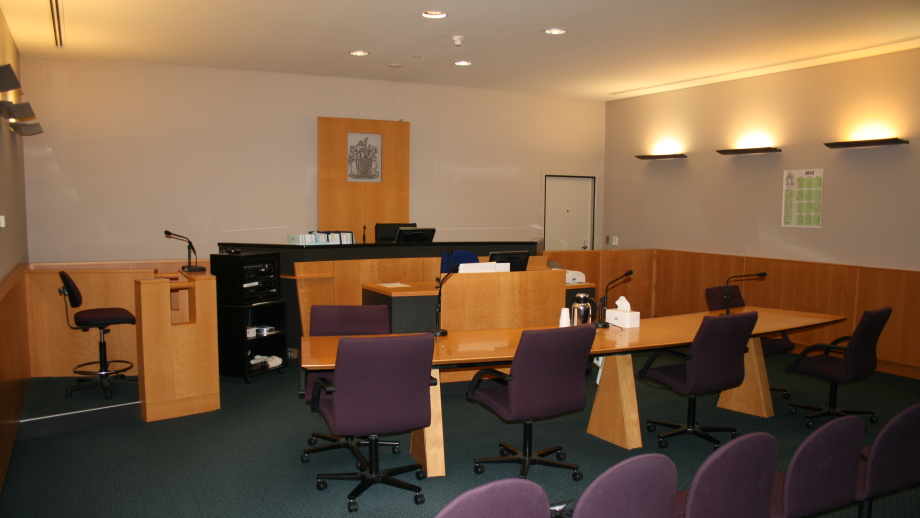
Here’s what you need to do if you choose to contest a traffic offence in Court
By Elias Tabchouri, Principal Lawyer at Macquarie Lawyers
When high profile celebrities get caught drink driving, it focuses attention on what to do if you’re ever caught on the wrong side of the law. When it comes to driving offences, it’s important to have a good understanding of your legal rights and options.
If you’ve recently been involved in a traffic offence, here are a few fundamental things that you need to be aware of before you appear in Court.
#1 Know what you’re in for.
If you’ve committed a drink driving offence, the maximum penalties and license suspensions depend ultimately on the range that your blood alcohol reading returns. The following ranges apply in NSW:
“Novice range” (0.00 to 0.019g/100mL for a Learner, P1 or P2 driver)
“Special range” (0.02 to 0.049g/100mL for a Learner, P1/ P2 driver, bus or taxi driver)
Low range (0.05 to 0.079g/100mL)
Mid-range (0.08 to0.149g/100mL)
High range (0.15g/100mL and over)
Police can assist with getting your blood sample taken by taking you to a hospital in order to get your sample. For a court appearance, if you later wish to rely upon your blood sample, you will need to make a request to the Forensic and Analytical Science Service where there will be a fee applicable to arrange for this.
If you are caught with any of the following drugs in your oral fluid, blood or urine, you may be charged with a criminal offence:
Cannabis;
Methylamphetamines;
Methylenedioxymethamphetamine
Cocaine
Any trace or presence of the drug in your oral fluid, blood or urine is enough for you to be charged, and illicit substances can remain in your system well after their consumption and effects have worn off.
#2 Know what you need to prove.
Considerations that will be taken into account are your driving record, your age, your character, your need for a license and other subjective factors. The Court has jurisdiction to either remove the suspension or reduce it.
In relation to immediate licence suspensions however you must show to the Court that there are exceptional circumstances which justify the lifting of or reduction in the suspension of your licence. For example, you need to work and you have a relative who is extremely unwell and requires you to care for them and take them to medical appointments. The Court will also consider your driving record and the seriousness of the offence.
#3 Prepare a letter of apology ahead of time.
A great way to show the court you are remorseful for your actions is to sit and reflect upon the offence that you have committed and prepare a letter of apology to the Court. All correspondence to the Court should be headed “To the Presiding Magistrate” and all references to the Magistrate should be phrased as “Your Honour”. An apology letter is your opportunity to tell the Court how you feel about the offence. It is a chance for you to show them that you have learnt from the offence and put in steps to ensure it does not occur again.
For example, you may say in relation to a drink driving offence: “Your Honour I am deeply ashamed to be before the Court for an offence of this sort. I have made arrangements since the offence with my partner that on nights out where we intend to drink, we will not drive and will order an Uber or Taxi to and from the location.”
You should not make excuses or justifications for your offence. You can of course describe matters which were occurring in your life at the time which had an impact on the offence but you should accept full responsibility for your actions.
#4 Attend the Traffic Offenders Program.
A matter which is looked upon highly by the Courts in relation to traffic offences is the attendance and completion of the Traffic Offenders Program which teaches you about the dangers of driving. You will receive a certificate of completion at the end of the program which can significantly benefit your case.
#5 Have suitable character references ready.
Another matter to consider is preparation of character reference letters from friends or people that know you. They can detail their relationship with you and disclose to the Court that you are aware of the offences before the Court and why you believe they are out of character for them. It should also discuss your knowledge of the personal circumstances of the person and provide an opinion as to their character.
#6 Know how the Court procedure will run on the day.
The Courts are often extremely busy and you will be told to attend at 9.30am. You should check the Court lists to determine which Court you are in and speak to the Court officer to advise them that you are present.
Once you are called, you will then be asked whether you are pleading guilty or not guilty. If you are pleading not guilty to a traffic related matter it will be set down for hearing on some later date.
If you are pleading guilty, the Magistrate will receive the Police facts sheet and your criminal and traffic record. You can also hand up your pre-prepared apology letters, character references or any other relevant documentation for the Magistrate to read and consider at this time.
Once the Magistrate has read the materials, you will then be asked if you have something to say about the offence. This is your time to express how you feel about what happened and express any mitigating circumstances which can assist your case. You should tell the Court if you are remorseful for your actions and detail the impact of the traffic offenders’ program upon you.
#7 Know what to ask for (aka no criminal conviction).
If the offence is a minor offence and you have a limited record, be prepared to ask the Court for conditional discharge without conviction. This is what is commonly known as section 10’s.
You may say, “Your Honour, in light of all the things I have raised and given the triviality of the offence (if it is trivial) as well as my genuine need for a licence, I am asking you to consider dealing with the matter by way of a conditional release order without conviction.”


