

A tenth of all electricity is lost in the grid. Superconducting cables can help
- Written by The Conversation
For most of us, transmitting power is an invisible part of modern life. You flick the switch and the light goes on.
But the way we transport electricity is vital. For us to quit fossil fuels, we will need a better grid, connecting renewable energy in the regions with cities.
Electricity grids are big, complex systems. Building new high-voltage transmission lines often spurs backlash from communities worried about the visual impact of the towers. And our 20th century grid loses around 10% of the power generated as heat.
One solution? Use superconducting cables for key sections of the grid. A single 17-centimetre cable can carry the entire output of several nuclear plants. Cities and regions around the world have done this to cut emissions, increase efficiency, protect key infrastructure against disasters and run powerlines underground. As Australia prepares to modernise its grid, it should follow suit. It’s a once-in-a-generation opportunity.
What’s wrong with our tried-and-true technology?
Plenty.
The main advantage of high voltage transmission lines is they’re relatively cheap.
But cheap to build comes with hidden costs later. A survey of 140 countries found the electricity currently wasted in transmission accounts for a staggering half-billion tonnes of carbon dioxide – each year.
These unnecessary emissions are higher than the exhaust from all the world’s trucks, or from all the methane burned off at oil rigs.
Inefficient power transmission also means countries have to build extra power plants to compensate for losses on the grid.
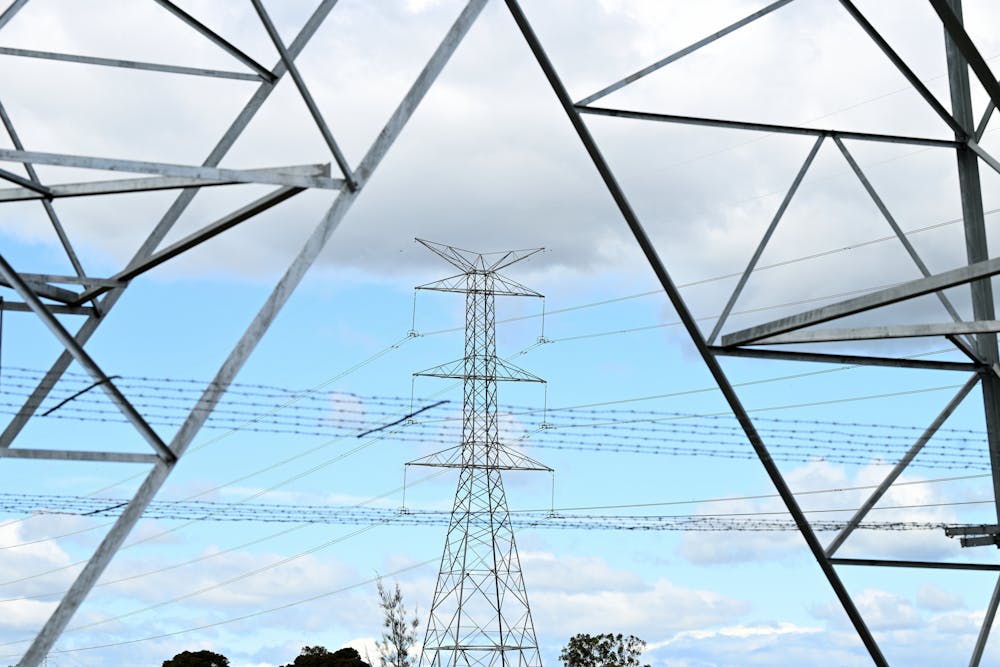
Labor has pledged A$20 billion to make the grid ready for clean energy. This includes an extra 10,000 kilometres of transmission lines. But what type of lines? At present, the plans are for the conventional high voltage overhead cables you see dotting the countryside.
System planning by Australia’s energy market operator shows many grid-modernising projects will use last century’s technologies, the conventional high voltage overhead cables. If these plans proceed without considering superconductors, it will be a huge missed opportunity.
How could superconducting cables help?
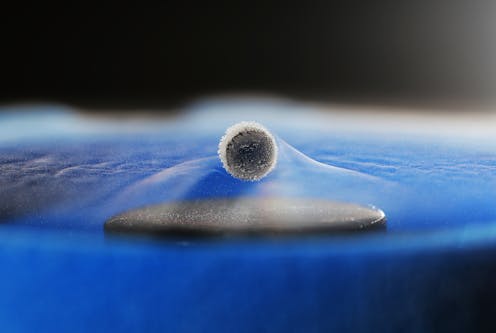
Superconduction is where electrons can flow without resistance or loss. Built into power cables, it holds out the promise of lossless electricity transfer, over both long and short distances. That’s important, given Australia’s remarkable wind and solar resources are often located far from energy users in the cities.
High voltage superconducting cables would allow us to deliver power with minimal losses from heat or electrical resistance and with footprints at least 100 times smaller than a conventional copper cable for the same power output.
And they are far more resilient to disasters and extreme weather, as they are located underground.
Read more: Explainer: what is a superconductor?
Even more important, a typical superconducting cable can deliver the same or greater power at a much lower voltage than a conventional transmission cable. That means the space needed for transformers and grid connections falls from the size of a large gym to only a double garage.
Bringing these technologies into our power grid offers social, environmental, commercial and efficiency dividends.
Unfortunately, while superconductors are commonplace in Australia’s medical community (where they are routinely used in MRI machines and diagnostic instruments) they have not yet found their home in our power sector.
One reason is that superconductors must be cooled to work. But rapid progress in cryogenics means you no longer have to lower their temperature almost to absolute zero (-273℃). Modern “high temperature” superconductors only need to be cooled to -200℃, which can be done with liquid nitrogen – a cheap, readily available substance.
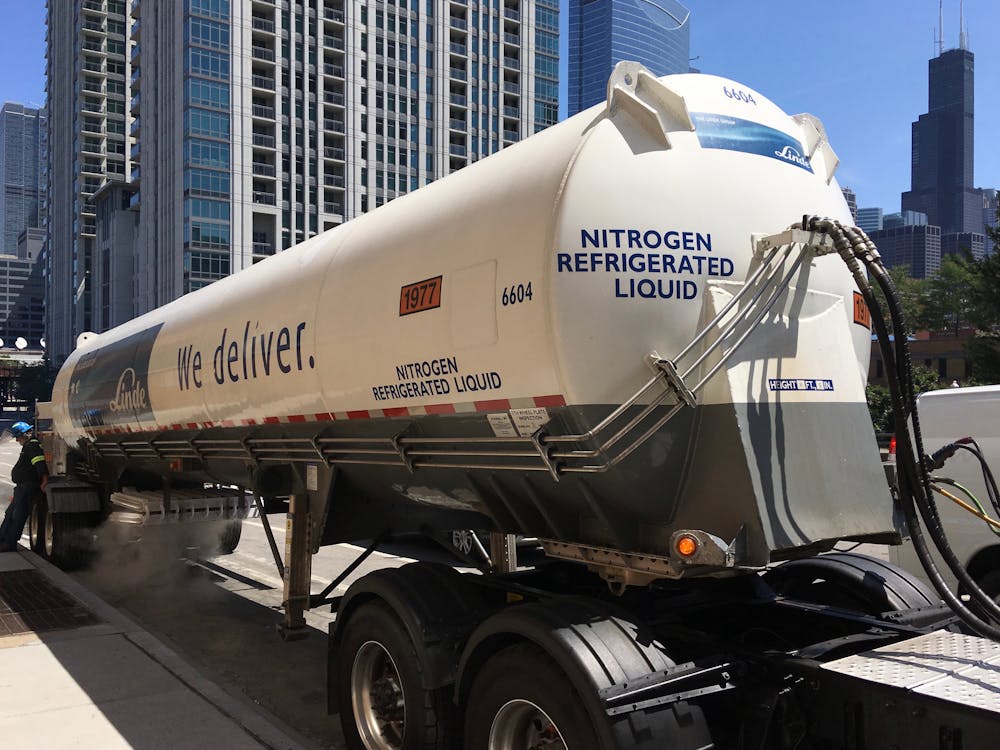 High temperature superconductors can be cooled just with liquid nitrogen.
Shutterstock
High temperature superconductors can be cooled just with liquid nitrogen.
Shutterstock
Overseas, however, they are proving themselves daily. Perhaps the most well-known example to date is in Germany’s city of Essen. In 2014, engineers installed a 10 kilovolt (kV) superconducting cable in the dense city centre. Even though it was only one kilometre long, it avoided the higher cost of building a third substation in an area where there was very limited space for infrastructure. Essen’s cable is unobtrusive in a metre-wide easement and only 70cm below ground.
Superconducting cables can be laid underground with a minimal footprint and cost-effectively. They need vastly less land.
A conventional high voltage overhead cable requires an easement of about 130 metres wide, with pylons up to 80 metres high to allow for safety. By contrast, an underground superconducting cable would take up an easement of six metres wide, and up to 2 metres deep.
This has another benefit: overcoming community scepticism. At present, many locals are concerned about the vulnerability of high voltage overhead cables in bushfire-prone and environmentally sensitive regions, as well as the visual impact of the large towers and lines. Communities and farmers in some regions are vocally against plans for new 85-metre high towers and power lines running through or near their land.
Climate extremes, unprecedented windstorms, excessive rainfall and lightning strikes can disrupt power supply networks, as the Victorian town of Moorabool discovered in 2021.
What about cost? This is hard to pin down, as it depends on the scale, nature and complexity of the task. But consider this – the Essen cable cost around $20m in 2014. Replacing the six 500kV towers destroyed by windstorms near Moorabool in January 2020 cost $26 million.
While superconducting cables will cost more up front, you save by avoiding large easements, requiring fewer substations (as the power is at a lower voltage), and streamlining approvals.
 Unprecedented windstorms in early 2020 took down six transmission towers in western Victoria.
Ausnet, CC BY
Unprecedented windstorms in early 2020 took down six transmission towers in western Victoria.
Ausnet, CC BY
Where would superconductors have most effect?
Queensland. The sunshine state is planning four new high-voltage transmission projects, to be built by the mid-2030s. The goal is to link clean energy production in the north of the state with the population centres of the south.
Right now, there are major congestion issues between southern and central Queensland. Strategically locating superconducting cables here would be the best location, serving to future-proof infrastructure, reduce emissions and avoid power loss.


