

Learning to read for pleasure is a serious matter – NZ schools should embrace a new curriculum
- Written by The Conversation
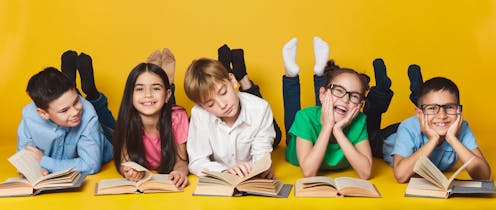
Until now, the New Zealand Curriculum has focused almost exclusively on the development of technical reading skills. Simply reading for pleasure hasn’t been a priority, which makes its inclusion in the draft version of a refreshed curriculum particularly welcome.
There is no question that basic reading skills are a necessary component of education. But too narrow a focus on skills alone has not served the children and young people of New Zealand well. The broader intent of Te Mātaiaho: the refreshed New Zealand Curriculum, released late in 2022 with the inclusion of reading for pleasure, is an important step towards remedying this.
If the goal of literacy education is to encourage young people to want and choose to read, then enjoyment needs to be supported and valued alongside skill. Being able to read words, reading competently for meaning, and wanting to read are not the same things.
Rates of reading for pleasure have been in decline, alongside reading achievement as measured by international assessments. So for those who realise the value of reading for pleasure, its inclusion in the draft curriculum as an essential practice is especially welcome.
Pleasure as well as skill
The presence of reading for pleasure in the curriculum will require schools and teachers to ensure it is happening. They cannot define some children as readers and others as not, or leave reading for pleasure to chance.
Our research for the Pūtoi Rito Communities of Readers initiative, and later using data from the Growing Up in NZ (GUiNZ) longitudinal study, challenges the view that reading for pleasure is a pastime for quiet, passive individuals sitting alone. Reading for pleasure is an inherently social activity.
We have previously identified the importance of reading for pleasure and its connection to a range of better social and educational outcomes for tamariki and rangatahi, both as individuals and as members of the wider community. These include better academic performance and positive wellbeing, and more positive connections to the rest of society.
Te Mātaiaho requires children to be sharing their reading experiences with others from the beginning of schooling. By the end of year six, learners are expected to be members of communities of readers.
School leaders and teachers will therefore need to ensure sufficient time and priority is given to these activities. In the recent past, pressure to develop competent (but not necessarily motivated) readers has led to teaching focused on skill development, leaving little time for enjoyment.
Reading as social activity
To meet the new curriculum goals, teachers first need an understanding of reading for pleasure and those who engage in it – including that those who do it are active, social people in other ways.
Recent analysis of the GUiNZ data, up to and including eight years of age, has shown those more likely to read frequently outside school were also more likely to attend other organised and interest-based activities, such as arts and sports. These activities were also related to greater levels of enjoyment of reading.
Children less likely to be engaged in reading for enjoyment could also be active, but their activity was less goal-directed. A similar pattern is seen in their use of electronic devices. Children who weren’t reading for pleasure spent more time on their devices, often passively consuming media.
Those who read for enjoyment more often did spend time online, but in active engagement with online material. The overall picture is one of readers as active people engaged with the world around them, and reading for pleasure as a purposeful social activity.
Putting it into practice
The fact readers are active people should not be a surprise. We have known for some time that good reading is goal-directed and strategic. Studies that have looked at individual reading styles and dispositions have identified that good readers are not focused on decoding text, compared with those focused on mastering the process of reading itself.
Read more: After a year of digital learning and virtual teaching, let's hear it for the joy of real books
Early reading instruction therefore needs to avoid sucking the fun out of reading. It should focus on developing readers who value and enjoy reading, with all the personal and societal benefits that go with it.
For those in social groups (often boys) where active pursuits such as sports are valued more highly, a view of reading as something for quiet passive individuals is particularly problematic. The evidence shows that reading should be portrayed as part of an active lifestyle, not an alternative to it.
Teaching styles that privilege skills and don’t actively promote the enjoyment of reading for its own sake have been called “pedagogies of poverty”. They are often used where learners are facing challenges with reading, yet further alienate those children from the enjoyment of reading.
Given the inclusion of reading for pleasure in Te Mātaiaho, those approaches will not meet the demands of the refreshed curriculum. It’s important, too, that the explicit inclusion of reading for pleasure doesn’t become a missed opportunity. This happened in the UK, where teaching did not change to match a curriculum that included reading for pleasure.
The Ministry of Education needs to be mindful of this risk as it develops a common practice model that will map and guide the teaching of reading laid out in Te Mātaiaho. The progress made so far must not be lost or diminished at this crucial stage.


