

What is Marburg virus and should we be worried?
- Written by The Conversation
An epidemic outbreak of Marburg virus in Equatorial Guinea, Central Africa, was confirmed this week, the first time the virus has occurred there. At least 16 cases have been detected, and nine deaths.
There are no approved treatments for Marburg virus, which is closely related to Ebola virus, but vaccines are in development. Following an unprecedented Ebola epidemic in West Africa in 2014 that caused more than 28,000 cases and 11,000 deaths, drugs and vaccines against Ebola were developed.
In fact, some of these were repurposed for COVID-19 in 2020. That experience may help more rapid vaccine and drug development against Marburg virus.
What is Marburg virus?
Marburg is a filovirus like its more famous cousin, Ebola. These are part of a broader group of viruses that can cause viral haemorrhagic fever, a syndrome of fever and bleeding.
Filoviruses are the most lethal of all haemorrhagic fevers, compared with more common viral haemorrhagic fevers such as dengue, yellow fever and Lassa fever. The first outbreaks of Marburg occurred in 1967 in lab workers in Germany and Yugoslavia who were working with African green monkeys imported from Uganda. The virus was identified in a lab in Marburg, Germany.
Since then, outbreaks have occurred in a handful of countries in Africa, less frequently than Ebola, with the largest in Angola in 2005 (374 cases and 329 deaths).
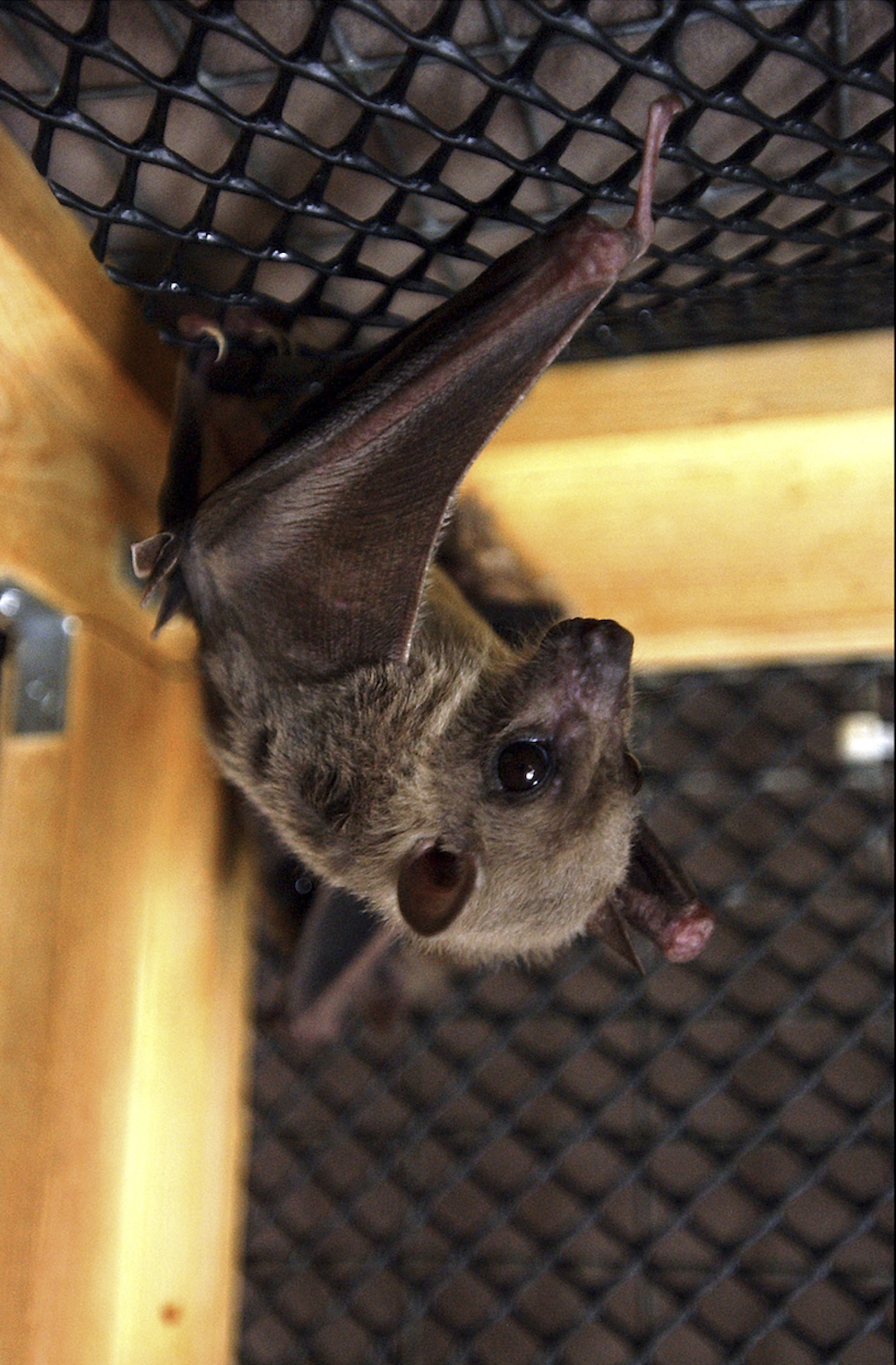
Marburg’s natural host is a fruit bat, but it can also infect primates, pigs and other animals. Human outbreaks start after a person has contact with an infected animal.
It’s spread between people mainly through direct contact, especially with bodily fluids, and it causes an illness like Ebola, with fever, headache and malaise, followed by vomiting, diarrhoea, and aches and pains. The bleeding follows about five days later, and it can be fatal in up to 90% of people infected.
How worried should we be?
Like Ebola in 2014, the fear is that Marburg could spread and become a much larger epidemic, and spread globally. Travel could see it spread to many other countries. In 2014, Ebola cases spread from Guinea to Liberia and Sierra Leone. The majority of cases occurred in these three countries, but travel-related cases occurred in seven other countries including the United States and the United Kingdom.
If Marburg case numbers increase in Equatorial Guinea or in Cameroon, where it has already spread, or if it spreads to other countries, all countries should be on alert.
Failure to diagnose viral haemorrhagic fever in countries not familiar with it can be deadly. The diagnosis of Ebola was initially missed in a traveller from West Africa in Dallas, Texas at the peak of the epidemic in 2014, and a nurse became infected. In Nigeria, the same thing occurred, but resulted in an outbreak and several deaths.
Less is known about Marburg virus than Ebola, which was well-studied during the large 2014 epidemic. It may be less infectious than Ebola, but there are fewer epidemics to assess this.
However, the high fatality rate, lack of available treatments and vaccines, and lessons from Ebola in 2014 should prompt a highly precautionary approach.
Read more: How are nurses becoming infected with Ebola?
How to stop its spread
While researchers will trial Marburg vaccines currently in development against this epidemic, non-phamaceutical measures are the best hope for controlling the epidemic rapidly. That means excellent surveillance and case detection, finding and isolating sick people, tracing their contacts, and quarantine of contacts to prevent transmission.
The infrastructure and planning for this can be substantial, including physical sites for isolation and quarantine. During the Ebola epidemic in Nigeria, a rapid and effective response included use of an abandoned building to isolate and treat patients rather than risk further hospital outbreaks.
The importance of identifying and isolating cases was seen in West Africa in 2014, where lack of hospital beds resulted in people dying in the street and worsening spread. One study found if 70% or more of infected people were isolated in a hospital bed, the epidemic could have been controlled without any drugs or vaccines. However it was very late in the epidemic when field hospitals were erected to overcome hospital bed shortages.
Use of personal protective equipment is also crucial, especially for health workers who are at increased risk of filovirus infections. Disinfection and safe disposal of biological waste is also important. Funerals where washing of the body is a cultural practice can also spread infection.
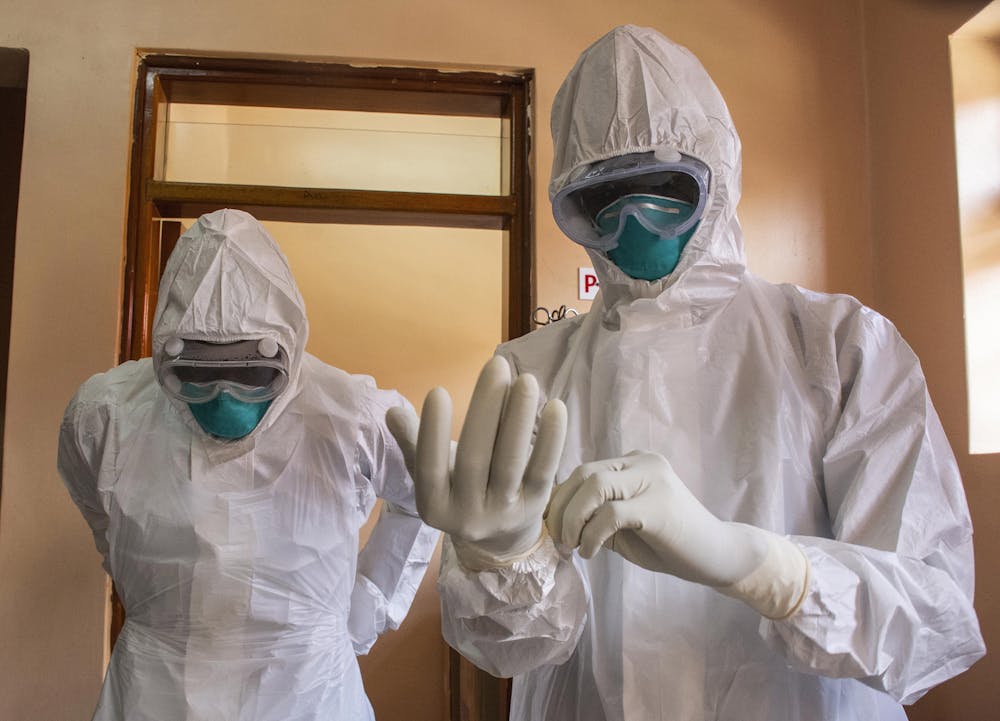 Personal protective equipment is essential in the fight against filoviruses.
AAP/Isaac Kasamani
Personal protective equipment is essential in the fight against filoviruses.
AAP/Isaac Kasamani
Health promotion and effective, culturally appropriate communication is needed to ensure compliance with health measures. During the Ebola epidemic in 2014, a team of people trying to raise awareness about Ebola were killed by locals who were fearful of the epidemic and mistrusting of foreigners. These lessons must be heeded if the Marburg epidemic grows.
Both Marburg and Ebola can persist in the body after recovery, in organs and fluids including seminal and vaginal fluid, the eye and other sites. This means outbreaks originating from human survivors, rather than from animals, are possible.
For low-income countries with weak surveillance systems, rapid epidemic intelligence using open-source data can help detect signals early. This is where news reports, social media and other data are used to look for patterns that could signify outbreaks of certain diseases in certain areas. We showed we could detect Ebola in the West African epidemic months earlier by analysing Twitter posts talking about disease symptoms in the area.
If the current epidemic continues to spread and is poorly controlled, the World Health Organization may declare a “Public Health Emergency of International Concern”, as it did with an Ebola epidemic in 2019 in the Democratic Republic of Congo.
For now, we have knowledge and experience of a poorly controlled, catastrophic epidemic of Ebola in 2014 that can inform the response to this epidemic of Marburg virus and hopefully control it quickly.
Read more: How would Australian hospitals respond to a case of Ebola?
Read more https://theconversation.com/what-is-marburg-virus-and-should-we-be-worried-200082


