

What actually is a treaty? What could it mean for Indigenous people?
- Written by The Conversation
This is the second article in our series explaining Voice, Treaty and Truth. Read the first article in the series here.
The Uluru Statement from the Heart calls for Voice, Treaty and Truth. These aspirations are intended as a sequence of reforms, that advance towards a just settlement with First Peoples.
The federal government is committed to holding a referendum later this year to put an Aboriginal and Torres Strait Islander Voice in the Australian Constitution. The government has also agreed to implement the Uluru Statement “in full”.
Following the referendum, it’s expected attention will shift towards a Makarrata Commission to “work on a national process of treaty-making and truth-telling”. In fact, reports suggest the government might move even faster.
For generations, Aboriginal and Torres Strait Islander peoples have called for a formal treaty or treaties to recognise their sovereignty “and set out mutually agreed terms for our relationship with the Australian government”.
But while Treaty has long been part of the political landscape, it is not well understood. Many Australians wonder what a Treaty is, what it would achieve, who it would be negotiated with, or for whom, and how. We’ll explore some of these questions here (in brief).
Why does Australia not have a Treaty?
When European colonial powers encountered Indigenous peoples, they often negotiated treaties. These agreements dealt with a range of matters, including trade and military alliances. They also set out rules to share the land and maintain peaceful relationships.
These colonial-era treaties were regularly broken. However, they recognised Indigenous peoples had the right to deal with land and exercised sovereignty over that land.
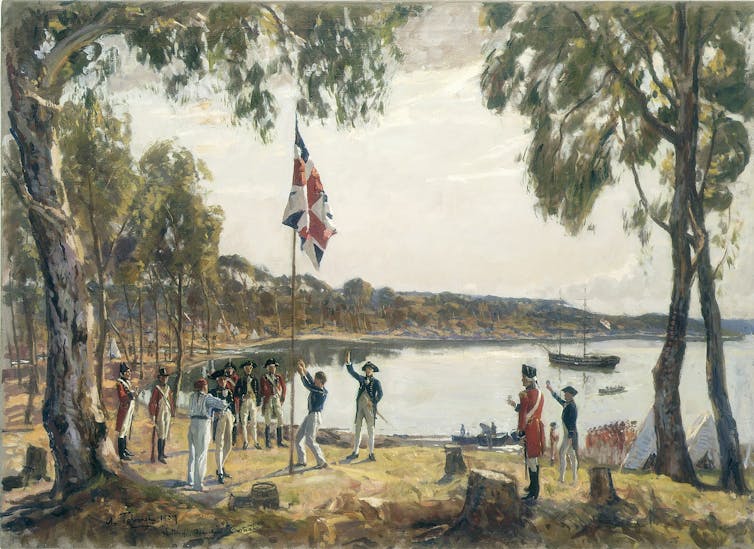
The British did not engage in treaty talks in Australia. They never sohttps://theconversation.com/the-voice-what-is-it-where-did-it-come-from-and-what-can-it-achieve-202138ught to negotiate with the owners of this land. Instead, they claimed the land belonged to no one and took it for themselves.
Historians have debated why the British took this approach. Some have argued as a penal colony with a substantial military force there was no need to negotiate trading relationships with the original owners. Others have argued the racist attitudes of the day were influential.

Whatever the reason, the result is Australia is an outlier. As a result, many Aboriginal and Torres Strait Islander peoples believe the moral and legal basis of the nation is “a little legally shaky”.
What is a Treaty?
The absence of a Treaty is one of the major challenges facing the Treaty debate in Australia. Without a history of treaty-making, the concept of what a treaty is or involves remains vague for many people, including government.
It means some people can argue a Treaty is dangerous or it would lead to the breakup of the nation. This makes little sense because a Treaty is a marriage not a divorce. It’s about bringing communities together and building strong relationships based on self-determination.
Governments might argue they’re already engaged in treaty-making. There are many examples of bureaucracy adapting its policy formulation and delivery to reflect community aspirations for a greater say in the delivery of services.
Such “partnerships”, “co-design” and local decision-making with government are valuable. They mark an important shift in promoting Aboriginal and Torres Strait Islander peoples’ participation in policy development and service delivery. But simply calling an agreement a “treaty” doesn’t make it a treaty.
Australia has signed up to a range of international legal instruments that concern the rights of Indigenous peoples. These legal instruments set a clear standard for what makes an agreement a treaty. A treaty must satisfy three conditions.
A treaty acknowledges Indigenous peoples are a distinct political community different to other Australians. This is because Indigenous peoples are the only group of Australians who owned, occupied, and governed the continent before colonisation. This recognition also acknowledges the historic and contemporary injustices that invasion has caused
A treaty is a political agreement reached by a fair process of negotiation between equals. Negotiation helps ensure everyone’s interests can be considered. But securing a fair negotiation process can be difficult. In Victoria, the First Peoples Assembly and State government have agreed to a Treaty Negotiation Framework that sets out principles to guide Treaty talks
Treaties involve both sides committing to responsibilities, promises and principles that bind the parties in an ongoing relationship of mutual obligation and shared responsibility. Most importantly, while the outcomes of any negotiation will differ according to the parties, a treaty is built on the recognition of Indigenous peoples’ inherent sovereignty. As part of this, a treaty will provide for some degree of self-government. What this looks like in practice will be worked out in negotiations.
A treaty will also include a range of other elements. It could include financial compensation, return of land, formal recognition of historic wrongs, and symbolic gestures of reconciliation, such as apologies.
Treaties are unique agreements. As Professor Megan Davis explains, they are aimed at “settling fundamental grievances, and establishing binding frameworks of future engagement and dispute resolution”.
 Maroochy Barambah looks on during the signing of an Indigenous Treaty commitment statement at Parliament House in Brisbane.
Jono Searle/AAP
Maroochy Barambah looks on during the signing of an Indigenous Treaty commitment statement at Parliament House in Brisbane.
Jono Searle/AAP
Modern treaties are different from historic treaties
There is a long history of treaty-making all over the world from which Australia can draw lessons. But it’s important to note modern treaties differ from those negotiated in colonial periods. They are more technical and legally complex. They are also negotiated against a long history of inequitable relationships.
They will also be subject to Australian law. While colonial-era treaties were international agreements between two sovereign communities, modern treaties will be subject to Australian law.
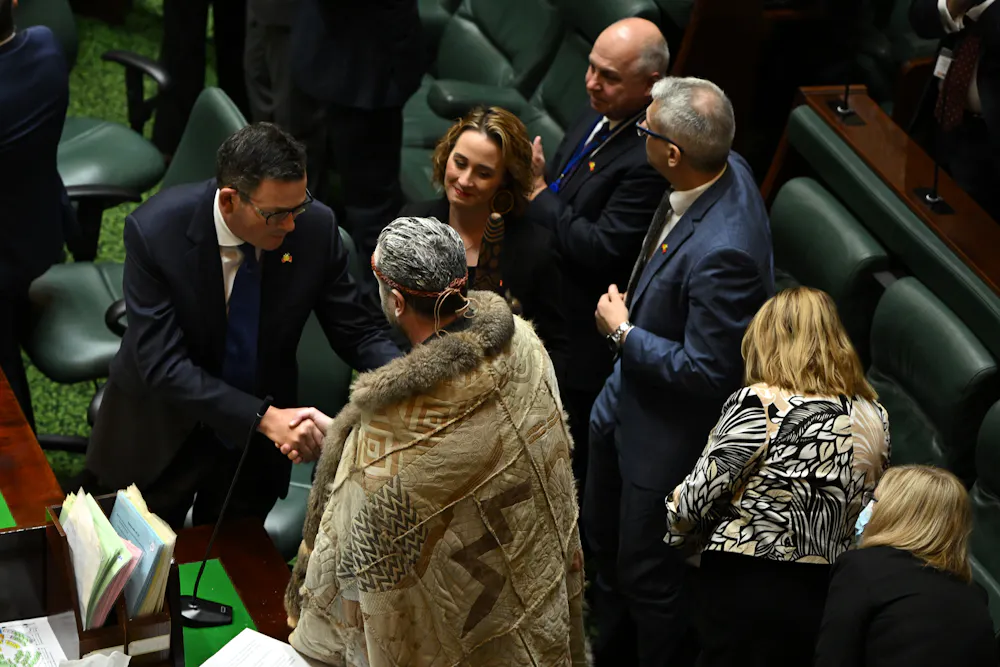 Co Chair of the First Peoples Assembly of Victoria Marcus Stewart at the Victorian Parliament in Melbourne urging parliamentarians to pass the legislation to enable the establishment of the Treaty Authority in that state.
Joel Carrett AAP
Co Chair of the First Peoples Assembly of Victoria Marcus Stewart at the Victorian Parliament in Melbourne urging parliamentarians to pass the legislation to enable the establishment of the Treaty Authority in that state.
Joel Carrett AAP
Treaty is happening now
Treaty is a longstanding aspiration of First Peoples in Australia. It is only in recent years, however, governments have decided to talk treaty.
Progress has been slow, but important steps have been taken at the state and territory level. For instance, in February this year, the Queensland government introduced the Path to Treaty Bill 2023 into the state parliament. The bill will establish and finance an independent First Nations Treaty Institute to “help prepare and support First Nations people for treaty negotiations with the state”.
That same month, the South Australian government introduced a bill to establish a Voice to the Parliament, with a treaty process to follow.
In Victoria, after several years of patient work, negotiations between the First Peoples Assembly and state government are expected to begin by the end of the year. Similar processes are underway in the Northern Territory, Tasmania and the ACT.
Every treaty process has its own challenges and complications and it’s too early to tell whether these processes will result in meaningful settlements. Nevertheless, they demonstrate two key things.
First, Treaty is a matter of political will, not legal impossibility. Second, looking towards the referendum later this year, the existence of treaty processes across the country suggests Australians may be willing to deal with the unfinished business of colonisation and its consequences.


