

Supernatural beliefs have featured in every society throughout history. New research helps explain why
- Written by The Conversation
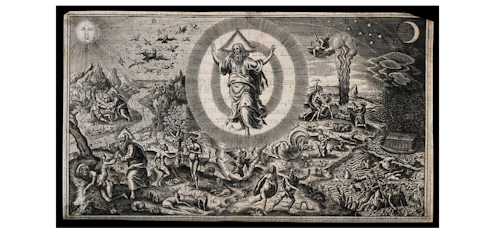
Religion is a human universal. For thousands of years, humans have held religious beliefs and participated in religious rituals. Throughout history, every human society has featured some kind of supernatural or religious belief.
Why is religion so prevalent? One reason is that it’s a powerful tool for explanation.
The world is a mysterious place, and was even more mysterious before the rise of modern science. Religion can be a way of making sense of this mystery. This idea dates back to theologians and philosophers such as Henry Drummond and Friedrich Nietzsche, who both supported the “God of the gaps” hypothesis, wherein divine intervention by God is used to explain gaps in scientific knowledge.
For example, ancient Chinese and Korean societies looked to divine intervention to justify changing their rulers, whereas Egyptians, Aztecs, Celtic, and Tiv people used the will of gods to explain celestial cycles.
In the contemporary world, many US Christians viewed the COVID pandemic as a form of divine punishment.
Yet despite these specific examples, we know little about which kinds of phenomena people try to explain using religion. If religion helps us fill gaps in knowledge, what kind of gaps is it most likely to fill?
Our international research team has pursued this question over the past five years, by surveying ethnographies from societies around the world and throughout history.
We found societies are overwhelmingly more likely to have supernatural beliefs that concern “natural” phenomena, rather than “social” phenomena.
Read more: Rituals have been crucial for humans throughout history – and we still need them
Supernatural explanations for natural events
In total, our research sample included historical records from 114 diverse societies.
These ranged from nomadic hunter-gatherer groups in Africa (such as the ǃKung people), to fishing and horticultural societies from the Pacific Islands (such as people from the Trobriand Islands), to large “complex” societies with modern technology and written records (such as the Javanese, Malay and Turkish societies).
For each society, we read through ethnographic texts and identified supernatural explanations that were commonly held across its people. We then identified the source of the explanation.
We were particularly interested in whether supernatural explanations focused on “natural” phenomena – events that had no clear human cause such as disease, natural disasters and drought – or whether they focused on human-caused “social” phenomena such as wars, murder and theft.
We found explanations for all these various phenomena in our survey. For example, the Cayapa people of the Ecuadorian rainforest attributed lightning, a natural phenomenon, to the Thunder spirit, who carried a large sword that glinted when he used it in combat.
And the Comanche people of the great American plains explained the timing of war, a social phenomenon, using dreams from medicine men.
However, our results also revealed a striking gap: supernatural explanations for natural phenomena were much more prevalent than for social phenomena.
In fact, nearly all the societies we surveyed had supernatural explanations for natural phenomena such as disease (96%), natural disasters (92%) and drought (90%). Fewer had supernatural explanations for warfare (67%), murder (82%) and theft (26%).
Supernatural beliefs evolve as societies expand
The global prevalence of naturally focused supernatural explanations is one of the most striking findings from our research. It’s partly surprising because current major religions such as Christianity and Islam are very social institutions.
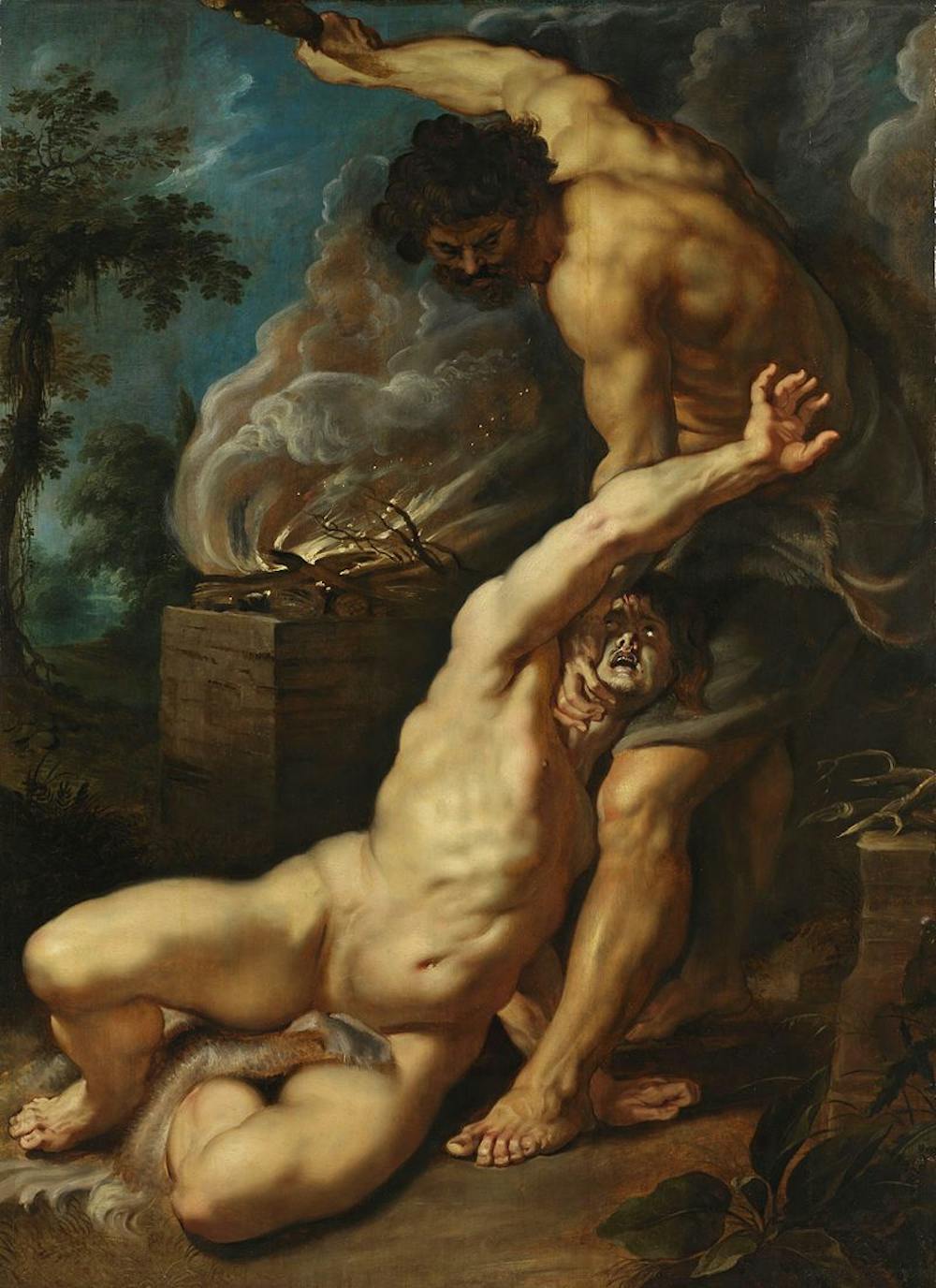
Contemporary Christians rely on their religious beliefs as more of a social and moral compass, rather than a way to understand the weather. Similarly, the Bible seeks to explain a variety of social phenomena. The story of Cain and Abel explains the origin of murder, while the Book of Joshua explains the supernatural causes of the war that destroyed Jericho.
So how might we explain the contrast between supernatural explanations in modern-day Christianity, and supernatural explanations among traditional societies, as told through historical records? One of our findings could provide a clue.
We found societies develop more supernatural explanations for social phenomena as they get bigger and more complex. More populous societies with currency and land transport were more likely to explain events such as theft and warfare using supernatural principles than small hunter-gatherer and horticultural groups.
We can’t say with certainty why this is. It may be because people know and trust each other less in bigger societies, and this translates to beliefs in witchcraft and sorcery. Or perhaps people in larger complex societies are more concerned about issues such as warfare and theft, and therefore more likely to develop supernatural explanations for them.
Intellectuals such as Edward Tylor and David Hume thought religious beliefs may have originated as a means of explaining natural phenomena.
Although our study can’t shed light on the origins of religion, it does corroborate this idea. But beyond that, it also shows that societies are more likely to turn to religion to make sense of the social world as they get larger and more complex.
Read more: In Japan, supernatural beliefs connect the spiritual realm with the earthly objects around us


