

Can a ‘nature repair market’ really save Australia’s environment? It’s not perfect, but it’s worth a shot
- Written by The Conversation
Australia has embarked on an experiment to create a market for biodiversity. No, we’re not talking about buying and selling wildlife, although, sadly, there is a black market for that. This is about repairing and restoring landscapes, providing habitat for threatened species and getting business and philanthropy to help pay for it.
When Environment and Water Minister Tanya Plibersek introduced the Nature Repair Market Bill to parliament last week, she said:
Just because something is difficult, doesn’t mean we shouldn’t do it. It means we should do it properly.
I agree. We have been publishing research on this topic for decades, discussing the issue with scientists, social scientists and economists. Now as chief scientist at the not for profit environmental accounting organisation Accounting for Nature and chief councillor at the Biodiversity Council, we are working hard to help turn the theory into reality.
There is, rightfully, a lot of concern about the integrity of biodiversity markets. However, with appropriate processes in place from governments, including independent authorities that verify biodiversity outcomes, and vigilance from the community, there is potential to create a well-behaved, net-positive biodiversity market in Australia.
What does a biodiversity market look like?
Australia has signed up to the United Nations’ Convention on Biological Diversity, which commits us to protecting and restoring 30% of the land for nature. This means 30% of every kind of habitat – it can’t just be deserts and salt lakes, for example.
That’s a big task, and governments can’t do it alone. It’s going to have to be the entire community, every single individual. This isn’t just about protection, a lot will be habitat restoration which needs serious investment.
Read more: The new major players in conservation? NGOs thrive while national parks struggle
The general public is increasingly concerned about the decline of nature in their local parks and backyards. One example is a nationwide concern about the disappearance of willie wagtails, a bird many Australians have grown up with. The loss of nature affects everyone, and can harm our mental health. It is not just about threatened species.
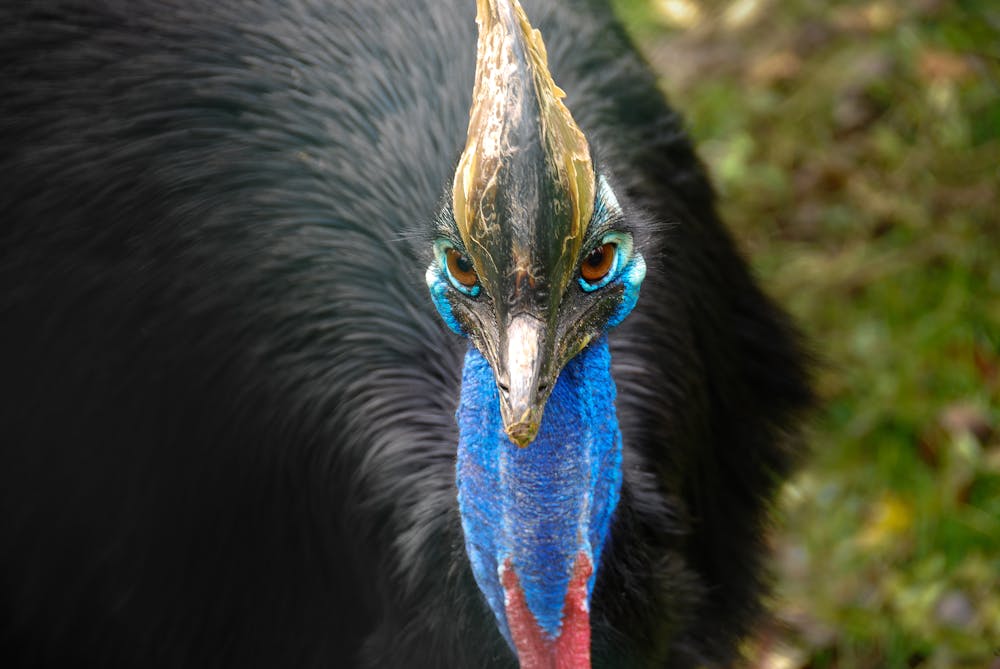
Concern for the cassowarry in the wet tropics region of far north Queensland prompted environmental management organisation Terrain NRM (natural resource management) to create a new biodiversity market scheme called Cassowary Credits. Terrain NRM says this is:
a mechanism that enables investors such as governments, philanthropists or corporates to pay landholders and land managers to undertake habitat restoration activities.
Australia has well over half a million different species, and about a third of them have a name. You can’t run a market for that many species – so the challenge will be to develop ways of quantifying biodiversity that are credible and simple.
Trial and error
A credible market needs a credible biodiversity currency (let’s call it a token). Such a token requires many attributes to make it work. The token should be awarded for measurable outcomes, like an increase in the abundance of hooded robins (a recently listed threatened woodland bird and one of my favourites) on your property, or an improvement in the extent and quality of native vegetation.
These outcomes need to be “additional”, outcomes that would not have otherwise happened without the investment. Ideally outcomes are permanent, and above and beyond what would have happened if we did nothing.
And finally, someone has to want to buy them – there is no point in creating a product when there is no demand. Making a trusted and valuable biodiversity currency is going to take time.
Almost 3,000 years ago the Lydians invented a currency based on metal coins with a ruler’s face stamped on it. That’s still roughly how it works, even with most of our money now being digital, rather than physical in coins and notes. However, even after 3,000 years, money is not yet perfect. Its value constantly changes, and it can collapse, too. There’s still fraud and scams – despite a global army of accountants, financial advisors, mathematicians and lawyers paid to assure integrity.
By comparison, creating a biodiversity market is more complex than stamping a face on a coin. Turning a million-dimensional object – the biodiversity of Australia – into a market will require biodiversity accountants, and biodiversity auditors, and strong laws to govern the new biodiversity markets. However, too much is at stake, and too many species will continue to disappear if we don’t try.
Read more: Losing the natural world comes with major risks for your super fund and bank
Rivers of gold
The government points to a 2022 PricewaterhouseCoopers report that found a biodiversity market could unlock A$137 billion to repair and protect Australia’s environment by 2050.
It sounds fanciful but it could be even bigger than that. The demand is there, internationally, and it’s growing. Can we bring this investment to Australia?
The idea is companies who want to prove they’re “nature positive” will pay for the privilege; some investment could also come from philanthropy. (Notably this is not about “biodiversity offsetting” where people are forced to compensate for the damage they cause.)
Nature Positive by 2030: The global goal for nature works alongside the UN Convention on Biological Diversity’s Kunming-Montreal Global Biodiversity Framework.The most important issue is integrity – it is transparent proof that actions have delivered additional permanent outcomes – much like biting a coin in 500 BCE to check it is really gold. And that’s the system we’re still struggling to create.
We’re getting there. A lot of smart people in the finance sector and the ecology sector are coming together to resolve some of these issues. I find it both exciting and uncertain.
Time to be bold
The federal government’s nature repair bill is not perfect. Many submissions have pointed out problems. But it’s a bold effort. And we need bold efforts like this to start taking off.
When you get down to it, everybody really does care a lot - about huge trees, cassowaries and coral reefs, the nature that inspires them, every single day. We all love willie wagtails and want to make a contribution. While governments still need to massively increase investments to repair landscapes and restore habitat for Australian native species, biodiversity markets could be a big part of a zero extinction Australia. So there’s every reason to give biodiversity markets a go.
Editor’s Note: This article has been adapted from an interview with the author published today on the Eco Futurists podcast.


